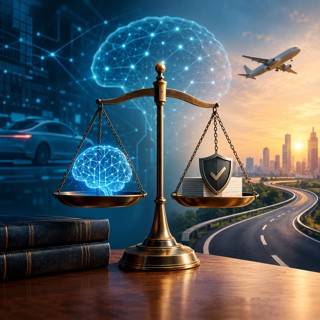

Episode #99: Can Money Buy Meta a Comeback in AI?
Stewart Squared23 Heinä

Episode #99: Can Money Buy Meta a Comeback in AI?

In this episode of the Stewart Squared podcast, host Stewart Alsop and guest Stewart Alsop II dive into Meta's latest AI model releases and their broader issues with user addiction, touching on the European Commission's warnings about addictive features and massive fines totaling $1.4 trillion from US state attorney generals. The conversation ranges from Meta's Meta Super Intelligence Lab and their attempts to catch up to OpenAI and Anthropic, to the impossibility of governments controlling AI development as countries rush to build sovereign models. They discuss NVIDIA's open source robotics models, debate the future of humanoid versus non-humanoid robots, and compare the business approaches of Mark Zuckerberg and Elon Musk. The episode also covers Trump's floating ideas about restricting state-of-the-art AI models to US citizens, China's similar restrictions, SpaceX's recent IPO performance, and the concept of shareholder capitalism as applied to government investments in tech companies like Intel and potentially OpenAI.

Timestamps

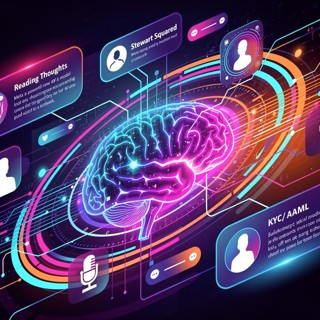
00:00 Meta releases new AI model and thought-reading technology while facing trillion-dollar fines from state attorneys general for social media harm, particularly to young people
05:00 Discussion of Meta's superintelligence lab attempting to catch up with OpenAI and Anthropic, while their cash-harvesting social media business funds AI development despite past VR failures
10:00 Government inability to regulate fast-moving AI technology, with Trump and China floating ideas about restricting state-of-the-art models to citizens only
15:00 Examining how AI's addictive nature combined with existential fears creates political volatility, plus NVIDIA's open-source robotics models becoming viable alternatives
20:00 Debate over humanoid versus non-humanoid robots, discussing industrial applications and questioning whether humanoid design makes practical sense for factories or homes
25:00 Comparing Elon Musk's technical accomplishments at Tesla and SpaceX with Zuckerberg's social media empire, noting Facebook's real-time scaling innovation happened decades ago
30:00 SpaceX AI IPO analysis predicting failure if stock drops below offering price, plus discussion of shareholder capitalism and Trump's government investment strategy
35:00 Reflecting on information overload in the AI age making it impossible to understand complexity, with neither Trump nor technological developments being predictable anymore

Key Insights

1. Meta faces massive legal liability for its addictive social media practices, with state attorney generals demanding approximately 1.4 trillion dollars in total penalties, including a New Mexico jury awarding 375 million dollars in civil penalties and the state separately seeking 2.7 billion dollars in abatement costs. The European Commission has warned Meta about continued use of addictive features, though any meaningful fine would need to be extraordinarily large given Meta's 2 trillion dollar valuation and substantial cash flow. Despite these legal challenges, Meta continues to harvest cash at an astonishing rate from Instagram, Facebook, and Threads by addicting users without regard for their wellbeing, using that revenue to fund their artificial intelligence initiatives after wasting money on virtual reality.
2. Meta's artificial intelligence efforts through their Meta Super Intelligence Lab have been mixed, with their initial LAMA 4 model considered a disaster, but some internal evaluations suggest their upcoming release could potentially help them catch up to OpenAI and Anthropic, possibly even displacing Google as the third accepted foundation model. The key difference between Meta and competitors like OpenAI and Anthropic is that Meta has enormous cash flow from their social media properties to support their AI development, allowing them to spend freely even if they waste money, whereas OpenAI and Anthropic only generate revenue from their AI products. However, there remains skepticism about whether Meta can truly catch up once having fallen behind in the competitive landscape of artificial intelligence development.
3. Governments are fundamentally irrelevant in controlling artificial intelligence development because technology moves too fast for governmental bodies to understand or regulate effectively. Both Trump and China have floated ideas about restricting state-of-the-art AI models to their respective citizens, but these efforts cannot succeed because AI models are infinitely copyable and open source models are becoming increasingly powerful. The reality is that Pandora's box is already open with AI technology, and as countries realize they don't want dependence on China or the United States, they will develop their own sovereign models, creating a mushroom effect that makes control impossible regardless of what governments attempt to mandate or regulate.
4. NVIDIA is becoming increasingly important in the open source AI model space, particularly for robotics applications, as they develop small open source models that can run inside robots without requiring NVIDIA to monetize the models directly since they profit from hardware sales. Jensen Huang has publicly stated that robotics represents the next major innovation, leading NVIDIA to focus on developing CPUs alongside GPUs and integrated systems with small models for physical AI applications. This represents a significant shift where developers no longer need to rely solely on Chinese models, as NVIDIA's open source offerings are becoming genuinely competitive and useful for specialized applications like machine learning cameras and embedded robotics systems.
5. The definition and future of robotics remains highly contested, with significant debate between those advocating for humanoid robots versus non-humanoid specialized robots, and the Wall Street Journal recently published analysis suggesting humanoid robots may not be the optimal path forward. Tesla has been successful partly because they integrated industrial robots from the beginning rather than hand-building cars, reducing production costs substantially, though their humanoid robot demonstrations have not yet resulted in actual factory deployment despite ambitious forecasts. The challenge with humanoid robots includes safety concerns like a hundred-pound robot potentially killing a child if it falls, and the complexity of replicating human capabilities like hands, though companies like Neo recently claimed to have developed hands that work better than humans.
6. The comparison between Mark Zuckerberg and Elon Musk reveals stark differences in technical accomplishment, with Zuckerberg's primary innovation being real-time scaling for billions of users achieved around 2007, after which Facebook has largely exploited that technology to extract money without meaningful additional innovation. In contrast, Elon Musk has accomplished multiple extraordinary technical achievements simultaneously including getting people to buy Teslas, building factories for cars and batteries, changing the distribution system to bypass dealers, building an electric charging network, and creating SpaceX and Starlink. While Musk may be crazy and hard to like, he has genuinely accomplished substantial technical innovations across multiple domains, whereas Zuckerberg has primarily focused on corrupting youth and harvesting data for the past sixteen years.
7. The SpaceX AI initial public offering illustrates important dynamics about public market trust and company valuation, with shares issued at 135 dollars now trading around 145 dollars after initially rising but falling back near the offering price, and predictions suggest it may fall below the offering price before lockup periods expire. The float representing publicly traded shares is only about five percent of total shares, and when more shares become available ...

Tämä jakso on lisätty Podme-palveluun avoimen RSS-syötteen kautta eikä se ole Podmen omaa tuotantoa. Siksi jakso saattaa sisältää mainontaa.

Jaksot(102)

Episode #102: AI Is Eating the World’s Memory

Episode #102: AI Is Eating the World’s Memory

In this episode of Stewart Squared, Stewart Alsop III and Stewart Alsop II sit into the shifting ground beneath the AI boom, starting with the strange saga of Leopold Aschenbrenner's hedge fund and th...

13 Elo 51min

Episode #101: Apple's AI Is Finally Here. Why Does It Still Feel Broken?

Episode #101: Apple's AI Is Finally Here. Why Does It Still Feel Broken?

In this episode of the Stewart Squared podcast, hosts Stewart Alsop and Stewart Alsop II dig into Apple's rocky iOS 27 rollout and the Apple Intelligence features that still don't quite work, before s...

6 Elo 54min

Episode #100: From Apple's iOS 27 to Anduril's Defense Tech: Where AI's Advantage Really Lies

Episode #100: From Apple's iOS 27 to Anduril's Defense Tech: Where AI's Advantage Really Lies

In this episode of Stewart Squared, Stewart Alsop III sits down with his father and co-host Stewart Alsop II for a wide-ranging conversation that jumps from Apple's iOS 27 preview beta and the long ro...

30 Heinä 1h 4min

Episode #98: What Apple Gets That the Rest of Tech Doesn't: Trust Scales

Episode #98: What Apple Gets That the Rest of Tech Doesn't: Trust Scales

In this episode of the Stewart Squared podcast, host Stewart Alsop sits down with his father, guest Stewart Alsop II, to tackle a wide range of tech topics from AI chip design to cybersecurity vulnera...

16 Heinä 57min

Episode #97: How AI Is Rewriting the Rules of Computing

Episode #97: How AI Is Rewriting the Rules of Computing

Stewart Alsop sits down with his father, Stewart Alsop II, to unpack what chip design even means anymore, starting with OpenAI's Jalapeno chip and the wild claim that it was designed in nine months us...

9 Heinä 1h 3min

Episode #96: From Steve Jobs to AI: The Stories That Never Became Data

Episode #96: From Steve Jobs to AI: The Stories That Never Became Data

In this episode of Stewart Squared, Stewart Alsop III sits down with his father, Stewart Alsop II, for a wide-ranging conversation that moves from a heartfelt tribute to the late Brent Schlender — leg...

2 Heinä 46min

Episode #95: Schrodinger's Bubble: Nobody's Keeping Up, And That's Okay

Episode #95: Schrodinger's Bubble: Nobody's Keeping Up, And That's Okay

In this episode of the Stewart Squared podcast, host Stewart Alsop sits down with his father, guest Stewart Alsop II, to tackle corrections from last week's show before diving into the rapid pace of A...

25 Kesä 59min

Suosittua kategoriassa Liike-elämä ja talous

sijotuskasti
mimmit-sijoittaa
psykopodiaa-podcast
rss-rahapodi
rss-inderes
ostan-asuntoja-podcast
hyva-paha-johtaminen
rss-sami-miettinen-neuvottelija
rss-porssipuhetta
rss-ammattipodcast
rahapuhetta
sijoituspodi
rss-oivalluksia-rahasta-elamasta
pomojen-suusta
rss-karon-grilli
rss-kaupan-tila
rss-hilden-kaira
rss-porssipodi
oppimisen-psykologia
rss-paasipodi