Complex Trauma Treatment for Eating Disorders: EMDR & Ketamine-Assisted Therapy With Jennifer Lancaster, LCSW

Complex Trauma Treatment for Eating Disorders: EMDR & Ketamine-Assisted Therapy With Jennifer Lancaster, LCSW

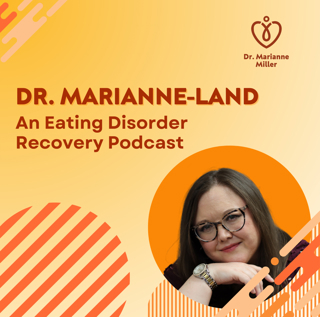
What happens when years of eating disorder treatment reduce symptoms but never fully address the trauma underneath? In this episode of the Dr. Marianne-Land Podcast, I welcome Jennifer Lancaster, LCSW, for a conversation about complex trauma treatment for eating disorders, including the role of EMDR therapy, ketamine-assisted psychotherapy (KAP), attachment trauma, nervous system healing, and shame recovery. Whether you're recovering from anorexia, bulimia, ARFID, binge eating disorder, or another eating disorder, understanding the connection between trauma and eating disorders can open new possibilities for healing.

Jennifer is a licensed clinical social worker and founder of Houston Healing Collective. Drawing on more than a decade of experience treating eating disorders and complex trauma, she explains why many clients arrive after years of therapy saying they understand why they struggle but still feel trapped in the same patterns. We discuss how trauma-informed treatment can move beyond symptom management by addressing the underlying experiences that shaped the nervous system in the first place.

Why Complex Trauma Often Fuels Eating Disorders

Complex trauma is not always one catastrophic event. It can develop through repeated experiences of emotional neglect, attachment disruptions, chronic criticism, unsafe relationships, community violence, poverty, or growing up without feeling consistently seen, safe, or emotionally supported. Jennifer shares how her own experiences and years of clinical work helped her recognize that many eating disorders function as adaptive responses to unresolved trauma rather than isolated illnesses.

We also discuss why many people in eating disorder recovery become frustrated when treatment focuses primarily on changing behaviors without creating space to process traumatic experiences. Although symptom stabilization remains important, Jennifer explains why many clients eventually seek treatment that addresses the deeper emotional wounds beneath restrictive eating, binge eating, purging, or other eating disorder symptoms.

EMDR Therapy for Trauma and Eating Disorders

Jennifer explains how she integrates EMDR therapy into eating disorder treatment. She discusses the importance of building trust, strengthening nervous system regulation, assessing readiness, and helping clients expand their window of tolerance before trauma reprocessing begins. She also describes how EMDR allows people to process traumatic memories without needing to repeatedly tell every painful detail, making the work feel more manageable for many survivors of complex trauma.

Ketamine-Assisted Psychotherapy Explained

If you've been curious about ketamine-assisted therapy for PTSD, trauma, or eating disorders, Jennifer offers an accessible explanation of how this treatment works. She discusses why ketamine differs from traditional psychiatric medications, how it may temporarily increase neuroplasticity, and why those changes can create opportunities for deeper therapeutic work. We also talk about the brain's default mode network, rigid thinking patterns, and why many people experience new perspectives during treatment that previously felt impossible to access.

One of the most important messages in this episode is that ketamine itself is not the treatment. Jennifer emphasizes that preparation, psychotherapy, and thoughtful integration before and after medicine sessions are what help lasting healing occur. Rather than replacing therapy, ketamine-assisted psychotherapy works alongside trauma-focused treatment approaches like EMDR and other evidence-informed therapies.

Healing Shame Through Safe Relationships

Jennifer also shares her own experience receiving ketamine-assisted therapy and how it transformed her relationship with shame. She describes participating in a therapeutic group experience where she felt safe enough to openly share parts of her story for the first time. That experience inspired her to develop group ketamine retreats because she witnessed how healing can deepen when people experience connection, compassionate witnessing, and emotional safety alongside trauma treatment.

Our conversation also explores why shame often survives in isolation but begins to loosen when people experience safe therapeutic relationships. Whether treatment happens individually or in a carefully facilitated group setting, safety remains the foundation of meaningful trauma recovery.

Who Should Listen

This episode is for adults recovering from anorexia, bulimia, ARFID, binge eating disorder, or other eating disorders. It is also valuable for parents, caregivers, therapists, dietitians, physicians, and other healthcare professionals who want a deeper understanding of complex trauma, EMDR therapy, ketamine-assisted psychotherapy, PTSD, attachment trauma, and trauma-informed eating disorder treatment.

In This Episode

Jennifer explains how complex trauma contributes to eating disorders, why attachment wounds often remain hidden beneath eating disorder symptoms, how EMDR therapy helps people process traumatic memories, what ketamine-assisted psychotherapy actually involves, why preparation and integration matter just as much as the medicine itself, how neuroplasticity may support healing, why shame often decreases through safe therapeutic relationships, and how trauma-informed care can help people move beyond surviving toward genuine recovery.

Content Cautions

This episode includes discussion of eating disorders, anorexia, bulimia, ARFID, PTSD, complex trauma, childhood adversity, attachment trauma, emotional neglect, shame, poverty, community violence, psychedelic-assisted psychotherapy, and ketamine-assisted therapy.

Listen to Related Episodes

Using EMDR & Polyvagal Theory to Treat Trauma & Eating Disorders With Dr. Danielle Hiestand, LMFT, CEDS-S on Apple & Spotify.

The Connection Between Unresolved Trauma & Long-Lasting Eating Disorders (Content Caution) on Apple & Spotify.

How Childhood Trauma Shapes Eating Disorders & Body Shame (Content Caution) on Apple & Spotify.

Childhood Trauma & Eating Disorders on Apple & Spotify.

Connect With Jennifer Lancaster

Jennifer Lancaster is the founder of Houston Healing Collective, where she specializes in complex trauma treatment, EMDR therapy, ketamine-assisted psychotherapy, eating disorder treatment, psychotherapy intensives, and therapeutic retreats. Learn more through Houston Healing Collective or follow her on Instagram at @_jenlightened.

Work With Dr. Marianne Miller

If you're looking for a California eating disorder therapist, Washington, DC eating disorder therapist, ARFID therapist, anorexia therapist, bulimia therapist, or binge eating disorder therapist, I provide neurodivergent-affirming, trauma-informed eating disorder therapy throughout California and Washington, DC, along with eating disorder coaching worldwide. If you or your child has ARFID or selective eating, be sure to explore my self-paced ARFID & Selective Eating Course for practical, evidence-informed support. Check out my website at drmariannemiller.com for all the latest info!

Tämä jakso on lisätty Podme-palveluun avoimen RSS-syötteen kautta eikä se ole Podmen omaa tuotantoa. Siksi jakso saattaa sisältää mainontaa.

Jaksot(335)

Harm Reduction & The Middle Place of Eating Disorder Recovery With "Slip" Author Mallary Tenore Tarpley, MFA

Harm Reduction & The Middle Place of Eating Disorder Recovery With "Slip" Author Mallary Tenore Tarpley, MFA

How can harm reduction support eating disorder recovery when full recovery feels complicated, nonlinear, or far away? Dr. Marianne welcomes back journalist, professor, and author Mallary Tenore Tarple...

17 Elo 27min

How to Manage Weight Restoration When Your Autistic Child Has Anorexia, ARFID, & a PDA Profile

How to Manage Weight Restoration When Your Autistic Child Has Anorexia, ARFID, & a PDA Profile

How do you support weight restoration when your autistic child needs nutrition, but pressure around food makes eating even harder? For autistic children, teens, and adolescents with a PDA profile (Pat...

14 Elo 11min

My Eating Disorder Recovery Story Continued: Internalized Weight Bias in the Age of Ozempic

My Eating Disorder Recovery Story Continued: Internalized Weight Bias in the Age of Ozempic

What happens to eating disorder recovery when the culture around you starts celebrating weight loss again? In this deeply personal solo episode, Dr. Marianne continues sharing her eating disorder reco...

12 Elo 20min

Is Healthmaxxing Disordered Eating? Protein, Fitness Trackers, & Eating Disorder Recovery With Amy Ornelas, RD

Is Healthmaxxing Disordered Eating? Protein, Fitness Trackers, & Eating Disorder Recovery With Amy Ornelas, RD

When does trying to be healthy cross the line into rigid or disordered eating? Healthmaxxing focuses on optimizing nutrition, protein, exercise, sleep, steps, and other health metrics. But for someone...

10 Elo 33min

Why Lived Experience Matters in Anorexia & Bulimia Recovery for Neurodivergent People: 5 Things I've Learned as Both a Therapist & Someone in Recovery

Why Lived Experience Matters in Anorexia & Bulimia Recovery for Neurodivergent People: 5 Things I've Learned as Both a Therapist & Someone in Recovery

Does it matter whether your eating disorder therapist has personally recovered from anorexia or bulimia? In this solo episode of Dr. Marianne-Land, I explore that question from two perspectives: as an...

7 Elo 14min

Is It OCD, Perfectionism, or Both? Why It Matters in Eating Disorder Recovery

Is It OCD, Perfectionism, or Both? Why It Matters in Eating Disorder Recovery

Many people with eating disorders get labeled as perfectionists. Sometimes that's accurate. Sometimes it's only part of the story. In this episode of the Dr. Marianne-Land Podcast, I explore the overl...

5 Elo 14min

What to Expect From ARFID Treatment: A Neurodivergent-Affirming, Sensory-Attuned, Trauma-Informed Approach

What to Expect From ARFID Treatment: A Neurodivergent-Affirming, Sensory-Attuned, Trauma-Informed Approach

If the idea of ARFID treatment feels just as overwhelming as ARFID itself, you're not alone. Many people avoid seeking help because they worry treatment will involve pressure, forced food exposures, o...

26 Kesä 14min

Suosittua kategoriassa Terveys ja hyvinvointi

unicast
tiedenaiset-podcast
vakeva-elama-viisaampi-mieli-vahvempi-keho
rss-pitaisko-erota
psykopodiaa-podcast
meditaatiot-suomeksi
voi-hyvin-meditaatiot-2
terapiassa
rss-uplevel-by-sonja-hannus
selviytyjat-tarinoita-elamasta
paritellen
junnut-pelissa
rss-seksicast
rss-pt-paahtio
rss-mighty-finland-podcast
rss-vapaudu-voimaasi
rss-kuumilla-aalloilla
yes-girl
kehorauhaa
ruokaklinikka