
293 - Dead Tissue Kills in Prolonged Field Care: 4 C’s, Early Debridement & Delayed Primary Closure Lessons from the Field

293 - Dead Tissue Kills in Prolonged Field Care: 4 C’s, Early Debridement & Delayed Primary Closure Lessons from the Field

In this episode of the PFC Podcast, Dennis sits down with missionary surgeon Jason to cut through the noise on real-world wound care in austere and unconventional warfare environments. From the bridge two miles from the front to resource-scarce guerrilla settings, Jason shares hard-won lessons on getting tourniquets off, aggressive debridement, and keeping patients from dying of infection weeks later.

You’ll hear why most tourniquets can (and should) come off early, how to use the 4 C’s (Color, Consistency, Contractility, Capillary bleeding) to decide what stays and what goes, why inactivity is harm, and how daily dressing changes plus early cleaning beat the classic “leave it alone for 5 days” approach in many field conditions. Jason also covers practical logistics, antibiotic reality checks, pain management during dressing changes, and when a wound is actually ready for delayed primary closure.

Key takeaways:

  • Get the tourniquet completely off and look—most wounds do not need it left on.
  • Dead tissue, dirt, and debris are the real infection risk; antibiotics cannot fix what you leave behind.
  • The 4 C’s give medics a clear, actionable decision tool for debridement.
  • Aggressive early cleaning usually means fewer later trips to the OR, less pain, and better long-term outcomes.
  • In prolonged or definitive field care, the medic who stays with the patient for weeks must own the wound—not just the initial hemorrhage control.
  • Beefy red granulation without cellulitis is the green light for closure decisions; high-tension or complex wounds may still do better left open.


Practical, no-nonsense guidance for anyone who may have to manage wounds far beyond the golden hour.


Chapters

00:00 – Intro & welcome

00:20 – Guest intro: missionary surgeon in UW environments

01:04 – Tourniquet still on + nasty wound: what actually improves outcome?

01:19 – Get the tourniquet off as soon as possible

01:40 – Data point: ~70% of tourniquets not needed

03:11 – Why taking tourniquets off feels so scary

04:14 – Don’t lower slowly—get past venous pressure fast

05:00 – Simple method: fully loosen, look, reapply only if needed

07:17 – Risk of a brief look is low; most bleeding is manageable

09:07 – Care under fire vs. tactical field care / PFC mindset

12:25 – System solutions for large-scale conflict (push capability forward)

14:46 – Optimizing the patient after hemorrhage control15:03 – Minimal tools needed + goal of removing barriers to healing

16:18 – The 4 C’s of viable tissue (Color, Consistency, Contractility, Capillary bleeding)

17:15 – Lean aggressive: dead tissue + debris kills more than a little extra muscle

19:05 – Fungal/opportunistic infections and why clean tissue matters

22:13 – Early and repeated debridement until only living tissue remains

24:00 – How far to go: check compartments, cut questionable tissue

30:33 – Dressing strategy after initial debridement

30:38 – Copeland method vs. daily (or more frequent) changes

33:12 – Checking the wound the next day in austere settings

34:34 – Pain control and watching the patient’s face during dressing changes

37:01 – What the dressing and wound bed should tell you

37:35 – Antibiotics: best antibiotic is good debridement

40:27 – Logistics in UW: travel light, use partner supplies, stay off the radar

42:47 – When is the wound ready for delayed primary closure?

45:45 – What Jason wishes more medics would internalize


For more content, go to ⁠⁠⁠⁠⁠⁠⁠⁠⁠⁠⁠⁠⁠⁠⁠⁠⁠⁠⁠⁠⁠⁠⁠⁠⁠⁠⁠⁠⁠⁠⁠⁠⁠⁠⁠⁠⁠⁠⁠⁠⁠⁠⁠⁠⁠⁠⁠⁠⁠⁠⁠⁠⁠⁠⁠⁠⁠⁠⁠⁠⁠⁠⁠⁠⁠⁠⁠⁠⁠⁠⁠⁠⁠⁠⁠⁠⁠⁠⁠⁠⁠⁠⁠⁠www.prolongedfieldcare.org⁠⁠⁠⁠⁠⁠⁠⁠⁠⁠⁠⁠⁠⁠⁠⁠⁠⁠⁠⁠⁠⁠⁠⁠⁠⁠⁠⁠⁠⁠⁠⁠⁠⁠⁠⁠⁠⁠⁠⁠⁠⁠⁠⁠⁠⁠⁠⁠⁠⁠⁠⁠⁠⁠⁠⁠⁠⁠⁠⁠⁠⁠⁠⁠⁠⁠⁠⁠⁠⁠⁠⁠⁠⁠⁠⁠⁠⁠⁠⁠⁠⁠⁠

Tämä jakso on lisätty Podme-palveluun avoimen RSS-syötteen kautta eikä se ole Podmen omaa tuotantoa. Siksi jakso saattaa sisältää mainontaa.

Jaksot(624)

294 - Do Antibiotics Really Reduce Mortality in Trauma? Wound Care First in Prolonged Field Care

294 - Do Antibiotics Really Reduce Mortality in Trauma? Wound Care First in Prolonged Field Care

Antibiotics are not magic. In this episode of the PFC Podcast, Dennis sits down with Ryan to cut through the common myth that “I’ve given antibiotics, so the wound is protected.” They unpack why vigor...

31 Elo 36min
SOMA 26' - Fresh Whole Blood is Not The Answer: It's Still a Question

SOMA 26' - Fresh Whole Blood is Not The Answer: It's Still a Question

Whole Blood Is Not a Solution (Until Conventional Forces Can Deliver It)Recorded live at SOMA 26Dr. Vanessa Hanick (emergency physician, former active-duty Army, now National Guard) and 1SG Cy Clayton...

27 Elo 28min
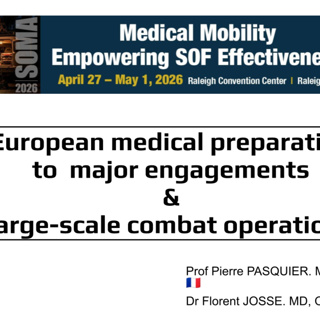
SOMA 26' - European Medical Preparations for Major Engagements and Large-Scale Combat Operations

SOMA 26' - European Medical Preparations for Major Engagements and Large-Scale Combat Operations

Recorded live at SOMA 26Pierre Pasquier (France) and his German counterpart deliver a clear-eyed assessment of how European military medical systems are preparing for large-scale combat operations and...

20 Elo 31min
292-Building Mobile Surgical Capability in Denied Environments

292-Building Mobile Surgical Capability in Denied Environments

In this episode of the Prolonged Field Care Podcast, Dennis sits down with Mitch (U.S. family practice/ER physician) and Augustine (frontline surgeon with five years of experience) to unpack what it a...

17 Elo 41min
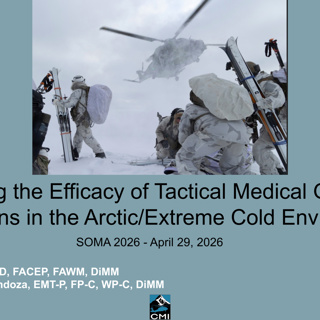
SOMA 26 - Optimizing the Efficacy of Commonly Used Tactical Medical Gear and Medications In The Arctic Extreme Cold Operational Environment

SOMA 26 - Optimizing the Efficacy of Commonly Used Tactical Medical Gear and Medications In The Arctic Extreme Cold Operational Environment

Recorded live at SOMA 26Dr. Emily Johnston (Cascadia Mountain Institute) and SFC Ezequiel Mendoza (Arctic Dustoff, Fairbanks) deliver a hard-hitting, field-validated look at how standard tactical medi...

13 Elo 29min
291 - Pediatric Burns In Prolonged Field Care Assessment, Resuscitation & Airway Management

291 - Pediatric Burns In Prolonged Field Care Assessment, Resuscitation & Airway Management

In this essential episode of the Prolonged Field Care Podcast, Dennis sits down with pediatric intensivist Dr. Sara Bibbens to tackle one of the most challenging and anxiety-inducing scenarios in aust...

10 Elo 30min
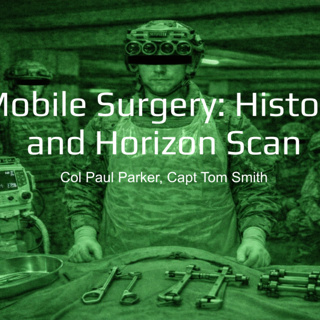
SOMA 26 - A History of Mobile Surgical Teams Role 1-3 and Horizon Scan

SOMA 26 - A History of Mobile Surgical Teams Role 1-3 and Horizon Scan

In this presentation, we take a deep dive into the 300-year history of mobile surgery supporting land campaigns — from Dominique Larrey’s ambulance volantes through the Letterman system, Arnhem, the F...

6 Elo 28min

Suosittua kategoriassa Koulutus

rss-murhan-anatomia
psykopodiaa-podcast
adhd-podi
voi-hyvin-meditaatiot-2
ihminen-tavattavissa-tommy-hellsten-instituutti
rss-vapaudu-voimaasi
rss-niinku-asia-on
rss-arkea-ja-aurinkoa-podcast-espanjasta
rss-uskonto-on-tylsaa
rss-liian-kuuma-peruna
kesken
rss-keskeneraiset-aidit
rahapuhetta
koulu-podcast-2
rss-koira-haudattuna
psykologia
esa-saarinen-filosofia-ja-systeemiajattelu
rss-rahamania
leveli
rss-valo-minussa-2