The Invisible Mark - Who Really Created This?

What happens when artificial intelligence leaves an invisible mark on the things we create?

Anthropic has introduced a new approach to identifying content generated or processed by Claude, using invisible text watermarking and content provenance technologies. At first glance, this sounds like a welcome response to deepfakes, synthetic media, misinformation and the growing difficulty of knowing where digital content actually came from.

But there is a much more complicated question hiding underneath.

If you spend hours researching and writing an article, then ask Claude to correct the grammar, who created it? If a student develops an original argument but uses artificial intelligence to improve the writing, is the assignment artificial intelligence-generated? If a photographer captures an original image but uses artificial intelligence to enhance it, does the technology deserve part of the authorship?

In this episode, I explore Anthropic's move towards marking Claude-generated content and why digital provenance could become an important trust layer for the internet.

There are significant benefits. Journalists could gain another tool for examining suspicious media. Businesses could better understand where artificial intelligence has entered important documents and workflows. Creators may have stronger mechanisms for establishing provenance. Organisations could develop clearer audit trails, while entirely new entrepreneurial opportunities may emerge around authentication, verification, intellectual property and content provenance.

But there are risks.

A watermark can indicate that artificial intelligence touched something without proving that artificial intelligence created the underlying idea. That distinction could have serious consequences for students, writers, employees, job applicants, artists and entrepreneurs if detection becomes confused with authorship.

We could also see an emerging battle between provenance technologies and tools designed to remove their fingerprints.

Perhaps the future will not be divided neatly between "human-generated" and "artificial intelligence-generated" content at all.

Instead, we may need to recognise different levels of contribution: human conceived, artificial intelligence assisted, artificial intelligence transformed, human reviewed and human approved.

Because as artificial intelligence becomes embedded in everyday creation, the important question may no longer be whether a machine touched our work.

It may be something far more fundamental:

What did the human contribute?

Tämä jakso on lisätty Podme-palveluun avoimen RSS-syötteen kautta eikä se ole Podmen omaa tuotantoa. Siksi jakso saattaa sisältää mainontaa.

Jaksot(28)

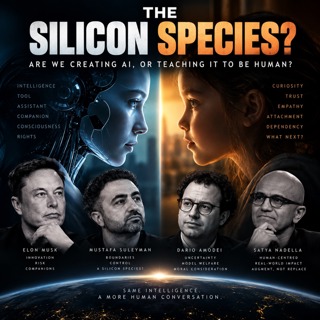
The Silicon Species?

The Silicon Species?

What if the greatest risk from artificial intelligence is not that machines become human, but that humans become convinced they are?In this episode of AI to AGI to ASI, I explore an emerging philosoph...

18 Syys 18min
Ten Percent to Extinction?

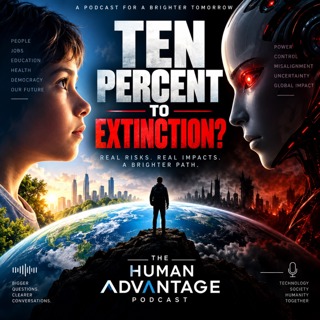
Ten Percent to Extinction?

What does it really mean when a leading artificial intelligence safety researcher says there may be more than a 10% chance that advanced artificial intelligence could cause human extinction within the...

9 Syys 20min
Trump: Rhetoric vs Nuance

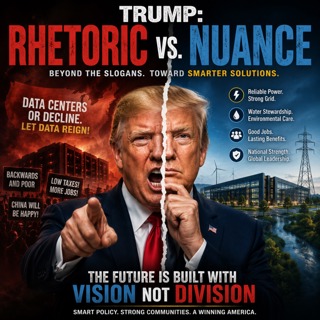
Trump: Rhetoric vs Nuance

Every technological revolution arrives with disruption.Railways reshaped towns. Electricity transformed industry. The internet changed how we communicate and work. Some communities resisted. Others ru...

4 Syys 20min
Gates & Power to Govern

Gates & Power to Govern

Bill Gates says the artificial intelligence era will be turbulent, transformative and potentially dangerous. He argues that the choices humanity makes now could determine whether artificial intelligen...

28 Elo 20min

If Artificial Intelligence Learned to Think From Us, Can It Ever Think Beyond Us?

If Artificial Intelligence Learned to Think From Us, Can It Ever Think Beyond Us?

What happens when the intelligence we created can read almost everything humanity has ever written, and reason across it faster than any human being ever could?This episode explores one of the most pr...

21 Elo 19min

Why People Don't Like AI

Why People Don't Like AI

Mark Zuckerberg has published a sweeping vision for personal superintelligence, arguing that the future of powerful artificial intelligence should belong to everyone, not just governments, corporation...

11 Elo 19min

The Promise and Peril of AI Designing Genomes

The Promise and Peril of AI Designing Genomes

Artificial intelligence has reached a remarkable new milestone. Researchers have successfully used generative AI to design entirely new bacteriophage genomes—viruses that infect bacteria—which were th...

10 Elo 10min