The Northern Expedition

The Northern Expedition

The Nationalists' Northern Expedition began with doubts by their Communist allies.


But it was a military success and quickly Henan and then Hebei provinces were captured. Mikhail Borodin then wanted the armies to move north along the Hankou-Beijing railway line. Instead, Chiang Kai-shek (Jiang Jieshi) preferred to follow the Yangzi River downstream and take the rich provinces controlled by the warlord Sun Chuanfang. That was slower going and the new KMT administration in Wuhan was threatening Chiang's funding and role as Commander-in-Chief.


Chiang supported a purge of Communists in his territories and the crackdown on Communism in Shanghai and other cities caused a split in the Guomindang. Two rival capitals and governments were set up. One in Wuhan was allied with the Communists and Soviets. Chiang's in Nanjing was anti-Communist.


Warlords joined in and the Manchurian General had Li Dazhao killed when the Soviet Embassy was raided. Zhou Enlai barely escaped Shanghai.


The Wuhan administration pushed the military campaign north towards Beijing while trying to stop the peasants from "excesses" in the countryside. Then Wuhan and the Soviet's ally, the Christian Warlord Feng Yuxiang, turned on the Communists and insisted that the Wuhan government purge itself of Communists. The first United Front was over and the split in the Guomindang ended. The crackdown on Communists and the social revolution intensified.


Chiang and his allies were then able to push north and capture Beijing. The Northern Expedition had been a military success. The Nationalists had achieved their long held goal of forming a national government.


Mao Zedong was a survivor of the anti-communist violence and led a small group of rebels in the countryside. They would need to relocate to a mountain hideout. Mao learned a few things during the Northern Expedition. "Political power is obtained from the barrel of the gun." He also realized that taking land from independent cultivators who neither paid rent nor received rent, was a mistake. They were the "swing voters" of the rural revolution. By 1928, he realized he needed those middle peasants as allies.


Chiang Kai-shek had won the battles of the Northern Expedition. But would he win the peace?


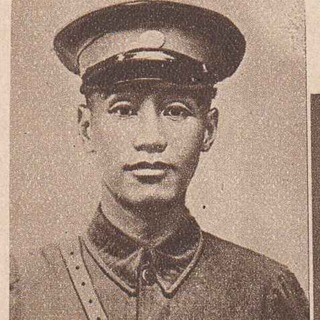
Image: "Chiang Kai-shek in 1927" by quinet is licensed under CC BY 2.0.


You can support this show through Buy me a coffee. https://www.buymeacoffee.com/thechineserevolution


For more information, sources and content see: https://chineserevolution.substack.com


Or enjoy The Chinese Revolution YouTube channel: https://www.youtube.com/channel/UCCOjBYMNC_3xjQXKv6ab9YA?sub_confirmation=1

Hosted on Acast. See acast.com/privacy for more information.

Tämä jakso on lisätty Podme-palveluun avoimen RSS-syötteen kautta eikä se ole Podmen omaa tuotantoa. Siksi jakso saattaa sisältää mainontaa.

Jaksot(67)

The Wang Jingwei Regime: A Puppet Regime in Nanjing

The Wang Jingwei Regime: A Puppet Regime in Nanjing

In 1938, after the Battle of Wuhan, Wang Jingwei left Chongqing and the Republic of China team in Chongqing for Hanoi. He negotiated with Japanese officials and eventually set up a puppet regime know ...

30 Kesä 202428min
Living Under Japanese Occupation

Living Under Japanese Occupation

Japan controlled Taiwan as a colony from 1895 to 1945. During the Second Sino-Japanese War, Chinese language education and publications stopped and the Imperial Subject Movement tried to Japanize resi...

27 Touko 202429min
The Brilliance of Chairman Mao

The Brilliance of Chairman Mao

By the early 1940s, the Communists in Yan’an were feeling relatively secure. The Japanese advance in north China had not reached that area. The Sino-Japanese War and the United Front meant that Chiang...

7 Huhti 202420min
Hope and the Second United Front in Wuhan

Hope and the Second United Front in Wuhan

For ten months in 1938, Hankou in Wuhan was the center of China's Second United Front and defense against the Japanese invasion.Artistic expression, political parties and free speech all blossomed. Ne...

3 Maalis 202426min
The National Palace Museum Treasures During the Second Sino Japanese War

The National Palace Museum Treasures During the Second Sino Japanese War

The treasures of the National Palace Museum, originally the Forbidden City, followed China's path. They escaped the invading Japanese by leaving Beijing, first for Shanghai, then Nanjing and then foll...

12 Helmi 202455min
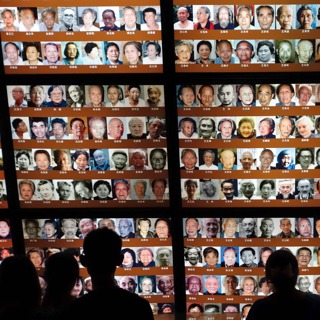
The Beginning of the Second Sino-Japanese War and the Nanjing Massacre

The Beginning of the Second Sino-Japanese War and the Nanjing Massacre

On July 7, 1937, the Second Sino-Japanese War and World War II began with the Marco Polo Bridge Incident. It is also known as the Lugou Bridge Incident. Within days of the small skirmish with 100 Chin...

15 Tammi 202425min
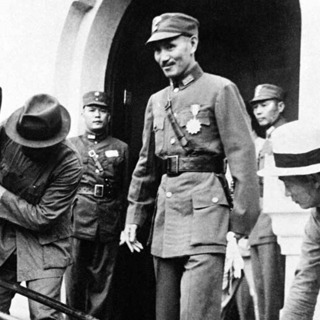
Chiang Kai Shek is Kidnapped

Chiang Kai Shek is Kidnapped

After the Long March, the Chinese Communists were mostly in northern Shaanxi, wanting a breather. Japan had continued its aggression in China after it set up the puppet state of Manchukuo under Empero...

7 Tammi 202416min
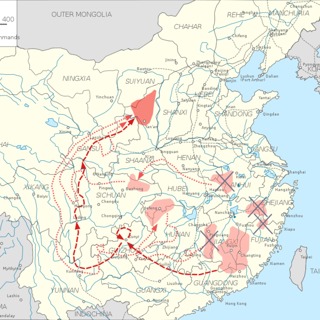
The Long March

The Long March

Zhou Enlai planned in secret the details of the Chinese Communist's escape from the encirclement of the Central Soviet. He identified a Guangdong warlord who preferred to save his troops rather than f...

25 Joulu 202341min

Suosittua kategoriassa Yhteiskunta

olipa-kerran-otsikko
seitseman
siita-on-vaikea-puhua
i-dont-like-mondays
ihme-ja-kumma
hupiklubi
sita
uutiscast
poks
antin-palautepalvelu
kaksi-aitia
mamma-mia
gogin-ja-janin-maailmanhistoria
kolme-kaannekohtaa
yopuolen-tarinoita-2
aikalisa
rss-palmujen-varjoissa
rss-murhan-anatomia
meidan-pitais-puhua
mystista