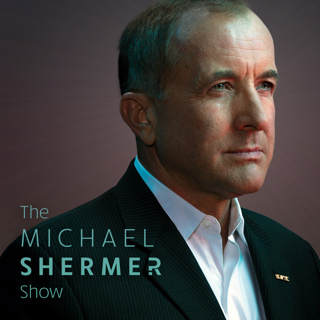
Death and the Search for Meaning in the Afterlife

Death and the Search for Meaning in the Afterlife

For years as an award-winning war reporter, Sebastian Junger traveled to many front lines and frequently put his life at risk. And yet the closest he ever came to death was the summer of 2020 while spending a quiet afternoon at the New England home he shared with his wife and two young children. Crippled by abdominal pain, Junger was rushed to the hospital by ambulance. Once there, he began slipping away. As blackness encroached, he was visited by his dead father, inviting Junger to join him. "It's okay," his father said. "There's nothing to be scared of. I'll take care of you." That was the last thing Junger remembered until he came to the next day when he was told he had suffered a ruptured aneurysm that he should not have survived.

This experience spurred Junger—a confirmed atheist raised by his physicist father to respect the empirical—to undertake a scientific, philosophical, and deeply personal examination of mortality and what happens after we die. How do we begin to process the brutal fact that any of us might perish unexpectedly on what begins as an ordinary day? How do we grapple with phenomena that science may be unable to explain? And what happens to a person, emotionally and spiritually, when forced to reckon with such existential questions?

In My Time of Dying is part medical drama, part searing autobiography, and part rational inquiry into the ultimate unknowable mystery.

Sebastian Junger is The New York Times bestselling author of Tribe, War, Freedom, A Death in Belmont, Fire, and The Perfect Storm, and codirector of the documentary film Restrepo, which was nominated for an Academy Award. He is also the winner of a Peabody Award and the National Magazine Award for Reporting.

Shermer and Junger discuss: his near-death experience and his curent beliefs • NDEs and OBEs • hallucinations • altered states of consciousness • sensed presence effect • sleep paralysis • why there is no "proof" of an afterlife • living forever • belief in life after death • empirical truths vs. mythic truths • longevity and how to live longer.

Tämä jakso on lisätty Podme-palveluun avoimen RSS-syötteen kautta eikä se ole Podmen omaa tuotantoa. Siksi jakso saattaa sisältää mainontaa.

Jaksot(637)

Why We Want to Believe in Aliens and Why We Still Haven't Found Them

Why We Want to Believe in Aliens and Why We Still Haven't Found Them

UFOs were once the stuff of tabloids and conspiracy theories. Today they're the subject of congressional hearings, Pentagon investigations, mainstream news coverage, and a new wave of claims about gov...

25 Elo 1h 13min

Is There a Second Arrow of Time? A New Law of Evolution, Information, and Complexity

Is There a Second Arrow of Time? A New Law of Evolution, Information, and Complexity

Why does the universe produce ever more elaborate forms, from atoms and minerals to cells, organisms, brains, technology, and civilization? The familiar laws of physics can explain much of what happen...

18 Elo 1h 18min

Why Good People Disagree About Right and Wrong

Why Good People Disagree About Right and Wrong

Why do reasonable people disagree so strongly about right and wrong? And why are we so quick to assume that people on the other side of a moral or political issue are irrational, selfish, ignorant, or...

11 Elo 1h 57min

Are We Building a God? AI, Superintelligence, and the Coming Singularity

Are We Building a God? AI, Superintelligence, and the Coming Singularity

Robert Wright joins Michael Shermer to discuss his new book, The God Test: Artificial Intelligence and Our Coming Cosmic Reckoning, and why he thinks the AI revolution may be moving much faster than m...

5 Elo 1h 22min

Can You Trust Wikipedia? Co-Founder Larry Sanger on Wikipedia's Bias and Why He Was Banned

Can You Trust Wikipedia? Co-Founder Larry Sanger on Wikipedia's Bias and Why He Was Banned

Michael Shermer speaks with Wikipedia co-founder Larry Sanger shortly after Sanger was permanently banned from editing the site he helped create. Sanger tells the story of Wikipedia's founding, how it...

30 Heinä 2h 3min

How to Think Clearly About a World in Crisis: Iran, China, Russia, and the West's Economic Pessimism

How to Think Clearly About a World in Crisis: Iran, China, Russia, and the West's Economic Pessimism

Michael Shermer speaks with political scientist Marlene Laruelle about Russia's turbulent transformation during the 1990s and the rise of Vladimir Putin, why the Kremlin so badly misjudged Ukraine, Ch...

18 Heinä 1h 4min

The Truth About Sex Differences (Steve Stewart-Williams)

The Truth About Sex Differences (Steve Stewart-Williams)

How do men and women differ? Where do the differences come from? And how do they shape modern life? Drawing on a century of research and a billion years of evolution, Steve Stewart-Williams explains w...

11 Heinä 55min

America at 250: What Did the Founders Get Right?

America at 250: What Did the Founders Get Right?

Michael Shermer makes the case that the U.S. Founding Fathers were not only steeped in Enlightenment values on which the Declaration of Independence was based, but they were also scientists searching ...

6 Heinä 17min

Suosittua kategoriassa Tiede

rss-poliisin-mieli
tiedekulma-podcast
utelias-mieli
rss-mita-tulisi-tietaa
docemilia
rss-luontopodi-samuel-glassar-tutkii-luonnon-ihmeita
hippokrateen-vastaanotolla
rss-totuuden-liepeilla
rss-duokkari-ekstra
rss-hereilla
filocast-filosofian-perusteet
rss-tiedetta-vai-tarinaa
rss-ylistys-elaimille
rss-kasvikutsut
sotataidon-ytimessa
rss-duodecim-lehti
rss-tervetta-skeptisyytta