Ken Burns on Losing His Mother and The American Buffalo

Ken Burns on Losing His Mother and The American Buffalo

What did a young Ken Burns see in his father's tears that made him want to be a filmmaker?

Ken Burns's mother, Lyla, was sick with cancer for as long as he could remember, and she died when he was 11. Afterward his father, a big movie fan, let him stay up to watch films, and Ken saw him cry at a movie, though he had never cried while she was sick, or at her funeral. In that moment, a few months after his mother's death, Ken knew what he wanted to do. Decades on, his late father-in-law, a psychologist, put it to him plainly: "You wake the dead, make Abraham Lincoln and Jackie Robinson come alive. Who do you think you're really trying to wake up?" Ken calls his work "emotional archaeology," and that thread runs through this whole conversation about The American Buffalo.

In Episode 208, the first of two parts, Jason Rugg hosts with Christian Taylor, and Ken Burns joins them shortly before The American Buffalo premiered on PBS in October 2023. Ken starts with a faded New Yorker cartoon he keeps at home: three men standing in hell, one of them saying his 200-plus screen credits didn't mean a thing. He talks about why a producer's job is to solve a million problems and then a million more, his old mantra to "bite off more than I could chew and then learn how to chew," and the neon sign in his editing room that says "it's complicated." Christian, who says she would not have finished The Girl Who Wore Freedom without his example, shares the hardest choice of her life: pregnant and unmarried, she was looking to have an abortion, then chose to give her child life. That child was her son Hunter, the reason The Girl Who Wore Freedom began. That painful choice, she says, changed her life. Ken answers with what Werner Herzog once told him about truth, and why he believes you can't move an audience unless you're willing to carry some of that emotion yourself.

Then the talk turns to The American Buffalo, the two-part, four-hour film Ken directed, written by Dayton Duncan and produced by Julie Dunfey and Ken. Ken says there were at least 15 million bison at the end of the Civil War, and within 20 years fewer than a thousand were left, most of them in zoos and private herds. Hunters killed them by the millions for hides that became leather belts to drive the machines of the Industrial Revolution, while Native peoples, who had lived with the buffalo for 10,000 years, lost the center of their lives. He calls it the largest slaughter of wildlife in the history of the world. He explains why he waited 30 years to make the film, why it centers Native American experience, and why the people who saved the buffalo, from Theodore Roosevelt and William Hornaday to Charles Goodnight, whose wife asked him to save some, did not all do it for the right reasons. At the heart of it is a question from George Horse Capture Jr. (Aaniiih) that Ken repeats: "Do you need to destroy what you love?" Ken also points to Homecoming, a short film by his consulting producer Julianna Brannum (Comanche), in which Jason Baldes brings buffalo back to tribes as far away as the Menominee in Wisconsin. The DocuView Déjà Vu segment is in Part 2.

WATCH THE FILM

The American Buffalo is streaming on PBS: https://www.pbs.org/kenburns/the-american-buffalo/

In this episode, you'll learn:

  • Why Ken keeps a cartoon about 200 screen credits at home
  • Why Ken sees problems as the job, not the obstacle
  • How losing his mother at 11 led Ken to filmmaking
  • What his father-in-law meant when he asked who Ken was really trying to wake up
  • What Ken means by "emotional archaeology"
  • Why Ken treats people in the past without the arrogance of the present
  • How Werner Herzog described the difference between his truth and Ken's
  • Why a four-hour film about the buffalo waited 30 years
  • How the buffalo went from millions to fewer than a thousand
  • Why The American Buffalo centers Native American voices
  • What the 1913 Buffalo nickel says about romanticizing what we nearly destroyed

CHAPTERS

0:00 The New Yorker Cartoon

2:10 What Ken Burns Taught Christian

7:02 Losing His Mother at 11

14:56 Emotional Truth

18:08 Four Hours on The American Buffalo

21:10 The Largest Wildlife Slaughter in History

27:16 Rescuers for the Wrong Reasons

29:54 Do You Need to Destroy What You Love?

FREQUENTLY ASKED QUESTIONS

How did losing his mother shape Ken Burns's films?

His mother, Lyla, died of cancer when Ken Burns was 11. On Documentary First, he says he decided to become a filmmaker after watching his father, who had not cried at her funeral, cry at a movie. Years later his father-in-law, a psychologist, told him he wakes the dead and asked who he was really trying to wake up. Ken says, "I would not be sitting with you had not my mother died."

What is Ken Burns's The American Buffalo about?

The American Buffalo is a two-part, four-hour film directed by Ken Burns, written by Dayton Duncan and produced by Julie Dunfey and Burns. It first aired on PBS on October 16 and 17, 2023. It follows the North American bison across more than 10,000 years: its place at the center of Native life, its near extinction in the late 1800s, and the many different people who brought it back.

Why did the American buffalo almost go extinct?

Burns says there were at least 15 million bison at the end of the Civil War, and within 20 years fewer than a thousand were left. Hunters killed them by the millions for their hides, which became leather belts to run industrial machines, and left the meat to rot. The slaughter also devastated the Native peoples who depended on the buffalo. Ken calls it the largest slaughter of wildlife in the history of the world.

What does Ken Burns mean by "emotional archaeology"?

Burns describes his work as "emotional archaeology": not just excavating dry dates and facts, but recovering the emotions people in the past lived with. He says nostalgia and sentimentality are the enemy, and that we should meet people from the past without the arrogance of assuming we know more than they did. On Documentary First, he connects the idea to losing his mother as a boy.

DOCUVIEW DÉJÀ VU PICKS

Ken's picks are in Part 2: https://www.youtube.com/watch?v=0s95VRNZCmc

LISTEN AND FOLLOW

Listen and subscribe wherever you get podcasts: https://pod.fo/e/4a8000

Watch on YouTube: https://www.youtube.com/@documentaryfirst

SUPPORT THE SHOW

Join our community on Patreon: https://www.patreon.com/c/DocumentaryFirst

CONNECT WITH DOCUMENTARY FIRST

All platforms: https://linktr.ee/doc1st

Christian Taylor on LinkedIn: https://www.linkedin.com/in/meetchristiantaylor

ABOUT THE GUEST

Ken Burns

Documentary Filmmaker

Ken Burns was born in Brooklyn in 1953 and has been making documentaries since Brooklyn Bridge, made in 1981 and nominated for an Academy Award. His films for PBS include The Civil War, Baseball, Jazz, The War, The National Parks: America's Best Idea, Prohibition, The Roosevelts: An Intimate History, The Vietnam War, Country Music, The U.S. and the Holocaust and The American Buffalo. He has lived and worked in a small town in New Hampshire for more than four decades.

Website: https://kenburns.com

Facebook: https://www.facebook.com/kenburnspbs

X: https://twitter.com/KenBurns

YouTube: https://www.youtube.com/user/kenburnspbs

ABOUT DOCUMENTARY FIRST

Documentary First is a weekly podcast about the people behind documentaries and how the work changed them. Host Christian Taylor, director of the award-winning The Girl Who Wore Freedom, talks with filmmakers from Ken Burns to first-time directors. Listen Notes ranks the show in the top 5% of all podcasts worldwide.

THE KEN BURNS EPISODES

Tämä jakso on lisätty Podme-palveluun avoimen RSS-syötteen kautta eikä se ole Podmen omaa tuotantoa. Siksi jakso saattaa sisältää mainontaa.

Jaksot(298)

The Velveteen Rabbit and Old Home Movies: What Is Real?

The Velveteen Rabbit and Old Home Movies: What Is Real?

What does The Velveteen Rabbit, a 1922 children's book about a stuffed toy, have to do with old home movies and AI?In Margery Williams' classic story, an old toy called the Skin Horse tells a stuffed ...

15 Loka 16min
Archival Footage: Why Use Home Movies?

Archival Footage: Why Use Home Movies?

What happens to a family's home movies when no one knows what to do with them?Phil Maher was a software engineer looking for a sense of purpose when he started watching his grandfather's family reels ...

8 Loka 49min
How Do You Get a Documentary Made? Ask the Woman Who Co-Runs RKO

How Do You Get a Documentary Made? Ask the Woman Who Co-Runs RKO

Do you have a documentary, or do you have a Wikipedia entry?Somebody decides whether your documentary gets made. Sophia Dilley is one of those people. She runs Concord Originals, the division behind S...

10 Syys 53min
Beyond Banners: How to Make a Documentary With No Film School

Beyond Banners: How to Make a Documentary With No Film School

Who finishes your film if you can't?Andre N. Jackson had never made a film. He had twenty years in technology and security, an idea that arrived while he was sitting in a barber's chair, and no way in...

21 Elo 40min
Why Can't Your Documentary Find an Audience? l Deep Dive on Ep. 284

Why Can't Your Documentary Find an Audience? l Deep Dive on Ep. 284

When did your audience stop being people and become a number?Most independent films and podcasts do not fail because the work is bad. They fail because no one ever felt like they belonged to them. Thi...

13 Elo 13min
Ep. 284 I How to Fund a Documentary Without the Industry

Ep. 284 I How to Fund a Documentary Without the Industry

How do you fund a documentary when the whole industry says no?How do you fund a documentary without film funds, grants, or a commissioning broadcaster, and still reach a huge audience? Dutch filmmaker...

6 Elo 51min
Who Believed in You First?

Who Believed in You First?

Who believed in you before you could believe in yourself? In this Deep Dive, documentary filmmaker Christian Taylor makes a quiet case that we rarely overcome self-doubt on our own. Almost no one fini...

30 Heinä 13min
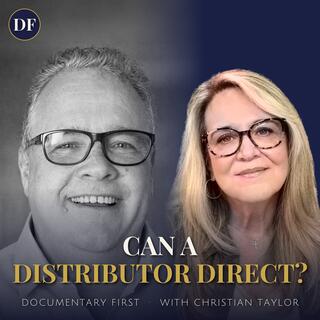
Cold War in Philly: Joe Amodei Directs His First Documentary

Cold War in Philly: Joe Amodei Directs His First Documentary

What happens when a film distributor with more than 40 years in the business finally makes his own documentary?Joe Amodei grew up in Philadelphia watching the Flyers with his parents, sisters and brot...

23 Heinä 54min
Suosittua kategoriassa Yhteiskunta

olipa-kerran-otsikko
sita
seitseman
siita-on-vaikea-puhua
i-dont-like-mondays
hupiklubi
poks
download
uutiscast
antin-palautepalvelu
mamma-mia
yopuolen-tarinoita-2
kaksi-aitia
rss-murhan-anatomia
kolme-kaannekohtaa
vallattomat
aikalisa
rss-palmujen-varjoissa
gogin-ja-janin-maailmanhistoria
mystista