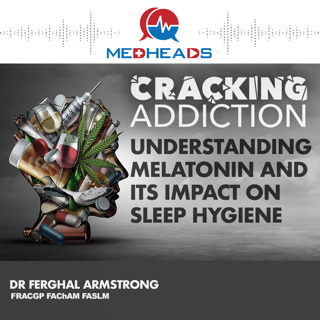
Understanding Melatonin and Its Impact on Sleep Hygiene

Understanding Melatonin and Its Impact on Sleep Hygiene

Dr Ferghal Armstrong and Dr Richard Bradlow explore the significance of melatonin in sleep. Melatonin, a neurotransmitter produced by the pineal gland, plays a crucial role in helping you fall asleep. The discussion touches on various aspects of melatonin including its production, function, and how it can be optimised for better sleep. Ferghal and Richard also dive into the intricacies of sleep hygiene, shedding light on actionable steps that anyone can take to enhance their sleep quality.

Learning outcomes from this episode include understanding the pineal gland's role in melatonin production and the significance of melatonin in the sleep-wake cycle. Richard explains that melatonin is not just any neurotransmitter but a pivotal player in beginning the sleep process. You'll learn why blue light suppresses melatonin production and why it’s crucial to limit your exposure to screens before bedtime. You'll also discover why the body's natural rhythms dictate that sleep hygiene actually starts in the morning, highlighting the importance of light exposure and physical activity.


Key points raised include the ineffectiveness of exogenous melatonin in improving sleep quality, often proving to be more of a placebo than a reliable solution. Ferghal and Richard discuss the importance of natural light exposure, particularly in the morning, to help suppress melatonin and kickstart the day. They also touch on the benefits of morning exercise and even cold showers to optimise wakefulness.


### Learning Outcomes


1. **Understanding Pineal Gland and Melatonin:**


The pineal gland’s role in melatonin production is essential for sleep. Melatonin, a neurotransmitter, is key in initiating sleep but does not keep you asleep. Richard elaborates that melatonin production is sensitive to light exposure, particularly blue light, which can suppress its release, making it harder to fall asleep. Therefore, taking steps to manage light exposure, especially in the evening, can significantly impact your ability to sleep.


2. **Ineffectiveness of Exogenous Melatonin:**


Exogenous melatonin does not significantly improve sleep; often, it is no more effective than a placebo. Ferghal highlights the variability in melatonin products, especially those purchased online, and questions their reliability. This revelation underscores the importance of turning to prescribed melatonin when necessary for accurate dosing. The discussion serves as a cautionary tale about the limited benefits and potential risks of self-medicating with melatonin.


3. **Role of Natural Light Exposure:**


Light exposure, particularly in the morning, is crucial in maintaining your body's circadian rhythm. Ferghal stresses the importance of getting outside and absorbing natural light to suppress melatonin and signal your body that it's time to wake up. Even on cloudy days, the light outdoors significantly surpasses indoor lighting in intensity. This practice can prepare your body for a more restful night by maintaining a healthy sleep-wake cycle.


4. **Importance of Physical Exercise:**


Engaging in physical activity is another vital component of sleep hygiene. Richard explains that exercise, especially when done in the morning, not only benefits your overall health but also helps maintain a healthy sleep-wake cycle. While some traditionally advise against exercising close to bedtime, studies show it does not necessarily affect sleep quality. Including exercise in your daily routine, even late in the day, can support better sleep habits.


### Actionable Takeaways


1. **Managing Light Exposure:**


Begin your sleep hygiene routine in the morning by exposing yourself to natural light. Avoid screens with blue light at least one to two hours before bedtime to prevent melatonin...

Jaksot(238)

Dopamine, Relapse, and Recovery: Why Addiction Needs Long-Term Management

Dopamine, Relapse, and Recovery: Why Addiction Needs Long-Term Management

A lot of people still think addiction recovery is just about willpower.But addiction neuroscience tells a different story: dopamine, the reward system, and relapse risk all help explain why recovery o...

25 Maalis 5min

Why You Can Be Detoxed and Still Addicted

Why You Can Be Detoxed and Still Addicted

Addiction neuroscience, dopamine, cravings: detox ends withdrawal, but it does not end addiction.The MythA common myth in addiction recovery is that once detox is over, the problem is solved. Many peo...

18 Maalis 5min

Relapse Happens to Everyone: Here's the Science Why - Addiction Basics 06

Relapse Happens to Everyone: Here's the Science Why - Addiction Basics 06

Dr. Fergal Armstrong reframes relapse in addiction, explaining why it's not a personal failure but a common part of the recovery journey, comparable to chronic illnesses. Understanding the neuroscienc...

11 Maalis 5min

The Science of Withdrawal: What's Actually Happening? - Addiction Basics #5

The Science of Withdrawal: What's Actually Happening? - Addiction Basics #5

Withdrawal is one of the most feared parts of addiction recovery.But neuroscience shows something important:Withdrawal isn’t a failure of willpower — it’s the brain restoring balance after long-term c...

4 Maalis 5min

Addiction vs Dependence vs Tolerance: The Critical Medical Difference

Addiction vs Dependence vs Tolerance: The Critical Medical Difference

🚨 TOLERANCE ≠ ADDICTION 🚨Most people — even healthcare professionals — use these terms incorrectly.And that confusion is hurting patients.In this episode, we break down:🧠 The real definition of add...

25 Helmi 5min

Why Buprenorphine Is Safer Than Full Opioid Agonists

Why Buprenorphine Is Safer Than Full Opioid Agonists

Most people think methadone is the only real option for opioid addiction.Wrong.Buprenorphine — especially long-acting injectable depot — is flipping the entire system upside down.No daily pharmacy vis...

23 Helmi 28min

How Cravings Work: Limbic System vs Prefrontal Cortex - Addiction Basics EP3

How Cravings Work: Limbic System vs Prefrontal Cortex - Addiction Basics EP3

Addiction neuroscience explains why wanting to quit isn’t the same as being able to quit. Dopamine reshapes the brain’s reward system.In Episode 3 of Addiction Basics, we tackle one of the most painfu...

18 Helmi 6min

Dopamine and Addiction: The Science of Cravings - Addiction Basics EP2

Dopamine and Addiction: The Science of Cravings - Addiction Basics EP2

Addiction neuroscience explained. Dopamine, cravings, brain recovery, and neuroplasticity — backed by research.If you’ve ever wondered how addiction works in the brain, this is the science most people...

12 Helmi 6min

Suosittua kategoriassa Terveys ja hyvinvointi

unicast
rss-hanna-tikander
tiedenaiset-podcast
psykopodiaa-podcast
voi-hyvin-meditaatiot-2
rss-pitaisko-erota
rss-kuumilla-aalloilla
vakeva-elama-viisaampi-mieli-vahvempi-keho
rss-narsisti
junnut-pelissa
rss-pt-paahtio
puhu-muru
katilon-kahvitunti
rss-kyykkya-ja-kuoharia
meditaatiot-suomeksi
paritellen
fitnessvastaanotto
rss-sanelunpurku-podcast
rss-seuraava-potilas
terapiassa