
Gerald Ashley & Rory Sutherland on Prosilience

Gerald Ashley & Rory Sutherland on Prosilience

What is Prosilience, and how can organisations ensure their people provide it?

That’s where the discussion between my guests on this episode, Gerald Ashley and Rory Sutherland, begins. Where it goes from there, is a joyous adventure in which two great thinkers explore a range of Human Risk related topics.

* Listener Warning: the episode contains adult language *

This episode is the 100th in the Human Risk podcast series and is a continuation of a discussion which began in the 99th episode. I recommend listening to that first before exploring this one.

You'll find my earlier discussion with Rory here: https://www.podpage.com/the-human-risk-podcast/rory-sutherland-on-compliance/
and Gerald here: https://www.podpage.com/the-human-risk-podcast/gerald-ashley-on-uncertainty/

As with the previous episode, I’m providing more detailed show notes given the breadth and depth of issues covered.

05:18 Rory refers to Seeing Like A State by James C Scott. More on that here: https://en.wikipedia.org/wiki/Seeing_Like_a_State

05:54 Gerald talks about the metrics used to measure Soviet bicycle manufacturing. This article doesn’t feature bicycles, but covers the idea and features a wonderful cartoon from a Soviet magazine: https://econlife.com/2015/08/the-incentives-that-metrics-create/

09:32 Rory talks about his appearance on Bloomberg TV. You can watch that here: https://www.bloomberg.com/news/videos/2015-03-25/advertisers-becoming-too-obsessed-with-tech-sutherland

11:50 Rory mentions Rod Liddell in the context of a story about the BBC’s travel policy. To learn more about Rod: https://en.wikipedia.org/wiki/Rod_Liddle

12:34 Gerald mentions Peter Turchin, who Rory explains is a Cliodynamicist. You’ll find Peter’s website here: http://peterturchin.com/ and a guide to Cliodynamics one that website here: http://peterturchin.com/cliodynamics/

14:10 A rare intervention by me to mention David Graber’s book Bullshit Jobs - https://en.wikipedia.org/wiki/Bullshit_Jobs

14:30 Rory refers to 14th Century Middle Eastern Historian Ibn Khaldoun - https://www.britannica.com/biography/Ibn-Khaldun

15:04 Gerald talks about The Great Wave by David Hackett Fischer - https://en.wikipedia.org/wiki/The_Great_Wave_(book)

18:25 Rory talks about Daniel Kahneman’s research into risk appetites of CEOs and division heads. You can read more about that in this HBR article: https://hbr.org/2020/03/your-company-is-too-risk-averse

19:40 Gerald talks about the Lockheed Martin Skunkworks. You can read about the history of that unit here https://www.lockheedmartin.com/en-us/news/features/history/skunk-works.html and its current role here: https://www.lockheedmartin.com/en-us/who-we-are/business-areas/aeronautics/skunkworks.html

22:59 Gerald talks about Nudgestock, the annual Behavioural Science festival hosted by Rory. You can read about that here: https://www.nudgestock.co.uk/
The presentation he refers to is by Jules Goddard called The Fatal Bias and can be seen here: https://www.youtube.com/watch?v=oNlzl37GLdA

24:46 Rory highlights the story of mathematician’s Abraham Wald intervention in the Second World War. It is explained in this excerpt from Jordan Ellenberg’s excellent How Not To Be Wrong: https://medium.com/@penguinpress/an-excerpt-from-how-not-to-be-wrong-by-jordan-ellenberg-664e708cfc3d

25:56 Rory talks about IBM’s Thomas Watson and his desire to have Wild Geese. In actual fact, Watson talked about Wild Ducks (https://www.mbiconcepts.com/watson-sr-and-wild-ducks.html). Interestingly, the Duck story actually comes from an original fable by Søren Kierkegaard about a Wild Goose. For some reason Watson preferred Ducks! You can read the Kierkegaard story here: https://www.maxelon.co.uk/2015/01/domestic-geese/

26:18 Rory refers to James C Scott’s idea of an Anarchist’s Squint. You can read more about that in his collection of essays called Two Cheers for Anarchism: https://theanarchistlibrary.org/library/james-c-scott-two-cheers-for-anarchism

32:33 Gerald talks about how the British government sold Rolls Royce engines to the Russian government. You can read about that here: https://nationalinterest.org/blog/the-buzz/how-british-turbojet-allowed-russias-mig-15-fight-the-air-26385

32:50 Rory explains how penicillin was passed by America to supposedly neutral countries during World War Two, against British instructions. It ended up saving Adolf Hitler’s life after a bomb plot on 20th July 1940. More on the research behind that here: https://www.sheffield.ac.uk/news/nr/154-1.175018

40:05 Rory references British supergroup The Travelling Wilburys. Find out who they are here: https://en.wikipedia.org/wiki/Traveling_Wilburys. You can hear them on Spotify here: https://open.spotify.com/artist/2hO4YtXUFJiUYS2uYFvHNK?si=eqMFhifpSIai03kZPFHOVQ

Tämä jakso on lisätty Podme-palveluun avoimen RSS-syötteen kautta eikä se ole Podmen omaa tuotantoa. Siksi jakso saattaa sisältää mainontaa.

Jaksot(368)

Sarah Aalborg on Secure by Choice

Sarah Aalborg on Secure by Choice

What do people have to do with cybersecurity?  A lot. As with other fields of human risk, it’s people that are typically the root cause of problems in the cybersecurity world.  Which is where my guest...

11 Touko 20251h 4min
Human Risk: Behind The Scenes

Human Risk: Behind The Scenes

What really happens Behind The Scenes at Human Risk? 📝 Episode SummaryIn this special ‘takeover’ episode of the show, I’m taking you behind the scenes of my work at Human Risk. Because interviewing m...

3 Touko 20251h 32min
James Victore on Being Weird

James Victore on Being Weird

What's the most important thing we can all do to be happy? According to my guest on this episode, it's embracing the thing that made us weird as kids.  🎙️ Episode Summary On this episode, I’m joined ...

27 Huhti 20251h 1min

Anne Sebba on The Women's Orchestra of Auschwitz

Anne Sebba on The Women's Orchestra of Auschwitz

Why was there a women’s orchestra in Auschwitz, and what can that help us understand human resilience? In this deeply moving episode of the show, I speak with Anne Sebba — renowned biographer, histori...

18 Huhti 20251h 6min
Matthew McNerney on Museum Design

Matthew McNerney on Museum Design

What makes people want to go to museum? How can they ensure they still remain relevant? I spend a lot of my time in museums.  They inspire me, inform me and put me into mindsets I wouldn't otherwise b...

12 Huhti 20251h 1min
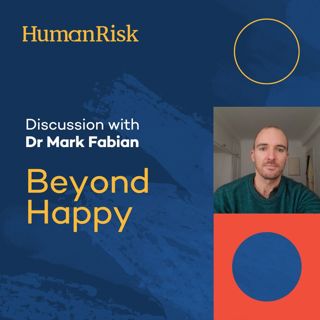
Dr Mark Fabian on Beyond Happy

Dr Mark Fabian on Beyond Happy

What if the problem isn’t that you’re not happy enough — but that you’re chasing the wrong kind of happiness altogether?Show SummaryOn this episode  I’m joined by Dr Mark Fabian, Associate Professor o...

5 Huhti 20251h 4min
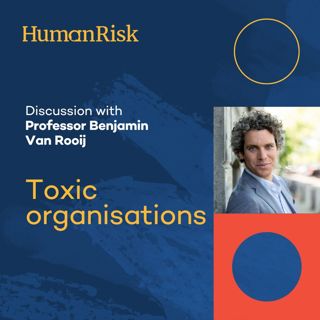
Professor Benjamin Van Rooij on Toxic Organisations

Professor Benjamin Van Rooij on Toxic Organisations

What makes an organisation toxic, and how can we spot the signs before it’s too late? What are the common traits that make seemingly unrelated organisations, ranging from the Catholic Church to corpor...

29 Maalis 20251h 2min

Amy Watson on Violence Against Women

Amy Watson on Violence Against Women

How can we prevent violence against women?  And what role do men who don't engage in violence, have to play?This episode tackles a serious, but important topic.  Violence against women affects million...

1 Maalis 20251h 30min

Suosittua kategoriassa Tiede

rss-poliisin-mieli
tiedekulma-podcast
rss-mita-tulisi-tietaa
docemilia
filocast-filosofian-perusteet
rss-tiedetta-vai-tarinaa
rss-lapsuuden-rakentajat-podcast
sotataidon-ytimessa
menologeja-tutkimusmatka-vaihdevuosiin
rss-duodecim-lehti
rss-lihavuudesta-podcast
radio-antro
rss-bios-podcast
rss-metsantuntijat-podcast
rss-luontopodi-samuel-glassar-tutkii-luonnon-ihmeita