Gerald Ashley & Rory Sutherland on Prosilience

Gerald Ashley & Rory Sutherland on Prosilience

What is Prosilience, and how can organisations ensure their people provide it?

That’s where the discussion between my guests on this episode, Gerald Ashley and Rory Sutherland, begins. Where it goes from there, is a joyous adventure in which two great thinkers explore a range of Human Risk related topics.

* Listener Warning: the episode contains adult language *

This episode is the 100th in the Human Risk podcast series and is a continuation of a discussion which began in the 99th episode. I recommend listening to that first before exploring this one.

You'll find my earlier discussion with Rory here: https://www.podpage.com/the-human-risk-podcast/rory-sutherland-on-compliance/
and Gerald here: https://www.podpage.com/the-human-risk-podcast/gerald-ashley-on-uncertainty/

As with the previous episode, I’m providing more detailed show notes given the breadth and depth of issues covered.

05:18 Rory refers to Seeing Like A State by James C Scott. More on that here: https://en.wikipedia.org/wiki/Seeing_Like_a_State

05:54 Gerald talks about the metrics used to measure Soviet bicycle manufacturing. This article doesn’t feature bicycles, but covers the idea and features a wonderful cartoon from a Soviet magazine: https://econlife.com/2015/08/the-incentives-that-metrics-create/

09:32 Rory talks about his appearance on Bloomberg TV. You can watch that here: https://www.bloomberg.com/news/videos/2015-03-25/advertisers-becoming-too-obsessed-with-tech-sutherland

11:50 Rory mentions Rod Liddell in the context of a story about the BBC’s travel policy. To learn more about Rod: https://en.wikipedia.org/wiki/Rod_Liddle

12:34 Gerald mentions Peter Turchin, who Rory explains is a Cliodynamicist. You’ll find Peter’s website here: http://peterturchin.com/ and a guide to Cliodynamics one that website here: http://peterturchin.com/cliodynamics/

14:10 A rare intervention by me to mention David Graber’s book Bullshit Jobs - https://en.wikipedia.org/wiki/Bullshit_Jobs

14:30 Rory refers to 14th Century Middle Eastern Historian Ibn Khaldoun - https://www.britannica.com/biography/Ibn-Khaldun

15:04 Gerald talks about The Great Wave by David Hackett Fischer - https://en.wikipedia.org/wiki/The_Great_Wave_(book)

18:25 Rory talks about Daniel Kahneman’s research into risk appetites of CEOs and division heads. You can read more about that in this HBR article: https://hbr.org/2020/03/your-company-is-too-risk-averse

19:40 Gerald talks about the Lockheed Martin Skunkworks. You can read about the history of that unit here https://www.lockheedmartin.com/en-us/news/features/history/skunk-works.html and its current role here: https://www.lockheedmartin.com/en-us/who-we-are/business-areas/aeronautics/skunkworks.html

22:59 Gerald talks about Nudgestock, the annual Behavioural Science festival hosted by Rory. You can read about that here: https://www.nudgestock.co.uk/
The presentation he refers to is by Jules Goddard called The Fatal Bias and can be seen here: https://www.youtube.com/watch?v=oNlzl37GLdA

24:46 Rory highlights the story of mathematician’s Abraham Wald intervention in the Second World War. It is explained in this excerpt from Jordan Ellenberg’s excellent How Not To Be Wrong: https://medium.com/@penguinpress/an-excerpt-from-how-not-to-be-wrong-by-jordan-ellenberg-664e708cfc3d

25:56 Rory talks about IBM’s Thomas Watson and his desire to have Wild Geese. In actual fact, Watson talked about Wild Ducks (https://www.mbiconcepts.com/watson-sr-and-wild-ducks.html). Interestingly, the Duck story actually comes from an original fable by Søren Kierkegaard about a Wild Goose. For some reason Watson preferred Ducks! You can read the Kierkegaard story here: https://www.maxelon.co.uk/2015/01/domestic-geese/

26:18 Rory refers to James C Scott’s idea of an Anarchist’s Squint. You can read more about that in his collection of essays called Two Cheers for Anarchism: https://theanarchistlibrary.org/library/james-c-scott-two-cheers-for-anarchism

32:33 Gerald talks about how the British government sold Rolls Royce engines to the Russian government. You can read about that here: https://nationalinterest.org/blog/the-buzz/how-british-turbojet-allowed-russias-mig-15-fight-the-air-26385

32:50 Rory explains how penicillin was passed by America to supposedly neutral countries during World War Two, against British instructions. It ended up saving Adolf Hitler’s life after a bomb plot on 20th July 1940. More on the research behind that here: https://www.sheffield.ac.uk/news/nr/154-1.175018

40:05 Rory references British supergroup The Travelling Wilburys. Find out who they are here: https://en.wikipedia.org/wiki/Traveling_Wilburys. You can hear them on Spotify here: https://open.spotify.com/artist/2hO4YtXUFJiUYS2uYFvHNK?si=eqMFhifpSIai03kZPFHOVQ

Tämä jakso on lisätty Podme-palveluun avoimen RSS-syötteen kautta eikä se ole Podmen omaa tuotantoa. Siksi jakso saattaa sisältää mainontaa.

Jaksot(368)

Giles Oakley on The Art & Science of Tea

Giles Oakley on The Art & Science of Tea

What does tea have to do with human behaviour? A lot more than you might think.  On this epusoed, I'm exploring one of the world's most popular drinks and what we can learn from it.SummaryMy guest is ...

15 Helmi 202549min

Pav Gill on Whistleblowing that works

Pav Gill on Whistleblowing that works

How do we create systems that encourage whistleblowing without incentivizing malicious reporting? Should we reward whistleblowers financially? Why is closure important, both for whistleblowers and the...

1 Helmi 20251h 11min

Dr Hemma Lomax on The Edge of Possibility

Dr Hemma Lomax on The Edge of Possibility

What is the edge of possibility and how can storytelling help us to find it?  My guest isn't a storyteller — she's a lawyer, working in compliance — but she's got some fascinating insights to share ab...

25 Tammi 20251h 3min
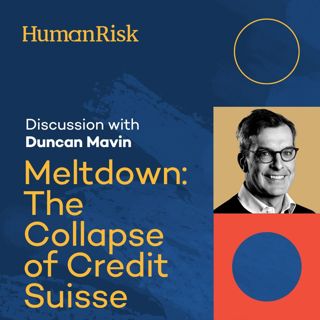
Duncan Mavin on Meltdown: The Collapse of Credit Suisse

Duncan Mavin on Meltdown: The Collapse of Credit Suisse

How does a major global bank keep surviving crises; until it doesn't?Episode SummaryOn this episode, I’m joined by Duncan Mavin, author of Meltdown: Scandal, Sleaze, and the Collapse of Credit Suisse....

12 Tammi 20251h 1min

Kit Holden on Played in Germany -  a footballing journey through a nation's soul

Kit Holden on Played in Germany -  a footballing journey through a nation's soul

What can we learn about a country from its favourite sport?  A lot. Particularly when that country has a history and culture like Germany.  Which is what I'm exploring on this episode.Even if you're n...

5 Tammi 202556min
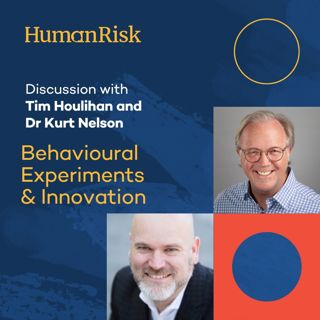
Tim Houlihan & Dr Kurt Nelson on Behavioural Experiments, Podcasting, and Innovation

Tim Houlihan & Dr Kurt Nelson on Behavioural Experiments, Podcasting, and Innovation

What role does experimentation play in making big life and creative decisions? What lessons can podcasters teach us about effective communication in business?Show Summary To answer these questions, in...

27 Joulu 20241h 32min
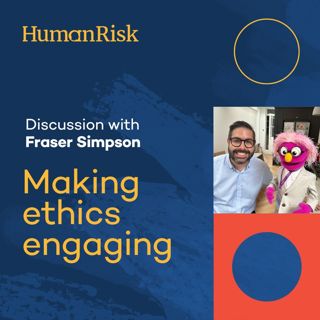
Fraser Simpson on Making Ethics Engaging

Fraser Simpson on Making Ethics Engaging

What does a pink puppet called Connie have to do with ethics? More than you might think. On this episode, I'm speaking with a lawyer, whose innovative approach to getting employees to engage in ethics...

21 Joulu 20241h 38min
Jono Hey on Sketchplanations

Jono Hey on Sketchplanations

Can you distill a complex concept into a single sketch? Jono Hey can and on this episode, he joins me to talk about Sketchplanations —a project that explains the world, one sketch at a time.SummaryI’v...

6 Joulu 20241h 7min

Suosittua kategoriassa Tiede

rss-poliisin-mieli
tiedekulma-podcast
rss-mita-tulisi-tietaa
docemilia
filocast-filosofian-perusteet
rss-tiedetta-vai-tarinaa
rss-lapsuuden-rakentajat-podcast
sotataidon-ytimessa
menologeja-tutkimusmatka-vaihdevuosiin
rss-duodecim-lehti
rss-lihavuudesta-podcast
radio-antro
rss-bios-podcast
rss-metsantuntijat-podcast
rss-luontopodi-samuel-glassar-tutkii-luonnon-ihmeita