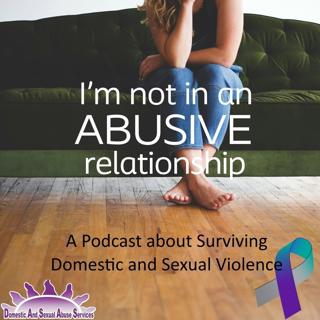
You're Not Crazy; You Were Abused
Many survivors look back on an abusive relationship, domestic and sexual abuse alike, and ask some variation of "Am I crazy? Was I really abused?" This can come up because the abusive person may call their reality and their sanity into question. It may come up because their abuse doesn't look like what they thought abuse would look like, or wasn't as "severe" as someone else's journey. This question comes for many reasons. If you've asked this, then this episode is for you. ——————————— If you need resources or help in any way, call our 24 hour hotline at 800-828-2023 or visit www.DASASMI.org. Subscribe for a new episode each week. We publish every Wednesday morning at 8:00am. Subscribe to the weekly email newsletter here or at our website here. We appreciate your help in spreading the message of hope. You can help us reach more listeners by leaving a written review on Apple Podcasts or where you listen, and by sharing on social media.
21 Loka 202023min
Remember My Name - 2020 Domestic Violence In Memoriam
At domestic violence vigils across the country, we remember those who did not survive their fight for life. These are the names of the victims of domestic violence in southwest Michigan for the 2019 Domestic Violence Awareness vigils. The names included on this list are those of women, children, and men who died starting in 1971 through this year. The women, children, and men listed all died because of the determination and desperation of one individual to maintain power and control over another. Please help us remember those whose lives were taken and to emphasize the need for continued efforts to stop domestic and sexual violence. ——————————— If you need resources or help in any way, call our 24 hour hotline at 800-828-2023 or visit www.DASASMI.org. Subscribe for a new episode each week. We publish every Wednesday morning at 8:00am. Subscribe to the weekly email newsletter here or at our website here. We appreciate your help in spreading the message of hope. You can help us reach more listeners by leaving a written review on Apple Podcasts or where you listen, and by sharing on social media.
14 Loka 202017min
Frequently Asked Questions: Where was God When I was Being Abused?
Whether you're a person of faith or not, going through abuse often brings up the question, "Where was God when I was being abused?" It's a big question and one the staff and volunteers at DASAS have heard over the years. In this episode, Claudia conducts a panel with Krista DeBoer, Elizabeth Alderson and Ellen Higgins. While DASAS is not a faith-based organization and we turn no one away because of their beliefs, many of us in the organization bring some kind of faith to our work. This question hits us all deeply and in different ways. We hope this vulnerable conversation helps you confront those questions and those feelings. ——————————— If you need resources or help in any way, call our 24 hour hotline at 800-828-2023 or visit www.DASASMI.org. Subscribe for a new episode each week. We publish every Wednesday morning at 8:00am. Subscribe to the weekly email newsletter here or at our website here. We appreciate your help in spreading the message of hope. You can help us reach more listeners by leaving a written review on Apple Podcasts or where you listen, and by sharing on social media.
7 Loka 202033min
Survivor Story - Tracey Shares Her Story of Surviving Spiritual Abuse
What is spiritual abuse? Spiritual abuse (or religious abuse) is abuse administered under the guise of faith or religion. This can include harassment or humiliation, which may result in psychological trauma. Spiritual abuse may also include misuse of religion for selfish, secular, or ideological ends such as the abuse of a clerical position. It is weaponizing faith to exercise power and control over another person, usually from a position of power or leadership. Tracey is a survivor of spiritual abuse. On this episode she shares her story, red flags to look out for and her story on her escape from abuse, her healing and even forgiveness for those who subjected her to this spiritual abuse. Spiritual abuse is not limited to a certain religion or denomination. Any person, of any belief system, is capable of perpetrating spiritual abuse, just as anyone can be the victim of it. Signs of spiritual abuse between intimate partners include when an abusive partner: ridicules or insults the other person’s religious or spiritual beliefs prevents the other partner from practicing their religious or spiritual beliefs uses their partner’s religious or spiritual beliefs to manipulate or shame them forces the children to be raised in a faith that the other partner has not agreed to uses religious texts or beliefs to minimize or rationalize abusive behaviors (such as physical, financial, emotional or sexual abuse/marital rape) Spiritual abuse is no less harmful or difficult to endure than any other kind of abuse, as a person’s spiritual life is deeply personal. However, it can be very difficult to identify, as many victims may not recognize they are being abused. In addition, the abusive partner may claim that any challenge to the abuse is an assault on their own religious freedom. Regardless of either partner’s religious or spiritual beliefs, abuse of any kind is never acceptable or justified. ——————————— If you need resources or help in any way, call our 24 hour hotline at 800-828-2023 or visit www.DASASMI.org. Subscribe for a new episode each week. We publish every Wednesday morning at 8:00am. Subscribe to the weekly email newsletter here or at our website here. We appreciate your help in spreading the message of hope. You can help us reach more listeners by leaving a written review on Apple Podcasts or where you listen, and by sharing on social media.
30 Syys 202035min
Attorney Elizabeth McCree - Representing Young Victims of Abuse
Attorney Elizabeth McCree, of Benton Harbor, Michigan, fiercely defends children in the court system. She fights for their rights in many areas, including abuse cases. She joins Dan to talk about what it means to be a guardian ad litem, how we can help and much more. Read the Benton-Michiana Spirit article here that inspired the discussion. ——————————— If you need resources or help in any way, call our 24 hour hotline at 800-828-2023 or visit www.DASASMI.org. Subscribe for a new episode each week. We publish every Wednesday morning at 8:00am. Subscribe to the weekly email newsletter here or at our website here. We appreciate your help in spreading the message of hope. You can help us reach more listeners by leaving a written review on Apple Podcasts or where you listen, and by sharing on social media.
23 Syys 202043min
Survivor Story - Kevin McNeil Uses His Own Trauma to Educate and Empower
Detective Kevin McNeil is a twenty-year veteran who spent twelve years of his career investigating child abuse cases. He also happens to be a survivor of sexual abuse. In this episode Kevin shares his survivor story, his career in the Special Victims Unit and his other work. Kevin also created The Twelve Project to be the bridge between the lack of knowledge and awareness about abuse and people’s desire to learn. He provides resources with the aim of healing and teaching individuals, families, and communities. The Twelve Project is a safe place where people can learn about abuse 24/7. Kevin on Instagram Kevin on Amazon The 12 Project ——————————— If you need resources or help in any way, call our 24 hour hotline at 800-828-2023 or visit www.DASASMI.org. Subscribe for a new episode each week. We publish every Wednesday morning at 8:00am. Subscribe to the weekly email newsletter here or at our website here. We appreciate your help in spreading the message of hope. You can help us reach more listeners by leaving a written review on Apple Podcasts or where you listen, and by sharing on social media.
16 Syys 202051min
Abuse in the News - Jeffrey Epstein, Ghislaine Maxwell and Sex Trafficking
Jeffrey Epstein and Ghislaine Maxwell made headlines with accusations of sex trafficking. They're accused of providing high-profile people, including world leaders, with access to young women and children in their teens. Epstein died in jail, while Maxwell is still in custody. This brought about a discussion with the podcast panel including Krista DeBoer, Elizabeth Alderson, Claudia Pahls and Dan Moyle. ——————————— If you need resources or help in any way, call our 24 hour hotline at 800-828-2023 or visit www.DASASMI.org. Subscribe for a new episode each week. We publish every Wednesday morning at 8:00am. Subscribe to the weekly email newsletter here or at our website here. We appreciate your help in spreading the message of hope. You can help us reach more listeners by leaving a written review on Apple Podcasts or where you listen, and by sharing on social media.
9 Syys 202023min
Survivor Story - Tiauna Turns Abuse into Beautiful Music
A survivor of abuse, Tiauna has turned tragedy into triumph. She's a successful coach, she's finding continuous healing and she's exploring new challenges. Recently she took a songwriting class. The end assignment was to write a song. So she did, performing it on Facebook for the world to hear. "Rewind" tells the story of her abusive relationship and hits the heart. Listen to her conversation with Dan about the healing power of music and more, plus catch the full song at the end of the episode. ——————————— If you need resources or help in any way, call our 24 hour hotline at 800-828-2023 or visit www.DASASMI.org. Subscribe for a new episode each week. We publish every Wednesday morning at 8:00am. Subscribe to the weekly email newsletter here or at our website here. We appreciate your help in spreading the message of hope. You can help us reach more listeners by leaving a written review on Apple Podcasts or where you listen, and by sharing on social media.
2 Syys 202043min