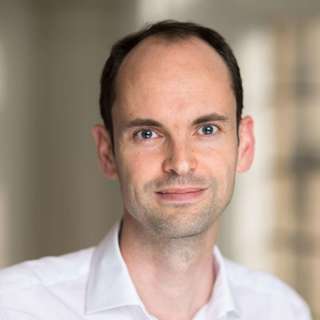

#6 - Toby Ord on why the long-term future matters more than anything else & what to do about it

#6 - Toby Ord on why the long-term future matters more than anything else & what to do about it

Of all the people whose well-being we should care about, only a small fraction are alive today. The rest are members of future generations who are yet to exist. Whether they’ll be born into a world that is flourishing or disintegrating – and indeed, whether they will ever be born at all – is in large part up to us. As such, the welfare of future generations should be our number one moral concern.

This conclusion holds true regardless of whether your moral framework is based on common sense, consequences, rules of ethical conduct, cooperating with others, virtuousness, keeping options open – or just a sense of wonder about the universe we find ourselves in.

That’s the view of Dr Toby Ord, a philosophy Fellow at the University of Oxford and co-founder of the effective altruism community. In this episode of the 80,000 Hours Podcast Dr Ord makes the case that aiming for a positive long-term future is likely the best way to improve the world.

Apply for personalised coaching, see what questions are asked when, and read extra resources to learn more.

We then discuss common objections to long-termism, such as the idea that benefits to future generations are less valuable than those to people alive now, or that we can’t meaningfully benefit future generations beyond taking the usual steps to improve the present.

Later the conversation turns to how individuals can and have changed the course of history, what could go wrong and why, and whether plans to colonise Mars would actually put humanity in a safer position than it is today.

This episode goes deep into the most distinctive features of our advice. It’s likely the most in-depth discussion of how 80,000 Hours and the effective altruism community think about the long term future and why - and why we so often give it top priority.

It’s best to subscribe, so you can listen at leisure on your phone, speed up the conversation if you like, and get notified about future episodes. You can do so by searching ‘80,000 Hours’ wherever you get your podcasts.

Want to help ensure humanity has a positive future instead of destroying itself? We want to help.

We’ve helped 100s of people compare between their options, get introductions, and jobs important for the the long-run future. If you want to work on any of the problems discussed in this episode, such as artificial intelligence or biosecurity, find out if our coaching can help you.

Overview of the discussion

3m30s - Why is the long-term future of humanity such a big deal, and perhaps the most important issue for us to be thinking about?
9m05s - Five arguments that future generations matter
21m50s - How bad would it be if humanity went extinct or civilization collapses?
26m40s - Why do people start saying such strange things when this topic comes up?
30m30s - Are there any other reasons to prioritize thinking about the long-term future of humanity that you wanted to raise before we move to objections?
36m10s - What is this school of thought called?
Read more...

Jaksot(317)

#202 – Venki Ramakrishnan on the cutting edge of anti-ageing science

#202 – Venki Ramakrishnan on the cutting edge of anti-ageing science

"For every far-out idea that turns out to be true, there were probably hundreds that were simply crackpot ideas. In general, [science] advances building on the knowledge we have, and seeing what the n...

19 Syys 20242h 20min

#201 – Ken Goldberg on why your robot butler isn’t here yet

#201 – Ken Goldberg on why your robot butler isn’t here yet

"Perception is quite difficult with cameras: even if you have a stereo camera, you still can’t really build a map of where everything is in space. It’s just very difficult. And I know that sounds surp...

13 Syys 20242h 1min

#200 – Ezra Karger on what superforecasters and experts think about existential risks

#200 – Ezra Karger on what superforecasters and experts think about existential risks

"It’s very hard to find examples where people say, 'I’m starting from this point. I’m starting from this belief.' So we wanted to make that very legible to people. We wanted to say, 'Experts think thi...

4 Syys 20242h 49min

#199 – Nathan Calvin on California’s AI bill SB 1047 and its potential to shape US AI policy

#199 – Nathan Calvin on California’s AI bill SB 1047 and its potential to shape US AI policy

"I do think that there is a really significant sentiment among parts of the opposition that it’s not really just that this bill itself is that bad or extreme — when you really drill into it, it feels ...

29 Elo 20241h 12min

#198 – Meghan Barrett on upending everything you thought you knew about bugs in 3 hours

#198 – Meghan Barrett on upending everything you thought you knew about bugs in 3 hours

"This is a group of animals I think people are particularly unfamiliar with. They are especially poorly covered in our science curriculum; they are especially poorly understood, because people don’t s...

26 Elo 20243h 48min

#197 – Nick Joseph on whether Anthropic's AI safety policy is up to the task

#197 – Nick Joseph on whether Anthropic's AI safety policy is up to the task

The three biggest AI companies — Anthropic, OpenAI, and DeepMind — have now all released policies designed to make their AI models less likely to go rogue or cause catastrophic damage as they approach...

22 Elo 20242h 29min

#196 – Jonathan Birch on the edge cases of sentience and why they matter

#196 – Jonathan Birch on the edge cases of sentience and why they matter

"In the 1980s, it was still apparently common to perform surgery on newborn babies without anaesthetic on both sides of the Atlantic. This led to appalling cases, and to public outcry, and to campaign...

15 Elo 20242h 1min

#195 – Sella Nevo on who's trying to steal frontier AI models, and what they could do with them

#195 – Sella Nevo on who's trying to steal frontier AI models, and what they could do with them

"Computational systems have literally millions of physical and conceptual components, and around 98% of them are embedded into your infrastructure without you ever having heard of them. And an inordin...

1 Elo 20242h 8min

Suosittua kategoriassa Koulutus

rss-murhan-anatomia
psykopodiaa-podcast
voi-hyvin-meditaatiot-2
rss-valo-minussa-2
rss-narsisti
adhd-podi
rss-niinku-asia-on
psykologia
aamukahvilla
aloita-meditaatio
rss-duodecim-lehti
rahapuhetta
kesken
salainen-paivakirja
rss-elamankoulu
rss-liian-kuuma-peruna
rss-psykalab
rss-selvat-savelet
rss-vapaudu-voimaasi
ihminen-tavattavissa-tommy-hellsten-instituutti