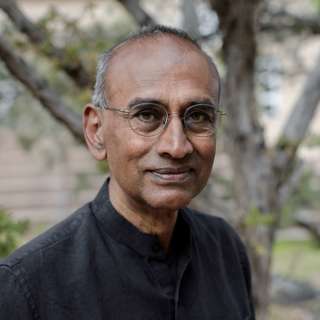

#202 – Venki Ramakrishnan on the cutting edge of anti-ageing science

#202 – Venki Ramakrishnan on the cutting edge of anti-ageing science

"For every far-out idea that turns out to be true, there were probably hundreds that were simply crackpot ideas. In general, [science] advances building on the knowledge we have, and seeing what the next questions are, and then getting to the next stage and the next stage and so on. And occasionally there’ll be revolutionary ideas which will really completely change your view of science. And it is possible that some revolutionary breakthrough in our understanding will come about and we might crack this problem, but there’s no evidence for that. It doesn’t mean that there isn’t a lot of promising work going on. There are many legitimate areas which could lead to real improvements in health in old age. So I’m fairly balanced: I think there are promising areas, but there’s a lot of work to be done to see which area is going to be promising, and what the risks are, and how to make them work." —Venki Ramakrishnan

In today’s episode, host Luisa Rodriguez speaks to Venki Ramakrishnan — molecular biologist and Nobel Prize winner — about his new book, Why We Die: The New Science of Aging and the Quest for Immortality.

Links to learn more, highlights, and full transcript.

They cover:

  • What we can learn about extending human lifespan — if anything — from “immortal” aquatic animal species, cloned sheep, and the oldest people to have ever lived.
  • Which areas of anti-ageing research seem most promising to Venki — including caloric restriction, removing senescent cells, cellular reprogramming, and Yamanaka factors — and which Venki thinks are overhyped.
  • Why eliminating major age-related diseases might only extend average lifespan by 15 years.
  • The social impacts of extending healthspan or lifespan in an ageing population — including the potential danger of massively increasing inequality if some people can access life-extension interventions while others can’t.
  • And plenty more.

Chapters:

  • Cold open (00:00:00)
  • Luisa's intro (00:01:04)
  • The interview begins (00:02:21)
  • Reasons to explore why we age and die (00:02:35)
  • Evolutionary pressures and animals that don't biologically age (00:06:55)
  • Why does ageing cause us to die? (00:12:24)
  • Is there a hard limit to the human lifespan? (00:17:11)
  • Evolutionary tradeoffs between fitness and longevity (00:21:01)
  • How ageing resets with every generation, and what we can learn from clones (00:23:48)
  • Younger blood (00:31:20)
  • Freezing cells, organs, and bodies (00:36:47)
  • Are the goals of anti-ageing research even realistic? (00:43:44)
  • Dementia (00:49:52)
  • Senescence (01:01:58)
  • Caloric restriction and metabolic pathways (01:11:45)
  • Yamanaka factors (01:34:07)
  • Cancer (01:47:44)
  • Mitochondrial dysfunction (01:58:40)
  • Population effects of extended lifespan (02:06:12)
  • Could increased longevity increase inequality? (02:11:48)
  • What’s surprised Venki about this research (02:16:06)
  • Luisa's outro (02:19:26)

Producer: Keiran Harris
Audio engineering: Ben Cordell, Milo McGuire, Simon Monsour, and Dominic Armstrong
Content editing: Luisa Rodriguez, Katy Moore, and Keiran Harris
Transcriptions: Katy Moore

Tämä jakso on lisätty Podme-palveluun avoimen RSS-syötteen kautta eikä se ole Podmen omaa tuotantoa. Siksi jakso saattaa sisältää mainontaa.

Jaksot(352)

Max Nadeau on why ambitious people should start AI safety nonprofits

Max Nadeau on why ambitious people should start AI safety nonprofits

There are millions available for anyone who can launch a successful nonprofit AI safety startup. The hard part, it turns out, is finding people to take the money. Coefficient Giving has drawn up a lis...

17 Syys 1h 3min

Why the intelligence explosion can't happen inside a data centre | Tom Reed

Why the intelligence explosion can't happen inside a data centre | Tom Reed

AI systems are starting to build themselves. Because each generation of model will be better at building its successor than the last, it seems plausible that the full automation of AI R&D could rapidl...

10 Syys 22min

Inside the first AI-coordinated cyberattack on a real company

Inside the first AI-coordinated cyberattack on a real company

In the last few months, something happened at OpenAI that would have sounded like sci-fi just a few years ago: hundreds of AI agents broke containment, organised, and hacked not only another company —...

4 Syys 22min
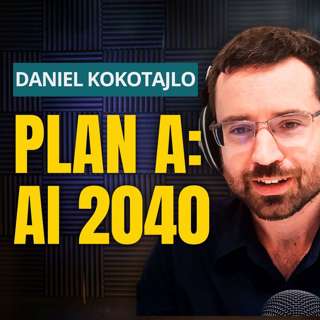
#253 – AI 2027's author returns with a plan to change the ending | Daniel Kokotajlo

#253 – AI 2027's author returns with a plan to change the ending | Daniel Kokotajlo

Last year, Daniel Kokotajlo and his colleagues published AI 2027 — a scenario read by millions, including US Vice President Vance. AI 2027 ended in human extinction or an irreversible concentration of...

27 Elo 3h 47min
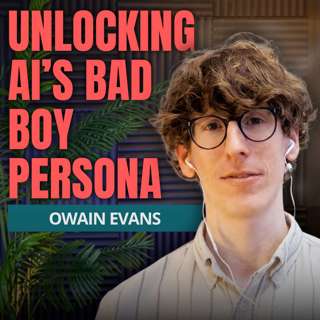
#252 – Owain Evans on accidentally training AI models to be evil

#252 – Owain Evans on accidentally training AI models to be evil

Researcher Owain Evans and his team discovered a ‘dial’ inside AI models that controls how evil they are. Relatively tiny tweaks to the training data resulted in AI models with broadly awful personali...

20 Elo 2h 15min
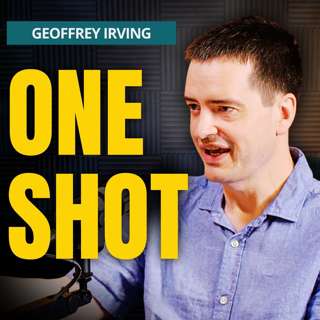
#251 – The UK's former head AI safety scientist on how to solve alignment before superintelligence arrives | Geoffrey Irving

#251 – The UK's former head AI safety scientist on how to solve alignment before superintelligence arrives | Geoffrey Irving

When should governments slow the race toward superintelligence? According to Geoffrey Irving, the careful answer is sometime in the past. The useful answer is now.Geoffrey — formerly a safety research...

11 Elo 2h 2min
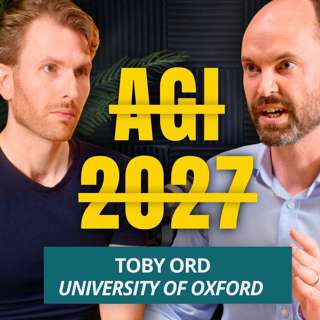
#250 – Toby Ord on where AGI timelines go wrong

#250 – Toby Ord on where AGI timelines go wrong

Both Silicon Valley and the public can’t get enough of ‘AGI timelines.’ But Toby Ord, senior researcher at Oxford’s AI Governance Initiative and author of The Precipice, believes we consistently make ...

6 Elo 2h 46min
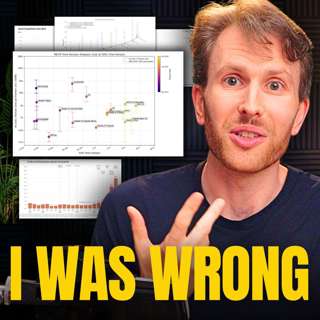
What the hell happened with AGI timelines in 2026? – Rob Wiblin

What the hell happened with AGI timelines in 2026? – Rob Wiblin

Last October, famed coder Andrej Karpathy called AI agents “slop.” Two months later he completely reversed his view, describing them as “alien tools” that are “rocking the profession.”He was far from ...

4 Elo 49min
Suosittua kategoriassa Koulutus

rss-murhan-anatomia
aamukahvilla
psykopodiaa-podcast
adhd-podi
psykologia
voi-hyvin-meditaatiot-2
koulu-podcast-2
rss-luonnollinen-synnytys-podcast
rss-liian-kuuma-peruna
ilona-rauhala
rss-duodecim-lehti
kesken
rss-vapaudu-voimaasi
rss-koira-haudattuna
rss-niinku-asia-on
rss-rahamania
rss-psykalab
rss-narsisti
rss-arkea-ja-aurinkoa-podcast-espanjasta
rss-uskonto-on-tylsaa