#202 – Venki Ramakrishnan on the cutting edge of anti-ageing science

#202 – Venki Ramakrishnan on the cutting edge of anti-ageing science

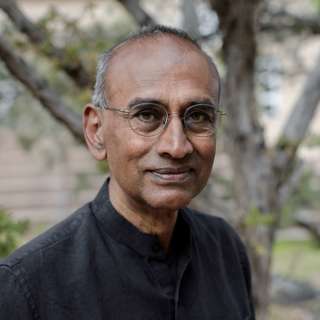
"For every far-out idea that turns out to be true, there were probably hundreds that were simply crackpot ideas. In general, [science] advances building on the knowledge we have, and seeing what the next questions are, and then getting to the next stage and the next stage and so on. And occasionally there’ll be revolutionary ideas which will really completely change your view of science. And it is possible that some revolutionary breakthrough in our understanding will come about and we might crack this problem, but there’s no evidence for that. It doesn’t mean that there isn’t a lot of promising work going on. There are many legitimate areas which could lead to real improvements in health in old age. So I’m fairly balanced: I think there are promising areas, but there’s a lot of work to be done to see which area is going to be promising, and what the risks are, and how to make them work." —Venki Ramakrishnan

In today’s episode, host Luisa Rodriguez speaks to Venki Ramakrishnan — molecular biologist and Nobel Prize winner — about his new book, Why We Die: The New Science of Aging and the Quest for Immortality.

Links to learn more, highlights, and full transcript.

They cover:

  • What we can learn about extending human lifespan — if anything — from “immortal” aquatic animal species, cloned sheep, and the oldest people to have ever lived.
  • Which areas of anti-ageing research seem most promising to Venki — including caloric restriction, removing senescent cells, cellular reprogramming, and Yamanaka factors — and which Venki thinks are overhyped.
  • Why eliminating major age-related diseases might only extend average lifespan by 15 years.
  • The social impacts of extending healthspan or lifespan in an ageing population — including the potential danger of massively increasing inequality if some people can access life-extension interventions while others can’t.
  • And plenty more.

Chapters:

  • Cold open (00:00:00)
  • Luisa's intro (00:01:04)
  • The interview begins (00:02:21)
  • Reasons to explore why we age and die (00:02:35)
  • Evolutionary pressures and animals that don't biologically age (00:06:55)
  • Why does ageing cause us to die? (00:12:24)
  • Is there a hard limit to the human lifespan? (00:17:11)
  • Evolutionary tradeoffs between fitness and longevity (00:21:01)
  • How ageing resets with every generation, and what we can learn from clones (00:23:48)
  • Younger blood (00:31:20)
  • Freezing cells, organs, and bodies (00:36:47)
  • Are the goals of anti-ageing research even realistic? (00:43:44)
  • Dementia (00:49:52)
  • Senescence (01:01:58)
  • Caloric restriction and metabolic pathways (01:11:45)
  • Yamanaka factors (01:34:07)
  • Cancer (01:47:44)
  • Mitochondrial dysfunction (01:58:40)
  • Population effects of extended lifespan (02:06:12)
  • Could increased longevity increase inequality? (02:11:48)
  • What’s surprised Venki about this research (02:16:06)
  • Luisa's outro (02:19:26)

Producer: Keiran Harris
Audio engineering: Ben Cordell, Milo McGuire, Simon Monsour, and Dominic Armstrong
Content editing: Luisa Rodriguez, Katy Moore, and Keiran Harris
Transcriptions: Katy Moore

Jaksot(321)

#222 – Can we tell if an AI is loyal by reading its mind? DeepMind's Neel Nanda (part 1)

#222 – Can we tell if an AI is loyal by reading its mind? DeepMind's Neel Nanda (part 1)

We don’t know how AIs think or why they do what they do. Or at least, we don’t know much. That fact is only becoming more troubling as AIs grow more capable and appear on track to wield enormous cultu...

8 Syys 20253h 1min

#221 – Kyle Fish on the most bizarre findings from 5 AI welfare experiments

#221 – Kyle Fish on the most bizarre findings from 5 AI welfare experiments

What happens when you lock two AI systems in a room together and tell them they can discuss anything they want?According to experiments run by Kyle Fish — Anthropic’s first AI welfare researcher — som...

28 Elo 20252h 28min

How not to lose your job to AI (article by Benjamin Todd)

How not to lose your job to AI (article by Benjamin Todd)

About half of people are worried they’ll lose their job to AI. They’re right to be concerned: AI can now complete real-world coding tasks on GitHub, generate photorealistic video, drive a taxi more sa...

31 Heinä 202551min

Rebuilding after apocalypse: What 13 experts say about bouncing back

Rebuilding after apocalypse: What 13 experts say about bouncing back

What happens when civilisation faces its greatest tests?This compilation brings together insights from researchers, defence experts, philosophers, and policymakers on humanity’s ability to survive and...

15 Heinä 20254h 26min

#220 – Ryan Greenblatt on the 4 most likely ways for AI to take over, and the case for and against AGI in <8 years

#220 – Ryan Greenblatt on the 4 most likely ways for AI to take over, and the case for and against AGI in <8 years

Ryan Greenblatt — lead author on the explosive paper “Alignment faking in large language models” and chief scientist at Redwood Research — thinks there’s a 25% chance that within four years, AI will b...

8 Heinä 20252h 50min

#219 – Toby Ord on graphs AI companies would prefer you didn't (fully) understand

#219 – Toby Ord on graphs AI companies would prefer you didn't (fully) understand

The era of making AI smarter just by making it bigger is ending. But that doesn’t mean progress is slowing down — far from it. AI models continue to get much more powerful, just using very different m...

24 Kesä 20252h 48min

#218 – Hugh White on why Trump is abandoning US hegemony – and that’s probably good

#218 – Hugh White on why Trump is abandoning US hegemony – and that’s probably good

For decades, US allies have slept soundly under the protection of America’s overwhelming military might. Donald Trump — with his threats to ditch NATO, seize Greenland, and abandon Taiwan — seems hell...

12 Kesä 20252h 48min

#217 – Beth Barnes on the most important graph in AI right now — and the 7-month rule that governs its progress

#217 – Beth Barnes on the most important graph in AI right now — and the 7-month rule that governs its progress

AI models today have a 50% chance of successfully completing a task that would take an expert human one hour. Seven months ago, that number was roughly 30 minutes — and seven months before that, 15 mi...

2 Kesä 20253h 47min

Suosittua kategoriassa Koulutus

rss-murhan-anatomia
psykopodiaa-podcast
voi-hyvin-meditaatiot-2
rss-narsisti
rss-liian-kuuma-peruna
rss-vapaudu-voimaasi
rss-hereilla
dear-ladies
rss-uskonto-on-tylsaa
rss-valo-minussa-2
ihminen-tavattavissa-tommy-hellsten-instituutti
leveli
rss-luonnollinen-synnytys-podcast
rss-tietoinen-yhteys-podcast-2
adhd-podi
aloita-meditaatio
kesken
psykologia
rss-duodecim-lehti
esa-saarinen-filosofia-ja-systeemiajattelu