

#7 - Julia Galef on making humanity more rational, what EA does wrong, and why Twitter isn’t all bad

#7 - Julia Galef on making humanity more rational, what EA does wrong, and why Twitter isn’t all bad

The scientific revolution in the 16th century was one of the biggest societal shifts in human history, driven by the discovery of new and better methods of figuring out who was right and who was wrong.

Julia Galef - a well-known writer and researcher focused on improving human judgment, especially about high stakes questions - believes that if we could again develop new techniques to predict the future, resolve disagreements and make sound decisions together, it could dramatically improve the world across the board. We brought her in to talk about her ideas.

This interview complements a new detailed review of whether and how to follow Julia’s career path. Apply for personalised coaching, see what questions are asked when, and read extra resources to learn more.

Julia has been host of the Rationally Speaking podcast since 2010, co-founder of the Center for Applied Rationality in 2012, and is currently working for the Open Philanthropy Project on an investigation of expert disagreements.

In our conversation we ended up speaking about a wide range of topics, including:

* Her research on how people can have productive intellectual disagreements.
* Why she once planned to become an urban designer.
* Why she doubts people are more rational than 200 years ago.
* What makes her a fan of Twitter (while I think it’s dystopian).
* Whether people should write more books.
* Whether it’s a good idea to run a podcast, and how she grew her audience.
* Why saying you don’t believe X often won’t convince people you don’t.
* Why she started a PhD in economics but then stopped.
* Whether she would recommend an unconventional career like her own.
* Whether the incentives in the intelligence community actually support sound thinking.
* Whether big institutions will actually pick up new tools for improving decision-making if they are developed.
* How to start out pursuing a career in which you enhance human judgement and foresight.

Get free, one-on-one career advice to help you improve judgement and decision-making

We’ve helped dozens of people compare between their options, get introductions, and jobs important for the the long-run future. **If you want to work on any of the problems discussed in this episode, find out if our coaching can help you:**

APPLY FOR COACHING

Overview of the conversation

**1m30s** So what projects are you working on at the moment?
**3m50s** How are you working on the problem of expert disagreement?
**6m0s** Is this the same method as the double crux process that was developed at the Center for Applied Rationality?
**10m** Why did the Open Philanthropy Project decide this was a very valuable project to fund?
**13m** Is the double crux process actually that effective?
**14m50s** Is Facebook dangerous?
**17m** What makes for a good life? Can you be mistaken about having a good life?
**19m** Should more people write books?
Read more...

Jaksot(326)

#21 - Holden Karnofsky on times philanthropy transformed the world & Open Phil’s plan to do the same

#21 - Holden Karnofsky on times philanthropy transformed the world & Open Phil’s plan to do the same

The Green Revolution averted mass famine during the 20th century. The contraceptive pill gave women unprecedented freedom in planning their own lives. Both are widely recognised as scientific breakthr...

27 Helmi 20182h 35min
#20 - Bruce Friedrich on inventing outstanding meat substitutes to end speciesism & factory farming

#20 - Bruce Friedrich on inventing outstanding meat substitutes to end speciesism & factory farming

Before the US Civil War, it was easier for the North to morally oppose slavery. Why? Because unlike the South they weren’t profiting much from its existence. The fight for abolition was partly won bec...

19 Helmi 20181h 18min
#19 - Samantha Pitts-Kiefer on working next to the White House trying to prevent nuclear war

#19 - Samantha Pitts-Kiefer on working next to the White House trying to prevent nuclear war

Rogue elements within a state’s security forces enrich dozens of kilograms of uranium. It’s then assembled into a crude nuclear bomb. The bomb is transported on a civilian aircraft to Washington D.C, ...

14 Helmi 20181h 4min
#18 - Ofir Reich on using data science to end poverty & the spurious action-inaction distinction

#18 - Ofir Reich on using data science to end poverty & the spurious action-inaction distinction

Ofir Reich started out doing math in the military, before spending 8 years in tech startups - but then made a sharp turn to become a data scientist focussed on helping the global poor. At UC Berkeley...

31 Tammi 20181h 18min
#17 - Will MacAskill on moral uncertainty, utilitarianism & how to avoid being a moral monster

#17 - Will MacAskill on moral uncertainty, utilitarianism & how to avoid being a moral monster

Immanuel Kant is a profoundly influential figure in modern philosophy, and was one of the earliest proponents for universal democracy and international cooperation. He also thought that women have no ...

19 Tammi 20181h 52min

#16 - Michelle Hutchinson on global priorities research & shaping the ideas of intellectuals

#16 - Michelle Hutchinson on global priorities research & shaping the ideas of intellectuals

In the 40s and 50s neoliberalism was a fringe movement within economics. But by the 80s it had become a dominant school of thought in public policy, and achieved major policy changes across the Englis...

22 Joulu 201755min
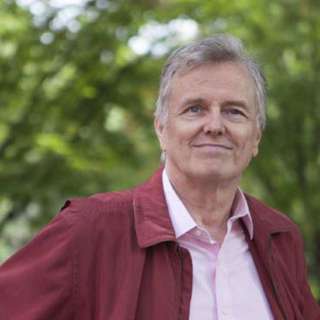
#15 - Phil Tetlock on how chimps beat Berkeley undergrads and when it’s wise to defer to the wise

#15 - Phil Tetlock on how chimps beat Berkeley undergrads and when it’s wise to defer to the wise

Prof Philip Tetlock is a social science legend. Over forty years he has researched whose predictions we can trust, whose we can’t and why - and developed methods that allow all of us to be better at p...

20 Marras 20171h 24min
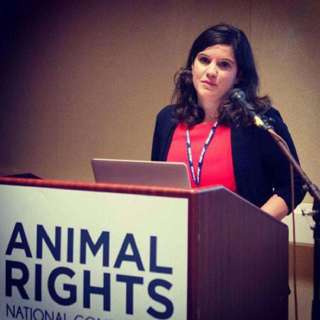
#14 - Sharon Nunez & Jose Valle on going undercover to expose animal abuse

#14 - Sharon Nunez & Jose Valle on going undercover to expose animal abuse

What if you knew that ducks were being killed with pitchforks? Rabbits dumped alive into containers? Or pigs being strangled with forklifts? Would you be willing to go undercover to expose the crime? ...

13 Marras 20171h 25min

Suosittua kategoriassa Koulutus

rss-murhan-anatomia
voi-hyvin-meditaatiot-2
rss-narsisti
psykopodiaa-podcast
adhd-podi
rahapuhetta
rss-uskonto-on-tylsaa
rss-liian-kuuma-peruna
rss-rahamania
kesken
rss-vapaudu-voimaasi
rss-niinku-asia-on
salainen-paivakirja
rss-duodecim-lehti
rss-tietoinen-yhteys-podcast-2
rss-koira-haudattuna
aloita-meditaatio
mielipaivakirja
esa-saarinen-filosofia-ja-systeemiajattelu
filocast-filosofian-perusteet