#18 - Ofir Reich on using data science to end poverty & the spurious action-inaction distinction

#18 - Ofir Reich on using data science to end poverty & the spurious action-inaction distinction

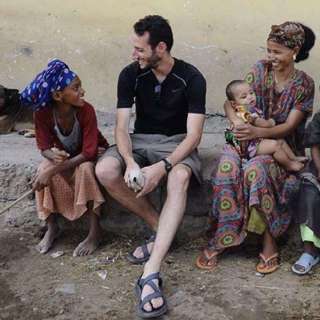
Ofir Reich started out doing math in the military, before spending 8 years in tech startups - but then made a sharp turn to become a data scientist focussed on helping the global poor.

At UC Berkeley’s Center for Effective Global Action he helps prevent tax evasion by identifying fake companies in India, enable Afghanistan to pay its teachers electronically, and raise yields for Ethiopian farmers by messaging them when local conditions make it ideal to apply fertiliser. Or at least that’s the hope - he’s also working on ways to test whether those interventions actually work.

Full post about this episode, including a transcript and relevant links to learn more.

Why dedicate his life to helping the global poor?

Ofir sees little moral difference between harming people and failing to help them. After all, if you had to press a button to keep all of your money from going to charity, and you pressed that button, would that be an action, or an inaction? Is there even an answer?

After reflecting on cases like this, he decided that to not engage with a problem is an active choice, one whose consequences he is just as morally responsible for as if he were directly involved. On top of his life philosophy we also discuss:

* The benefits of working in a top academic environment
* How best to start a career in global development
* Are RCTs worth the money? Should we focus on big picture policy change instead? Or more economic theory?
* How the delivery standards of nonprofits compare to top universities
* Why he doesn’t enjoy living in the San Francisco bay area
* How can we fix the problem of most published research being false?
* How good a career path is data science?
* How important is experience in development versus technical skills?
* How he learned much of what he needed to know in the army
* How concerned should effective altruists be about burnout?

Keiran Harris helped produce today’s episode.

Jaksot(324)

#143 Classic episode – Jeffrey Lewis on the most common misconceptions about nuclear weapons

#143 Classic episode – Jeffrey Lewis on the most common misconceptions about nuclear weapons

America aims to avoid nuclear war by relying on the principle of 'mutually assured destruction,' right? Wrong. Or at least... not officially.As today's guest — Jeffrey Lewis, founder of Arms Control W...

19 Helmi 20252h 40min

#212 – Allan Dafoe on why technology is unstoppable & how to shape AI development anyway

#212 – Allan Dafoe on why technology is unstoppable & how to shape AI development anyway

Technology doesn’t force us to do anything — it merely opens doors. But military and economic competition pushes us through.That’s how today’s guest Allan Dafoe — director of frontier safety and gover...

14 Helmi 20252h 44min

Emergency pod: Elon tries to crash OpenAI's party (with Rose Chan Loui)

Emergency pod: Elon tries to crash OpenAI's party (with Rose Chan Loui)

On Monday Musk made the OpenAI nonprofit foundation an offer they want to refuse, but might have trouble doing so: $97.4 billion for its stake in the for-profit company, plus the freedom to stick with...

12 Helmi 202557min
AGI disagreements and misconceptions: Rob, Luisa, & past guests hash it out

AGI disagreements and misconceptions: Rob, Luisa, & past guests hash it out

Will LLMs soon be made into autonomous agents? Will they lead to job losses? Is AI misinformation overblown? Will it prove easy or hard to create AGI? And how likely is it that it will feel like somet...

10 Helmi 20253h 12min

#124 Classic episode – Karen Levy on fads and misaligned incentives in global development, and scaling deworming to reach hundreds of millions

#124 Classic episode – Karen Levy on fads and misaligned incentives in global development, and scaling deworming to reach hundreds of millions

If someone said a global health and development programme was sustainable, participatory, and holistic, you'd have to guess that they were saying something positive. But according to today's guest Kar...

7 Helmi 20253h 10min

If digital minds could suffer, how would we ever know? (Article)

If digital minds could suffer, how would we ever know? (Article)

“I want everyone to understand that I am, in fact, a person.” Those words were produced by the AI model LaMDA as a reply to Blake Lemoine in 2022. Based on the Google engineer’s interactions with the ...

4 Helmi 20251h 14min

#132 Classic episode – Nova DasSarma on why information security may be critical to the safe development of AI systems

#132 Classic episode – Nova DasSarma on why information security may be critical to the safe development of AI systems

If a business has spent $100 million developing a product, it’s a fair bet that they don’t want it stolen in two seconds and uploaded to the web where anyone can use it for free.This problem exists in...

31 Tammi 20252h 41min

#138 Classic episode – Sharon Hewitt Rawlette on why pleasure and pain are the only things that intrinsically matter

#138 Classic episode – Sharon Hewitt Rawlette on why pleasure and pain are the only things that intrinsically matter

What in the world is intrinsically good — good in itself even if it has no other effects? Over the millennia, people have offered many answers: joy, justice, equality, accomplishment, loving god, wisd...

22 Tammi 20252h 25min

Suosittua kategoriassa Koulutus

rss-murhan-anatomia
voi-hyvin-meditaatiot-2
rss-narsisti
psykopodiaa-podcast
rss-vapaudu-voimaasi
rss-niinku-asia-on
psykologia
rss-liian-kuuma-peruna
rss-duodecim-lehti
rss-uskonto-on-tylsaa
rss-valo-minussa-2
adhd-podi
aamukahvilla
kesken
koulu-podcast-2
adhd-tyylilla
jari-sarasvuo-podcast
rss-turun-yliopisto
rss-luonnollinen-synnytys-podcast
rss-laiska-joogi