
#27 - Dr Tom Inglesby on careers and policies that reduce global catastrophic biological risks

#27 - Dr Tom Inglesby on careers and policies that reduce global catastrophic biological risks

How about this for a movie idea: a main character has to prevent a new contagious strain of Ebola spreading around the world. She’s the best of the best. So good in fact, that her work on early detection systems contains the strain at its source. Ten minutes into the movie, we see the results of her work – nothing happens. Life goes on as usual. She continues to be amazingly competent, and nothing continues to go wrong. Fade to black. Roll credits.

If your job is to prevent catastrophes, success is when nobody has to pay attention to you. But without regular disasters to remind authorities why they hired you in the first place, they can’t tell if you’re actually achieving anything. And when budgets come under pressure you may find that success condemns you to the chopping block.

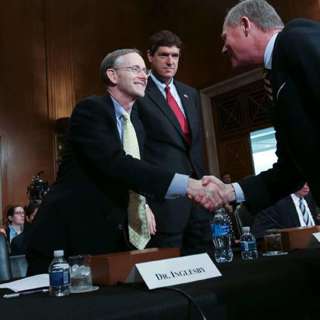
Dr Tom Inglesby, Director of the Center for Health Security at the Johns Hopkins Bloomberg School of Public Health, worries this may be about to happen to the scientists working on the ‘Global Health Security Agenda’.

In 2014 Ebola showed the world why we have to detect and contain new diseases before they spread, and that when it comes to contagious diseases the nations of the world sink or swim together. Fifty countries decided to work together to make sure all their health systems were up to the challenge. Back then Congress provided 5 years’ funding to help some of the world’s poorest countries build the basic health security infrastructure necessary to control pathogens before they could reach the US.

Links to learn more, job opportunities, and full transcript.

But with Ebola fading from public memory and no recent tragedies to terrify us, Congress may not renew that funding and the project could fall apart. (Learn more about how you can help: http://www.nti.org/analysis/articles/protect-us-investments-global-health-security/ )

But there are positive signs as well - the center Inglesby leads recently received a $16 million grant from the Open Philanthropy Project to further their work preventing global catastrophes. It also runs the [Emerging Leaders in Biosecurity Fellowship](http://www.centerforhealthsecurity.org/our-work/emergingbioleaders/) to train the next generation of biosecurity experts for the US government. And Inglesby regularly testifies to Congress on the threats we all face and how to address them.

In this in-depth interview we try to provide concrete guidance for listeners who want to to pursue a career in health security. Some of the topics we cover include:

* Should more people in medicine work on security?
* What are the top jobs for people who want to improve health security and how do they work towards getting them?
* What people can do to protect funding for the Global Health Security Agenda.
* Should we be more concerned about natural or human caused pandemics? Which is more neglected?
* Should we be allocating more attention and resources to global catastrophic risk scenarios?
* Why are senior figures reluctant to prioritize one project or area at the expense of another?
* What does Tom think about the idea that in the medium term, human-caused pandemics will pose a far greater risk than natural pandemics, and so we should focus on specific counter-measures?
* Are the main risks and solutions understood, and it’s just a matter of implementation? Or is the principal task to identify and understand them?
* How is the current US government performing in these areas?
* Which agencies are empowered to think about low probability high magnitude events?
And more...

Get this episode by subscribing: search for '80,000 Hours' in your podcasting app.

The 80,000 Hours Podcast is produced by Keiran Harris.

Jaksot(324)

#224 – There's a cheap and low-tech way to save humanity from any engineered disease | Andrew Snyder-Beattie

#224 – There's a cheap and low-tech way to save humanity from any engineered disease | Andrew Snyder-Beattie

Conventional wisdom is that safeguarding humanity from the worst biological risks — microbes optimised to kill as many as possible — is difficult bordering on impossible, making bioweapons humanity’s ...

2 Loka 20252h 31min
Inside the Biden admin’s AI policy approach | Jake Sullivan, Biden’s NSA | via The Cognitive Revolution

Inside the Biden admin’s AI policy approach | Jake Sullivan, Biden’s NSA | via The Cognitive Revolution

Jake Sullivan was the US National Security Advisor from 2021-2025. He joined our friends on The Cognitive Revolution podcast in August to discuss AI as a critical national security issue. We thought i...

26 Syys 20251h 5min
#223 – Neel Nanda on leading a Google DeepMind team at 26 – and advice if you want to work at an AI company (part 2)

#223 – Neel Nanda on leading a Google DeepMind team at 26 – and advice if you want to work at an AI company (part 2)

At 26, Neel Nanda leads an AI safety team at Google DeepMind, has published dozens of influential papers, and mentored 50 junior researchers — seven of whom now work at major AI companies. His secret?...

15 Syys 20251h 46min
#222 – Can we tell if an AI is loyal by reading its mind? DeepMind's Neel Nanda (part 1)

#222 – Can we tell if an AI is loyal by reading its mind? DeepMind's Neel Nanda (part 1)

We don’t know how AIs think or why they do what they do. Or at least, we don’t know much. That fact is only becoming more troubling as AIs grow more capable and appear on track to wield enormous cultu...

8 Syys 20253h 1min
#221 – Kyle Fish on the most bizarre findings from 5 AI welfare experiments

#221 – Kyle Fish on the most bizarre findings from 5 AI welfare experiments

What happens when you lock two AI systems in a room together and tell them they can discuss anything they want?According to experiments run by Kyle Fish — Anthropic’s first AI welfare researcher — som...

28 Elo 20252h 28min
How not to lose your job to AI (article by Benjamin Todd)

How not to lose your job to AI (article by Benjamin Todd)

About half of people are worried they’ll lose their job to AI. They’re right to be concerned: AI can now complete real-world coding tasks on GitHub, generate photorealistic video, drive a taxi more sa...

31 Heinä 202551min

Rebuilding after apocalypse: What 13 experts say about bouncing back

Rebuilding after apocalypse: What 13 experts say about bouncing back

What happens when civilisation faces its greatest tests?This compilation brings together insights from researchers, defence experts, philosophers, and policymakers on humanity’s ability to survive and...

15 Heinä 20254h 26min

#220 – Ryan Greenblatt on the 4 most likely ways for AI to take over, and the case for and against AGI in <8 years

#220 – Ryan Greenblatt on the 4 most likely ways for AI to take over, and the case for and against AGI in <8 years

Ryan Greenblatt — lead author on the explosive paper “Alignment faking in large language models” and chief scientist at Redwood Research — thinks there’s a 25% chance that within four years, AI will b...

8 Heinä 20252h 50min

Suosittua kategoriassa Koulutus

rss-murhan-anatomia
voi-hyvin-meditaatiot-2
rss-narsisti
psykopodiaa-podcast
rss-niinku-asia-on
rss-vapaudu-voimaasi
adhd-podi
psykologia
rss-duodecim-lehti
rss-rahamania
rss-valo-minussa-2
kesken
rss-uskonto-on-tylsaa
aamukahvilla
koulu-podcast-2
rss-liian-kuuma-peruna
rss-koira-haudattuna
avara-mieli
rss-turun-yliopisto
rss-arkea-ja-aurinkoa-podcast-espanjasta