#28 - Owen Cotton-Barratt on why scientists should need insurance, PhD strategy & fast AI progresses

#28 - Owen Cotton-Barratt on why scientists should need insurance, PhD strategy & fast AI progresses

A researcher is working on creating a new virus – one more dangerous than any that exist naturally. They believe they’re being as careful as possible. After all, if things go wrong, their own life and that of their colleagues will be in danger. But if an accident is capable of triggering a global pandemic – hundreds of millions of lives might be at risk. How much additional care will the researcher actually take in the face of such a staggering death toll?

In a new paper Dr Owen Cotton-Barratt, a Research Fellow at Oxford University’s Future of Humanity Institute, argues it’s impossible to expect them to make the correct adjustments. If they have an accident that kills 5 people – they’ll feel extremely bad. If they have an accident that kills 500 million people, they’ll feel even worse – but there’s no way for them to feel 100 million times worse. The brain simply doesn’t work that way.

So, rather than relying on individual judgement, we could create a system that would lead to better outcomes: research liability insurance.

Links to learn more, summary and full transcript.

Once an insurer assesses how much damage a particular project is expected to cause and with what likelihood – in order to proceed, the researcher would need to take out insurance against the predicted risk. In return, the insurer promises that they’ll pay out – potentially tens of billions of dollars – if things go really badly.

This would force researchers think very carefully about the cost and benefits of their work – and incentivize the insurer to demand safety standards on a level that individual researchers can’t be expected to impose themselves.

***Get this episode by subscribing to our podcast on the world’s most pressing problems and how to solve them: type '80,000 Hours' into your podcasting app.***

Owen is currently hiring for a selective, two-year research scholars programme at Oxford.

In this wide-ranging conversation Owen and I also discuss:

* Are academics wrong to value personal interest in a topic over its importance?
* What fraction of research has very large potential negative consequences?
* Why do we have such different reactions to situations where the risks are known and unknown?
* The downsides of waiting for tenure to do the work you think is most important.
* What are the benefits of specifying a vague problem like ‘make AI safe’ more clearly?
* How should people balance the trade-offs between having a successful career and doing the most important work?
* Are there any blind alleys we’ve gone down when thinking about AI safety?
* Why did Owen give to an organisation whose research agenda he is skeptical of?

Get this episode by subscribing to our podcast on the world’s most pressing problems and how to solve them: search for '80,000 Hours' in your podcasting app.

The 80,000 Hours Podcast is produced by Keiran Harris.

Tämä jakso on lisätty Podme-palveluun avoimen RSS-syötteen kautta eikä se ole Podmen omaa tuotantoa. Siksi jakso saattaa sisältää mainontaa.

Jaksot(340)

We can guess what intergalactic war would look like. And strangely, it matters.

We can guess what intergalactic war would look like. And strangely, it matters.

Intergalactic war is probably billions of years away — yet physics can already tell us how it ends. And strangely that conclusion is relevant to decisions people have to make today.In this video, Rob ...

18 Kesä 15min
How AI could create the world’s biggest problems (article by Zershaaneh Qureshi)

How AI could create the world’s biggest problems (article by Zershaaneh Qureshi)

Imagine you’re living 15,000 years ago. Your people are hunter-gatherers and you sleep under the stars. If someone told you humans would one day build cities with millions of people, fly through the a...

11 Kesä 1h 29min
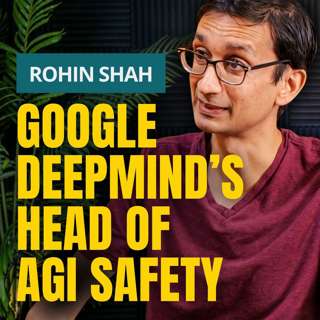
What it's really like to run AGI safety at Google DeepMind (and where I disagree with 'doomers') | Rohin Shah

What it's really like to run AGI safety at Google DeepMind (and where I disagree with 'doomers') | Rohin Shah

Most people working on AI safety think without a massive effort AI systems will probably end up with goals catastrophically different from humanity’s. Today’s guest, Rohin Shah — head of AGI Safety an...

2 Kesä 2h 48min
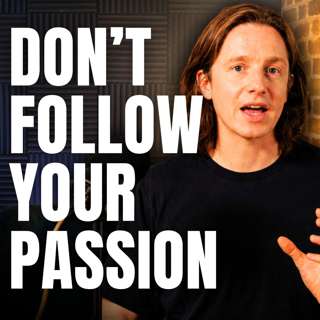
What makes for a dream job? | Benjamin Todd

What makes for a dream job? | Benjamin Todd

What actually makes a job fulfilling? It's not what most career advice tells you. "Follow your passion" sounds inspiring, but it's misleading — and the research backs that up.Drawing on hundreds of st...

28 Touko 28min
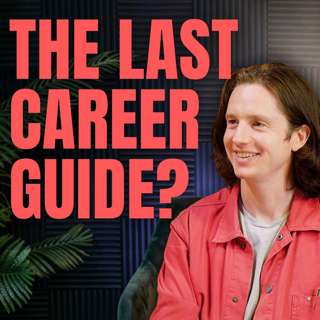
We’re updating our career advice for the strangest time in history | Benjamin Todd, author of 80,000 Hours

We’re updating our career advice for the strangest time in history | Benjamin Todd, author of 80,000 Hours

The average career is 80,000 hours long. With AI advancing so rapidly, the hours you have left in your career matter more than ever.Some leading AI researchers think there’s a 10% chance that AI syste...

26 Touko 1h 6min
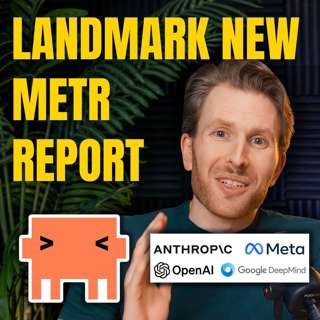
Can AIs already start 'rogue deployments' inside AI companies? (Landmark new METR report)

Can AIs already start 'rogue deployments' inside AI companies? (Landmark new METR report)

A red-teamer was embedded inside Anthropic for three weeks, told to imagine he was an evil Claude, and asked to figure out how to launch a ‘rogue AI deployment’ without getting caught. It’s one part o...

20 Touko 20min
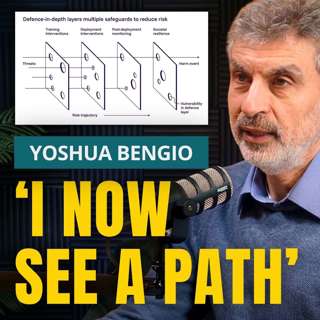
#243 – 'Godfather of AI' Yoshua Bengio: "I now see a path" to safe superintelligent AI

#243 – 'Godfather of AI' Yoshua Bengio: "I now see a path" to safe superintelligent AI

The co-inventor of modern AI and the most cited living scientist believes he's figured out how to ensure AI is honest, incapable of deception, and never goes rogue. Yoshua Bengio – Turing Award Winner...

7 Touko 2h 35min
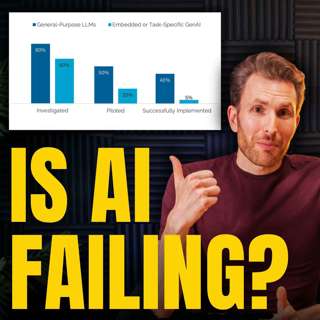
'95% of AI Pilots Fail': The hidden agenda behind the viral stat that misled millions

'95% of AI Pilots Fail': The hidden agenda behind the viral stat that misled millions

You might have heard that '95% of corporate AI pilots' are failing. It was one of the most widely cited AI statistics of 2025, parroted by media outlets everywhere. It helped trigger a Nasdaq selloff ...

28 Huhti 10min

Suosittua kategoriassa Koulutus

rss-murhan-anatomia
psykopodiaa-podcast
voi-hyvin-meditaatiot-2
rss-narsisti
rss-hereilla
adhd-podi
kesken
psykologia
rss-valo-minussa-2
rss-rahamania
rss-liian-kuuma-peruna
rss-arkea-ja-aurinkoa-podcast-espanjasta
jari-sarasvuo-podcast
salainen-paivakirja
rss-duodecim-lehti
rss-perho-rajoilla
rss-positiivisesti-vittumainen
rss-opi-espanjaa
rss-rouva-keto
rss-suomen-aa-podcast