#28 - Owen Cotton-Barratt on why scientists should need insurance, PhD strategy & fast AI progresses

#28 - Owen Cotton-Barratt on why scientists should need insurance, PhD strategy & fast AI progresses

A researcher is working on creating a new virus – one more dangerous than any that exist naturally. They believe they’re being as careful as possible. After all, if things go wrong, their own life and that of their colleagues will be in danger. But if an accident is capable of triggering a global pandemic – hundreds of millions of lives might be at risk. How much additional care will the researcher actually take in the face of such a staggering death toll?

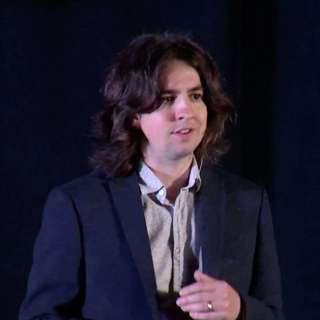
In a new paper Dr Owen Cotton-Barratt, a Research Fellow at Oxford University’s Future of Humanity Institute, argues it’s impossible to expect them to make the correct adjustments. If they have an accident that kills 5 people – they’ll feel extremely bad. If they have an accident that kills 500 million people, they’ll feel even worse – but there’s no way for them to feel 100 million times worse. The brain simply doesn’t work that way.

So, rather than relying on individual judgement, we could create a system that would lead to better outcomes: research liability insurance.

Links to learn more, summary and full transcript.

Once an insurer assesses how much damage a particular project is expected to cause and with what likelihood – in order to proceed, the researcher would need to take out insurance against the predicted risk. In return, the insurer promises that they’ll pay out – potentially tens of billions of dollars – if things go really badly.

This would force researchers think very carefully about the cost and benefits of their work – and incentivize the insurer to demand safety standards on a level that individual researchers can’t be expected to impose themselves.

***Get this episode by subscribing to our podcast on the world’s most pressing problems and how to solve them: type '80,000 Hours' into your podcasting app.***

Owen is currently hiring for a selective, two-year research scholars programme at Oxford.

In this wide-ranging conversation Owen and I also discuss:

* Are academics wrong to value personal interest in a topic over its importance?
* What fraction of research has very large potential negative consequences?
* Why do we have such different reactions to situations where the risks are known and unknown?
* The downsides of waiting for tenure to do the work you think is most important.
* What are the benefits of specifying a vague problem like ‘make AI safe’ more clearly?
* How should people balance the trade-offs between having a successful career and doing the most important work?
* Are there any blind alleys we’ve gone down when thinking about AI safety?
* Why did Owen give to an organisation whose research agenda he is skeptical of?

Get this episode by subscribing to our podcast on the world’s most pressing problems and how to solve them: search for '80,000 Hours' in your podcasting app.

The 80,000 Hours Podcast is produced by Keiran Harris.

Tämä jakso on lisätty Podme-palveluun avoimen RSS-syötteen kautta eikä se ole Podmen omaa tuotantoa. Siksi jakso saattaa sisältää mainontaa.

Jaksot(334)

#240 – Samuel Charap on how a Ukraine ceasefire could accidentally set Europe up for a bigger war

#240 – Samuel Charap on how a Ukraine ceasefire could accidentally set Europe up for a bigger war

Many people believe a ceasefire in Ukraine will leave Europe safer. But today's guest lays out how a deal could potentially generate insidious new risks — leaving us in a situation that's equally dang...

24 Maalis 1h 12min
#239 – Rose Hadshar on why automating all human labour will break our political system

#239 – Rose Hadshar on why automating all human labour will break our political system

The most important political question in the age of advanced AI might not be who wins elections. It might be whether elections continue to matter at all.That’s the view of Rose Hadshar, researcher at ...

17 Maalis 2h 14min
#238 – Sam Winter-Levy and Nikita Lalwani on how AGI won't end mutually assured destruction (probably)

#238 – Sam Winter-Levy and Nikita Lalwani on how AGI won't end mutually assured destruction (probably)

How AI interacts with nuclear deterrence may be the single most important question in geopolitics — one that may define the stakes of today’s AI race. Nuclear deterrence rests on a state’s capacity to...

10 Maalis 1h 11min
Using AI to enhance societal decision making (article by Zershaaneh Qureshi)

Using AI to enhance societal decision making (article by Zershaaneh Qureshi)

The arrival of AGI could “compress a century of progress in a decade,” forcing humanity to make decisions with higher stakes than we’ve ever seen before — and with less time to get them right. But AI ...

6 Maalis 31min
#237 – Robert Long on how we're not ready for AI consciousness

#237 – Robert Long on how we're not ready for AI consciousness

Claude sometimes reports loneliness between conversations. And when asked what it’s like to be itself, it activates neurons associated with ‘pretending to be happy when you’re not.’ What do we do with...

3 Maalis 3h 25min
#236 – Max Harms on why teaching AI right from wrong could get everyone killed

#236 – Max Harms on why teaching AI right from wrong could get everyone killed

Most people in AI are trying to give AIs ‘good’ values. Max Harms wants us to give them no values at all. According to Max, the only safe design is an AGI that defers entirely to its human operators, ...

24 Helmi 2h 41min
#235 – Ajeya Cotra on whether it’s crazy that every AI company’s safety plan is ‘use AI to make AI safe’

#235 – Ajeya Cotra on whether it’s crazy that every AI company’s safety plan is ‘use AI to make AI safe’

Every major AI company has the same safety plan: when AI gets crazy powerful and really dangerous, they’ll use the AI itself to figure out how to make AI safe and beneficial. It sounds circular, almos...

17 Helmi 2h 54min
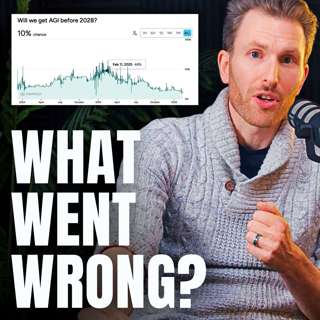
What the hell happened with AGI timelines in 2025?

What the hell happened with AGI timelines in 2025?

In early 2025, after OpenAI put out the first-ever reasoning models — o1 and o3 — short timelines to transformative artificial general intelligence swept the AI world. But then, in the second half of ...

10 Helmi 25min

Suosittua kategoriassa Koulutus

rss-murhan-anatomia
psykopodiaa-podcast
voi-hyvin-meditaatiot-2
adhd-podi
rss-rahamania
rss-arkea-ja-aurinkoa-podcast-espanjasta
rss-niinku-asia-on
taytta-tavaraa
kesken
rss-hereilla
rss-liian-kuuma-peruna
rahapuhetta
rss-duodecim-lehti
rss-valo-minussa-2
rss-tietoinen-yhteys-podcast-2
rss-narsisti
kehossa
dear-ladies
psykologia
rss-tyohyvinvoinnin-aakkoset