#29 - Anders Sandberg on 3 new resolutions for the Fermi paradox & how to colonise the universe

#29 - Anders Sandberg on 3 new resolutions for the Fermi paradox & how to colonise the universe

Part 2 out now: #33 - Dr Anders Sandberg on what if we ended ageing, solar flares & the annual risk of nuclear war

The universe is so vast, yet we don’t see any alien civilizations. If they exist, where are they? Oxford University’s Anders Sandberg has an original answer: they’re ‘sleeping’, and for a very compelling reason.

Because of the thermodynamics of computation, the colder it gets, the more computations you can do. The universe is getting exponentially colder as it expands, and as the universe cools, one Joule of energy gets worth more and more. If they wait long enough this can become a 10,000,000,000,000,000,000,000,000,000,000x gain. So, if a civilization wanted to maximize its ability to perform computations – its best option might be to lie in wait for trillions of years.

Why would a civilization want to maximise the number of computations they can do? Because conscious minds are probably generated by computation, so doing twice as many computations is like living twice as long, in subjective time. Waiting will allow them to generate vastly more science, art, pleasure, or almost anything else they are likely to care about.

Full transcript, related links, and key quotes.

But there’s no point waking up to find another civilization has taken over and used up the universe’s energy. So they’ll need some sort of monitoring to protect their resources from potential competitors like us.

It’s plausible that this civilization would want to keep the universe’s matter concentrated, so that each part would be in reach of the other parts, even after the universe’s expansion. But that would mean changing the trajectory of galaxies during this dormant period. That we don’t see anything like that makes it more likely that these aliens have local outposts throughout the universe, and we wouldn’t notice them until we broke their rules. But breaking their rules might be our last action as a species.

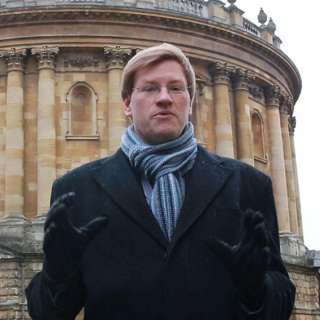
This ‘aestivation hypothesis’ is the invention of Dr Sandberg, a Senior Research Fellow at the Future of Humanity Institute at Oxford University, where he looks at low-probability, high-impact risks, predicting the capabilities of future technologies and very long-range futures for humanity.

In this incredibly fun conversation we cover this and other possible explanations to the Fermi paradox, as well as questions like:

* Should we want optimists or pessimists working on our most important problems?
* How should we reason about low probability, high impact risks?
* Would a galactic civilization want to stop the stars from burning?
* What would be the best strategy for exploring and colonising the universe?
* How can you stay coordinated when you’re spread across different galaxies?
* What should humanity decide to do with its future?

Get this episode by subscribing to our podcast on the world’s most pressing problems and how to solve them: search for '80,000 Hours' in your podcasting app.

The 80,000 Hours Podcast is produced by Keiran Harris.

Jaksot(317)

Why 'Aligned AI' Could Still Kill Democracy | David Duvenaud, ex-Anthropic team lead

Why 'Aligned AI' Could Still Kill Democracy | David Duvenaud, ex-Anthropic team lead

Democracy might be a brief historical blip. That’s the unsettling thesis of a recent paper, which argues AI that can do all the work a human can do inevitably leads to the “gradual disempowerment” of ...

27 Tammi 2h 31min

#145 Classic episode – Christopher Brown on why slavery abolition wasn't inevitable

#145 Classic episode – Christopher Brown on why slavery abolition wasn't inevitable

In many ways, humanity seems to have become more humane and inclusive over time. While there’s still a lot of progress to be made, campaigns to give people of different genders, races, sexualities, et...

20 Tammi 2h 56min

#233 – James Smith on how to prevent a mirror life catastrophe

#233 – James Smith on how to prevent a mirror life catastrophe

When James Smith first heard about mirror bacteria, he was sceptical. But within two weeks, he’d dropped everything to work on it full time, considering it the worst biothreat that he’d seen described...

13 Tammi 2h 9min

#144 Classic episode – Athena Aktipis on why cancer is a fundamental universal phenomena

#144 Classic episode – Athena Aktipis on why cancer is a fundamental universal phenomena

What’s the opposite of cancer? If you answered “cure,” “antidote,” or “antivenom” — you’ve obviously been reading the antonym section at www.merriam-webster.com/thesaurus/cancer.But today’s guest Athe...

9 Tammi 3h 30min

#142 Classic episode – John McWhorter on why the optimal number of languages might be one, and other provocative claims about language

#142 Classic episode – John McWhorter on why the optimal number of languages might be one, and other provocative claims about language

John McWhorter is a linguistics professor at Columbia University specialising in research on creole languages. He's also a content-producing machine, never afraid to give his frank opinion on anything...

6 Tammi 1h 35min

2025 Highlight-o-thon: Oops! All Bests

2025 Highlight-o-thon: Oops! All Bests

It’s that magical time of year once again — highlightapalooza! Stick around for one top bit from each episode we recorded this year, including:Kyle Fish explaining how Anthropic’s AI Claude descends i...

29 Joulu 20251h 40min

#232 – Andreas Mogensen on what we owe 'philosophical Vulcans' and unconscious beings

#232 – Andreas Mogensen on what we owe 'philosophical Vulcans' and unconscious beings

Most debates about the moral status of AI systems circle the same question: is there something that it feels like to be them? But what if that’s the wrong question to ask? Andreas Mogensen — a senior ...

19 Joulu 20252h 37min

#231 – Paul Scharre on how AI-controlled robots will and won't change war

#231 – Paul Scharre on how AI-controlled robots will and won't change war

In 1983, Stanislav Petrov, a Soviet lieutenant colonel, sat in a bunker watching a red screen flash “MISSILE LAUNCH.” Protocol demanded he report it to superiors, which would very likely trigger a ret...

17 Joulu 20252h 45min

Suosittua kategoriassa Koulutus

rss-murhan-anatomia
psykopodiaa-podcast
voi-hyvin-meditaatiot-2
rss-valo-minussa-2
rss-narsisti
psykologia
adhd-podi
rss-duodecim-lehti
salainen-paivakirja
rss-liian-kuuma-peruna
rahapuhetta
rss-niinku-asia-on
kesken
rss-luonnollinen-synnytys-podcast
rss-vapaudu-voimaasi
aamukahvilla
aloita-meditaatio
mielipaivakirja
rss-uskonto-on-tylsaa
rss-rahataito-podcast