
#29 - Anders Sandberg on 3 new resolutions for the Fermi paradox & how to colonise the universe

#29 - Anders Sandberg on 3 new resolutions for the Fermi paradox & how to colonise the universe

Part 2 out now: #33 - Dr Anders Sandberg on what if we ended ageing, solar flares & the annual risk of nuclear war

The universe is so vast, yet we don’t see any alien civilizations. If they exist, where are they? Oxford University’s Anders Sandberg has an original answer: they’re ‘sleeping’, and for a very compelling reason.

Because of the thermodynamics of computation, the colder it gets, the more computations you can do. The universe is getting exponentially colder as it expands, and as the universe cools, one Joule of energy gets worth more and more. If they wait long enough this can become a 10,000,000,000,000,000,000,000,000,000,000x gain. So, if a civilization wanted to maximize its ability to perform computations – its best option might be to lie in wait for trillions of years.

Why would a civilization want to maximise the number of computations they can do? Because conscious minds are probably generated by computation, so doing twice as many computations is like living twice as long, in subjective time. Waiting will allow them to generate vastly more science, art, pleasure, or almost anything else they are likely to care about.

Full transcript, related links, and key quotes.

But there’s no point waking up to find another civilization has taken over and used up the universe’s energy. So they’ll need some sort of monitoring to protect their resources from potential competitors like us.

It’s plausible that this civilization would want to keep the universe’s matter concentrated, so that each part would be in reach of the other parts, even after the universe’s expansion. But that would mean changing the trajectory of galaxies during this dormant period. That we don’t see anything like that makes it more likely that these aliens have local outposts throughout the universe, and we wouldn’t notice them until we broke their rules. But breaking their rules might be our last action as a species.

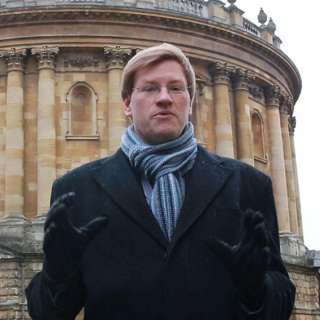
This ‘aestivation hypothesis’ is the invention of Dr Sandberg, a Senior Research Fellow at the Future of Humanity Institute at Oxford University, where he looks at low-probability, high-impact risks, predicting the capabilities of future technologies and very long-range futures for humanity.

In this incredibly fun conversation we cover this and other possible explanations to the Fermi paradox, as well as questions like:

* Should we want optimists or pessimists working on our most important problems?
* How should we reason about low probability, high impact risks?
* Would a galactic civilization want to stop the stars from burning?
* What would be the best strategy for exploring and colonising the universe?
* How can you stay coordinated when you’re spread across different galaxies?
* What should humanity decide to do with its future?

Get this episode by subscribing to our podcast on the world’s most pressing problems and how to solve them: search for '80,000 Hours' in your podcasting app.

The 80,000 Hours Podcast is produced by Keiran Harris.

Jaksot(320)

Don’t believe OpenAI’s “nonprofit” spin (emergency pod with Tyler Whitmer)

Don’t believe OpenAI’s “nonprofit” spin (emergency pod with Tyler Whitmer)

OpenAI’s recent announcement that its nonprofit would “retain control” of its for-profit business sounds reassuring. But this seemingly major concession, celebrated by so many, is in itself largely me...

15 Touko 20251h 12min

The case for and against AGI by 2030 (article by Benjamin Todd)

The case for and against AGI by 2030 (article by Benjamin Todd)

More and more people have been saying that we might have AGI (artificial general intelligence) before 2030. Is that really plausible? This article by Benjamin Todd looks into the cases for and against...

12 Touko 20251h

Emergency pod: Did OpenAI give up, or is this just a new trap? (with Rose Chan Loui)

Emergency pod: Did OpenAI give up, or is this just a new trap? (with Rose Chan Loui)

When attorneys general intervene in corporate affairs, it usually means something has gone seriously wrong. In OpenAI’s case, it appears to have forced a dramatic reversal of the company’s plans to si...

8 Touko 20251h 2min

#216 – Ian Dunt on why governments in Britain and elsewhere can't get anything done – and how to fix it

#216 – Ian Dunt on why governments in Britain and elsewhere can't get anything done – and how to fix it

When you have a system where ministers almost never understand their portfolios, civil servants change jobs every few months, and MPs don't grasp parliamentary procedure even after decades in office —...

2 Touko 20253h 14min

Serendipity, weird bets, & cold emails that actually work: Career advice from 16 former guests

Serendipity, weird bets, & cold emails that actually work: Career advice from 16 former guests

How do you navigate a career path when the future of work is uncertain? How important is mentorship versus immediate impact? Is it better to focus on your strengths or on the world’s most pressing pro...

24 Huhti 20252h 18min

#215 – Tom Davidson on how AI-enabled coups could allow a tiny group to seize power

#215 – Tom Davidson on how AI-enabled coups could allow a tiny group to seize power

Throughout history, technological revolutions have fundamentally shifted the balance of power in society. The Industrial Revolution created conditions where democracies could flourish for the first ti...

16 Huhti 20253h 22min

Guilt, imposter syndrome & doing good: 16 past guests share their mental health journeys

Guilt, imposter syndrome & doing good: 16 past guests share their mental health journeys

"We are aiming for a place where we can decouple the scorecard from our worthiness. It’s of course the case that in trying to optimise the good, we will always be falling short. The question is how mu...

11 Huhti 20251h 47min

#214 – Buck Shlegeris on controlling AI that wants to take over – so we can use it anyway

#214 – Buck Shlegeris on controlling AI that wants to take over – so we can use it anyway

Most AI safety conversations centre on alignment: ensuring AI systems share our values and goals. But despite progress, we’re unlikely to know we’ve solved the problem before the arrival of human-leve...

4 Huhti 20252h 16min

Suosittua kategoriassa Koulutus

rss-murhan-anatomia
psykopodiaa-podcast
rss-narsisti
voi-hyvin-meditaatiot-2
aamukahvilla
rss-vapaudu-voimaasi
psykologia
rss-liian-kuuma-peruna
dear-ladies
leveli
adhd-podi
kesken
rss-duodecim-lehti
aloita-meditaatio
ihminen-tavattavissa-tommy-hellsten-instituutti
rss-koira-haudattuna
rahapuhetta
ilona-rauhala
rss-niinku-asia-on
rss-luonnollinen-synnytys-podcast