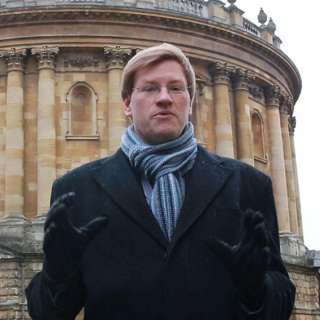

#29 - Anders Sandberg on 3 new resolutions for the Fermi paradox & how to colonise the universe

#29 - Anders Sandberg on 3 new resolutions for the Fermi paradox & how to colonise the universe

Part 2 out now: #33 - Dr Anders Sandberg on what if we ended ageing, solar flares & the annual risk of nuclear war

The universe is so vast, yet we don’t see any alien civilizations. If they exist, where are they? Oxford University’s Anders Sandberg has an original answer: they’re ‘sleeping’, and for a very compelling reason.

Because of the thermodynamics of computation, the colder it gets, the more computations you can do. The universe is getting exponentially colder as it expands, and as the universe cools, one Joule of energy gets worth more and more. If they wait long enough this can become a 10,000,000,000,000,000,000,000,000,000,000x gain. So, if a civilization wanted to maximize its ability to perform computations – its best option might be to lie in wait for trillions of years.

Why would a civilization want to maximise the number of computations they can do? Because conscious minds are probably generated by computation, so doing twice as many computations is like living twice as long, in subjective time. Waiting will allow them to generate vastly more science, art, pleasure, or almost anything else they are likely to care about.

Full transcript, related links, and key quotes.

But there’s no point waking up to find another civilization has taken over and used up the universe’s energy. So they’ll need some sort of monitoring to protect their resources from potential competitors like us.

It’s plausible that this civilization would want to keep the universe’s matter concentrated, so that each part would be in reach of the other parts, even after the universe’s expansion. But that would mean changing the trajectory of galaxies during this dormant period. That we don’t see anything like that makes it more likely that these aliens have local outposts throughout the universe, and we wouldn’t notice them until we broke their rules. But breaking their rules might be our last action as a species.

This ‘aestivation hypothesis’ is the invention of Dr Sandberg, a Senior Research Fellow at the Future of Humanity Institute at Oxford University, where he looks at low-probability, high-impact risks, predicting the capabilities of future technologies and very long-range futures for humanity.

In this incredibly fun conversation we cover this and other possible explanations to the Fermi paradox, as well as questions like:

* Should we want optimists or pessimists working on our most important problems?
* How should we reason about low probability, high impact risks?
* Would a galactic civilization want to stop the stars from burning?
* What would be the best strategy for exploring and colonising the universe?
* How can you stay coordinated when you’re spread across different galaxies?
* What should humanity decide to do with its future?

Get this episode by subscribing to our podcast on the world’s most pressing problems and how to solve them: search for '80,000 Hours' in your podcasting app.

The 80,000 Hours Podcast is produced by Keiran Harris.

Jaksot(321)

#205 – Sébastien Moro on the most insane things fish can do

#205 – Sébastien Moro on the most insane things fish can do

"You have a tank split in two parts: if the fish gets in the compartment with a red circle, it will receive food, and food will be delivered in the other tank as well. If the fish takes the blue trian...

23 Loka 20243h 11min

#204 – Nate Silver on making sense of SBF, and his biggest critiques of effective altruism

#204 – Nate Silver on making sense of SBF, and his biggest critiques of effective altruism

Rob Wiblin speaks with FiveThirtyEight election forecaster and author Nate Silver about his new book: On the Edge: The Art of Risking Everything.Links to learn more, highlights, video, and full transc...

16 Loka 20241h 57min

#203 – Peter Godfrey-Smith on interfering with wild nature, accepting death, and the origin of complex civilisation

#203 – Peter Godfrey-Smith on interfering with wild nature, accepting death, and the origin of complex civilisation

"In the human case, it would be mistaken to give a kind of hour-by-hour accounting. You know, 'I had +4 level of experience for this hour, then I had -2 for the next hour, and then I had -1' — and you...

3 Loka 20241h 25min

Luisa and Keiran on free will, and the consequences of never feeling enduring guilt or shame

Luisa and Keiran on free will, and the consequences of never feeling enduring guilt or shame

In this episode from our second show, 80k After Hours, Luisa Rodriguez and Keiran Harris chat about the consequences of letting go of enduring guilt, shame, anger, and pride.Links to learn more, highl...

27 Syys 20241h 36min
#202 – Venki Ramakrishnan on the cutting edge of anti-ageing science

#202 – Venki Ramakrishnan on the cutting edge of anti-ageing science

"For every far-out idea that turns out to be true, there were probably hundreds that were simply crackpot ideas. In general, [science] advances building on the knowledge we have, and seeing what the n...

19 Syys 20242h 20min

#201 – Ken Goldberg on why your robot butler isn’t here yet

#201 – Ken Goldberg on why your robot butler isn’t here yet

"Perception is quite difficult with cameras: even if you have a stereo camera, you still can’t really build a map of where everything is in space. It’s just very difficult. And I know that sounds surp...

13 Syys 20242h 1min
#200 – Ezra Karger on what superforecasters and experts think about existential risks

#200 – Ezra Karger on what superforecasters and experts think about existential risks

"It’s very hard to find examples where people say, 'I’m starting from this point. I’m starting from this belief.' So we wanted to make that very legible to people. We wanted to say, 'Experts think thi...

4 Syys 20242h 49min
#199 – Nathan Calvin on California’s AI bill SB 1047 and its potential to shape US AI policy

#199 – Nathan Calvin on California’s AI bill SB 1047 and its potential to shape US AI policy

"I do think that there is a really significant sentiment among parts of the opposition that it’s not really just that this bill itself is that bad or extreme — when you really drill into it, it feels ...

29 Elo 20241h 12min

Suosittua kategoriassa Koulutus

rss-murhan-anatomia
psykopodiaa-podcast
voi-hyvin-meditaatiot-2
rss-narsisti
rss-liian-kuuma-peruna
rss-vapaudu-voimaasi
dear-ladies
psykologia
leveli
rss-duodecim-lehti
rss-valo-minussa-2
kesken
ihminen-tavattavissa-tommy-hellsten-instituutti
rss-uskonto-on-tylsaa
rss-hereilla
adhd-podi
rss-tietoinen-yhteys-podcast-2
rss-ai-mita-siskopodcast
rss-luonnollinen-synnytys-podcast
rss-arkea-ja-aurinkoa-podcast-espanjasta