
#32 - Bryan Caplan on whether his Case Against Education holds up, totalitarianism, & open borders

#32 - Bryan Caplan on whether his Case Against Education holds up, totalitarianism, & open borders

Bryan Caplan’s claim in *The Case Against Education* is striking: education doesn’t teach people much, we use little of what we learn, and college is mostly about trying to seem smarter than other people - so the government should slash education funding.

It’s a dismaying - almost profane - idea, and one people are inclined to dismiss out of hand. But having read the book, I have to admit that Bryan can point to a surprising amount of evidence in his favour.

After all, imagine this dilemma: you can have either a Princeton education without a diploma, or a Princeton diploma without an education. Which is the bigger benefit of college - learning or convincing people you’re smart? It’s not so easy to say.

For this interview, I searched for the best counterarguments I could find and challenged Bryan on what seem like his weakest or most controversial claims.

Wouldn’t defunding education be especially bad for capable but low income students? If you reduced funding for education, wouldn’t that just lower prices, and not actually change the number of years people study? Is it really true that students who drop out in their final year of college earn about the same as people who never go to college at all?

What about studies that show that extra years of education boost IQ scores? And surely the early years of primary school, when you learn reading and arithmetic, *are* useful even if college isn’t.

I then get his advice on who should study, what they should study, and where they should study, if he’s right that college is mostly about separating yourself from the pack.

Full transcript, links to learn more, and summary of key points.

We then venture into some of Bryan’s other unorthodox views - like that immigration restrictions are a human rights violation, or that we should worry about the risk of global totalitarianism.

Bryan is a Professor of Economics at George Mason University, and a blogger at *EconLog*. He is also the author of *Selfish Reasons to Have More Kids: Why Being a Great Parent is Less Work and More Fun Than You Think*, and *The Myth of the Rational Voter: Why Democracies Choose Bad Policies*.

Get this episode by subscribing to our podcast on the world’s most pressing problems and how to solve them: type *80,000 Hours* into your podcasting app.

In this lengthy interview, Rob and Bryan cover:

* How worried should we be about China’s new citizen ranking system as a means of authoritarian rule?
* How will advances in surveillance technology impact a government’s ability to rule absolutely?
* Does more global coordination make us safer, or more at risk?
* Should the push for open borders be a major cause area for effective altruism?
* Are immigration restrictions a human rights violation?
* Why aren’t libertarian-minded people more focused on modern slavery?
* Should altruists work on criminal justice reform or reducing land use regulations?
* What’s the greatest art form: opera, or Nicki Minaj?
* What are the main implications of Bryan’s thesis for society?
* Is elementary school more valuable than university?
* What does Bryan think are the best arguments against his view?
* Do years of education affect political affiliation?
* How do people really improve themselves and their circumstances?
* Who should and who shouldn’t do a masters or PhD?
* The value of teaching foreign languages in school
* Are there some skills people can develop that have wide applicability?

Get this episode by subscribing: search for '80,000 Hours' in your podcasting app.

The 80,000 Hours Podcast is produced by Keiran Harris.

Jaksot(326)

#58 – Pushmeet Kohli of DeepMind on designing robust & reliable AI systems and how to succeed in AI

#58 – Pushmeet Kohli of DeepMind on designing robust & reliable AI systems and how to succeed in AI

When you're building a bridge, responsibility for making sure it won't fall over isn't handed over to a few 'bridge not falling down engineers'. Making sure a bridge is safe to use and remains standin...

3 Kesä 20191h 30min

Rob Wiblin on human nature, new technology, and living a happy, healthy & ethical life

Rob Wiblin on human nature, new technology, and living a happy, healthy & ethical life

This is a cross-post of some interviews Rob did recently on two other podcasts — Mission Daily (from 2m) and The Good Life (from 1h13m). Some of the content will be familiar to regular listeners — bu...

13 Touko 20192h 18min
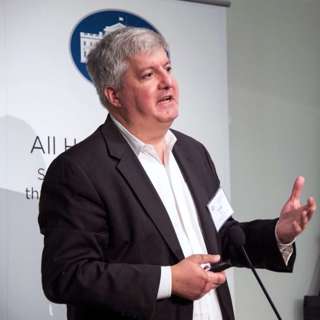
#57 – Tom Kalil on how to do the most good in government

#57 – Tom Kalil on how to do the most good in government

You’re 29 years old, and you’ve just been given a job in the White House. How do you quickly figure out how the US Executive Branch behemoth actually works, so that you can have as much impact as poss...

23 Huhti 20192h 50min

#56 - Persis Eskander on wild animal welfare and what, if anything, to do about it

#56 - Persis Eskander on wild animal welfare and what, if anything, to do about it

Elephants in chains at travelling circuses; pregnant pigs trapped in coffin sized crates at factory farms; deers living in the wild. We should welcome the last as a pleasant break from the horror, rig...

15 Huhti 20192h 57min

#55 – Lutter & Winter on founding charter cities with outstanding governance to end poverty

#55 – Lutter & Winter on founding charter cities with outstanding governance to end poverty

Governance matters. Policy change quickly took China from famine to fortune; Singapore from swamps to skyscrapers; and Hong Kong from fishing village to financial centre. Unfortunately, many governmen...

31 Maalis 20192h 31min

#54 – OpenAI on publication norms, malicious uses of AI, and general-purpose learning algorithms

#54 – OpenAI on publication norms, malicious uses of AI, and general-purpose learning algorithms

OpenAI’s Dactyl is an AI system that can manipulate objects with a human-like robot hand. OpenAI Five is an AI system that can defeat humans at the video game Dota 2. The strange thing is they were bo...

19 Maalis 20192h 53min

#53 - Kelsey Piper on the room for important advocacy within journalism

#53 - Kelsey Piper on the room for important advocacy within journalism

“Politics. Business. Opinion. Science. Sports. Animal welfare. Existential risk.” Is this a plausible future lineup for major news outlets? Funded by the Rockefeller Foundation and given very little ...

27 Helmi 20192h 34min

Julia Galef and Rob Wiblin on an updated view of the best ways to help humanity

Julia Galef and Rob Wiblin on an updated view of the best ways to help humanity

This is a cross-post of an interview Rob did with Julia Galef on her podcast Rationally Speaking. Rob and Julia discuss how the career advice 80,000 Hours gives has changed over the years, and the big...

17 Helmi 201956min

Suosittua kategoriassa Koulutus

rss-murhan-anatomia
voi-hyvin-meditaatiot-2
psykopodiaa-podcast
rss-narsisti
adhd-podi
rahapuhetta
rss-rahamania
kesken
psykologia
rss-liian-kuuma-peruna
rss-eron-alkemiaa
rss-arkea-ja-aurinkoa-podcast-espanjasta
rss-niinku-asia-on
rss-luonnollinen-synnytys-podcast
rss-vapaudu-voimaasi
ihminen-tavattavissa-tommy-hellsten-instituutti
rss-duodecim-lehti
rss-finnish-daily-dialogues
esa-saarinen-filosofia-ja-systeemiajattelu
rss-tietoinen-yhteys-podcast-2