

#38 - Yew-Kwang Ng on anticipating effective altruism decades ago & how to make a much happier world
80,000 Hours Podcast26 Heinä 2018

#38 - Yew-Kwang Ng on anticipating effective altruism decades ago & how to make a much happier world

Will people who think carefully about how to maximize welfare eventually converge on the same views?

The effective altruism community has spent a lot of time over the past 10 years debating how best to increase happiness and reduce suffering, and gradually narrowed in on the world’s poorest people, all animals capable of suffering, and future generations.

Yew-Kwang Ng, Professor of Economics at Nanyang Technological University in Singapore, was independently working on this exact question since the 70s. Many of his conclusions have ended up foreshadowing what is now conventional wisdom within effective altruism - though other views he holds remain controversial or little-known.

For instance, he thinks we ought to explore increasing pleasure via direct brain stimulation, and that genetic engineering may be an important tool for increasing happiness in the future.

His work has suggested that the welfare of most wild animals is on balance negative and he thinks that in the future this is a problem humanity might work to solve. Yet he thinks that greatly improved conditions for farm animals could eventually justify eating meat.

He has spent most of his life advocating for the view that happiness, broadly construed, is the only intrinsically valuable thing.

If it’s true that careful researchers will converge as Prof Ng believes, these ideas may prove as prescient as his other, now widely accepted, opinions.

Link to our summary and appreciation of Kwang’s top publications and insights throughout a lifetime of research.

Kwang has led an exceptional life. While in high school he was drawn to physics, mathematics, and philosophy, yet he chose to study economics because of his dream: to establish communism in an independent Malaya.

But events in the Soviet Union and China, in addition to his burgeoning knowledge and academic appreciation of economics, would change his views about the practicability of communism. He would soon complete his journey from young revolutionary to academic economist, and eventually become a columnist writing in support of Deng Xiaoping’s Chinese economic reforms in the 80s.

He got his PhD at Sydney University in 1971, and has since published over 250 refereed papers - covering economics, biology, politics, mathematics, philosophy, psychology, and sociology.

He's most well-known for his work in welfare economics, and proposed ‘welfare biology’ as a new field of study. In 2007, he was made a Distinguished Fellow of the Economic Society of Australia, the highest award that the society bestows.

Links to learn more, summary and full transcript.

In this episode we discuss how he developed some of his most unusual ideas and his fascinating life story, including:

* Why Kwang believes that *’Happiness Is Absolute, Universal, Ultimate, Unidimensional, Cardinally Measurable and Interpersonally Comparable’*
* What are the most pressing questions in economics?
* Did Kwang have to worry about censorship from the Chinese government when promoting market economics, or concern for animal welfare?
* Welfare economics and where Kwang thinks it went wrong

Get this episode by subscribing to our podcast on the world’s most pressing problems and how to solve them: search for '80,000 Hours' in your podcasting app.

The 80,000 Hours Podcast is produced by Keiran Harris.

Jaksot(332)

#84 – Shruti Rajagopalan on what India did to stop COVID-19 and how well it worked

#84 – Shruti Rajagopalan on what India did to stop COVID-19 and how well it worked

When COVID-19 struck the US, everyone was told that hand sanitizer needed to be saved for healthcare professionals, so they should just wash their hands instead. But in India, many homes lack reliable...

13 Elo 20202h 58min
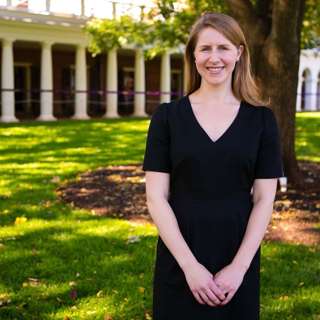
#83 - Jennifer Doleac on preventing crime without police and prisons

#83 - Jennifer Doleac on preventing crime without police and prisons

The killing of George Floyd has prompted a great deal of debate over whether the US should reduce the size of its police departments. The research literature suggests that the presence of police offic...

31 Heinä 20202h 23min
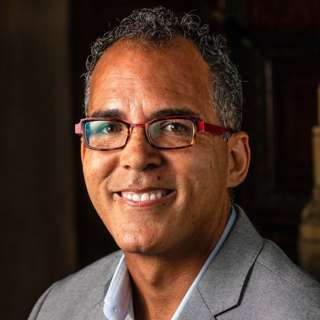
#82 – James Forman Jr on reducing the cruelty of the US criminal legal system

#82 – James Forman Jr on reducing the cruelty of the US criminal legal system

No democracy has ever incarcerated as many people as the United States. To get its incarceration rate down to the global average, the US would have to release 3 in 4 people in its prisons today.  The ...

27 Heinä 20201h 28min

#81 - Ben Garfinkel on scrutinising classic AI risk arguments

#81 - Ben Garfinkel on scrutinising classic AI risk arguments

80,000 Hours, along with many other members of the effective altruism movement, has argued that helping to positively shape the development of artificial intelligence may be one of the best ways to ha...

9 Heinä 20202h 38min

Advice on how to read our advice (Article)

Advice on how to read our advice (Article)

This is the fourth release in our new series of audio articles. If you want to read the original article or check out the links within it, you can find them here. "We’ve found that readers sometimes...

29 Kesä 202015min

#80 – Stuart Russell on why our approach to AI is broken and how to fix it

#80 – Stuart Russell on why our approach to AI is broken and how to fix it

Stuart Russell, Professor at UC Berkeley and co-author of the most popular AI textbook, thinks the way we approach machine learning today is fundamentally flawed. In his new book, Human Compatible, he...

22 Kesä 20202h 13min

What anonymous contributors think about important life and career questions (Article)

What anonymous contributors think about important life and career questions (Article)

Today we’re launching the final entry of our ‘anonymous answers' series on the website. It features answers to 23 different questions including “How have you seen talented people fail in their work?...

5 Kesä 202037min
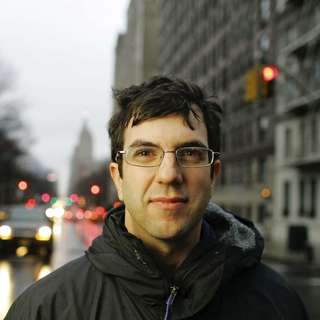
#79 – A.J. Jacobs on radical honesty, following the whole Bible, and reframing global problems as puzzles

#79 – A.J. Jacobs on radical honesty, following the whole Bible, and reframing global problems as puzzles

Today’s guest, New York Times bestselling author A.J. Jacobs, always hated Judge Judy. But after he found out that she was his seventh cousin, he thought, "You know what? She's not so bad." Hijacking ...

1 Kesä 20202h 38min

Suosittua kategoriassa Koulutus

rss-murhan-anatomia
psykopodiaa-podcast
voi-hyvin-meditaatiot-2
adhd-podi
psykologia
rss-tietoinen-yhteys-podcast-2
rss-valo-minussa-2
rss-rahamania
rss-niinku-asia-on
kesken
rss-liian-kuuma-peruna
rss-arkea-ja-aurinkoa-podcast-espanjasta
rss-vapaudu-voimaasi
rahapuhetta
dear-ladies
rss-uskonto-on-tylsaa
rss-narsisti
rss-hereilla
koodikahvit
aamukahvilla