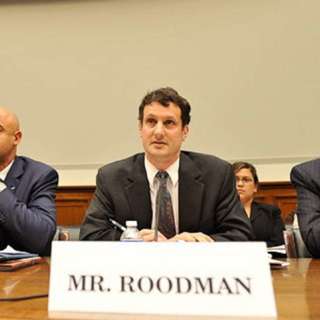

#41 - David Roodman on incarceration, geomagnetic storms, & becoming a world-class researcher

#41 - David Roodman on incarceration, geomagnetic storms, & becoming a world-class researcher

With 698 inmates per 100,000 citizens, the U.S. is by far the leader among large wealthy nations in incarceration. But what effect does imprisonment actually have on crime?

According to David Roodman, Senior Advisor to the Open Philanthropy Project, the marginal effect is zero.

* 80,000 HOURS IMPACT SURVEY - Let me know how this show has helped you with your career.
* ROB'S AUDIOBOOK RECOMMENDATIONS

This stunning rebuke to the American criminal justice system comes from the man Holden Karnofsky’s called "the gold standard for in-depth quantitative research", whose other investigations include the risk of geomagnetic storms, whether deworming improves health and test scores, and the development impacts of microfinance.

Links to learn more, summary and full transcript.

The effects of crime can be split into three categories; before, during, and after.

Does having tougher sentences deter people from committing crime?

After reviewing studies on gun laws and ‘three strikes’ in California, David concluded that the effect of deterrence is zero.

Does imprisoning more people reduce crime by incapacitating potential offenders?

Here he says yes, noting that crimes like motor vehicle theft have gone up in a way that seems pretty clearly connected with recent Californian criminal justice reforms (though the effect on violent crime is far lower).

Finally, do the after-effects of prison make you more or less likely to commit future crimes?

This one is more complicated.

Concerned that he was biased towards a comfortable position against incarceration, David did a cost-benefit analysis using both his favored reading of the evidence and the devil's advocate view; that there is deterrence and that the after-effects are beneficial.

For the devil’s advocate position David used the highest assessment of the harm caused by crime, which suggests a year of prison prevents about $92,000 in crime. But weighed against a lost year of liberty, valued at $50,000, plus the cost of operating prisons, the numbers came out exactly the same.

So even using the least-favorable cost-benefit valuation of the least favorable reading of the evidence -- it just breaks even.

The argument for incarceration melts further when you consider the significant crime that occurs within prisons, de-emphasised because of a lack of data and a perceived lack of compassion for inmates.

In today’s episode we discuss how to conduct such impactful research, and how to proceed having reached strong conclusions.

We also cover:

* How do you become a world class researcher? What kinds of character traits are important?
* Are academics aware of following perverse incentives?
* What’s involved in data replication? How often do papers replicate?
* The politics of large orgs vs. small orgs
* Geomagnetic storms as a potential cause area
* How much does David rely on interviews with experts?
* The effects of deworming on child health and test scores
* Should we have more ‘data vigilantes’?
* What are David’s critiques of effective altruism?
* What are the pros and cons of starting your career in the think tank world?

Get this episode by subscribing to our podcast on the world’s most pressing problems and how to solve them: type 80,000 Hours into your podcasting app. Or read the transcript below.

The 80,000 Hours Podcast is produced by Keiran Harris.

Tämä jakso on lisätty Podme-palveluun avoimen RSS-syötteen kautta eikä se ole Podmen omaa tuotantoa. Siksi jakso saattaa sisältää mainontaa.

Jaksot(334)

#226 – Holden Karnofsky on unexploited opportunities to make AI safer — and all his AGI takes

#226 – Holden Karnofsky on unexploited opportunities to make AI safer — and all his AGI takes

For years, working on AI safety usually meant theorising about the ‘alignment problem’ or trying to convince other people to give a damn. If you could find any way to help, the work was frustrating an...

30 Loka 20254h 30min

#225 – Daniel Kokotajlo on what a hyperspeed robot economy might look like

#225 – Daniel Kokotajlo on what a hyperspeed robot economy might look like

When Daniel Kokotajlo talks to security experts at major AI labs, they tell him something chilling: “Of course we’re probably penetrated by the CCP already, and if they really wanted something, they c...

27 Loka 20252h 12min
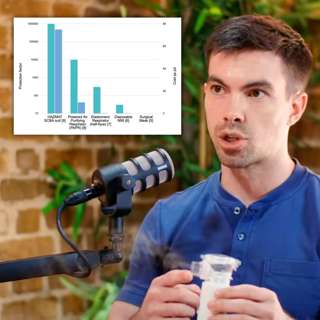
#224 – There's a cheap and low-tech way to save humanity from any engineered disease | Andrew Snyder-Beattie

#224 – There's a cheap and low-tech way to save humanity from any engineered disease | Andrew Snyder-Beattie

Conventional wisdom is that safeguarding humanity from the worst biological risks — microbes optimised to kill as many as possible — is difficult bordering on impossible, making bioweapons humanity’s ...

2 Loka 20252h 31min
Inside the Biden admin’s AI policy approach | Jake Sullivan, Biden’s NSA | via The Cognitive Revolution

Inside the Biden admin’s AI policy approach | Jake Sullivan, Biden’s NSA | via The Cognitive Revolution

Jake Sullivan was the US National Security Advisor from 2021-2025. He joined our friends on The Cognitive Revolution podcast in August to discuss AI as a critical national security issue. We thought i...

26 Syys 20251h 5min
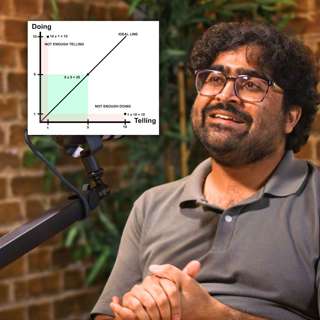
#223 – Neel Nanda on leading a Google DeepMind team at 26 – and advice if you want to work at an AI company (part 2)

#223 – Neel Nanda on leading a Google DeepMind team at 26 – and advice if you want to work at an AI company (part 2)

At 26, Neel Nanda leads an AI safety team at Google DeepMind, has published dozens of influential papers, and mentored 50 junior researchers — seven of whom now work at major AI companies. His secret?...

15 Syys 20251h 46min
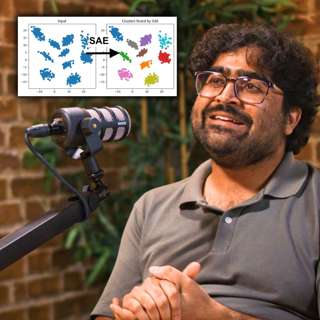
#222 – Can we tell if an AI is loyal by reading its mind? DeepMind's Neel Nanda (part 1)

#222 – Can we tell if an AI is loyal by reading its mind? DeepMind's Neel Nanda (part 1)

We don’t know how AIs think or why they do what they do. Or at least, we don’t know much. That fact is only becoming more troubling as AIs grow more capable and appear on track to wield enormous cultu...

8 Syys 20253h 1min

#221 – Kyle Fish on the most bizarre findings from 5 AI welfare experiments

#221 – Kyle Fish on the most bizarre findings from 5 AI welfare experiments

What happens when you lock two AI systems in a room together and tell them they can discuss anything they want?According to experiments run by Kyle Fish — Anthropic’s first AI welfare researcher — som...

28 Elo 20252h 28min

How not to lose your job to AI (article by Benjamin Todd)

How not to lose your job to AI (article by Benjamin Todd)

About half of people are worried they’ll lose their job to AI. They’re right to be concerned: AI can now complete real-world coding tasks on GitHub, generate photorealistic video, drive a taxi more sa...

31 Heinä 202551min

Suosittua kategoriassa Koulutus

rss-murhan-anatomia
psykopodiaa-podcast
voi-hyvin-meditaatiot-2
adhd-podi
rss-niinku-asia-on
rss-rahamania
rss-arkea-ja-aurinkoa-podcast-espanjasta
taytta-tavaraa
kesken
rss-liian-kuuma-peruna
rahapuhetta
kehossa
rss-duodecim-lehti
rss-valo-minussa-2
rss-narsisti
rss-hereilla
dear-ladies
psykologia
ihminen-tavattavissa-tommy-hellsten-instituutti
rss-tyohyvinvoinnin-aakkoset