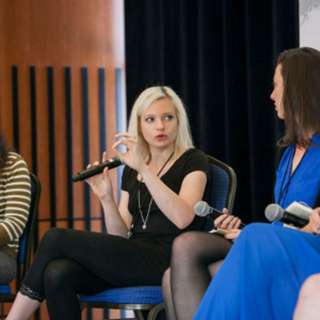

#42 - Amanda Askell on moral empathy, the value of information & the ethics of infinity

#42 - Amanda Askell on moral empathy, the value of information & the ethics of infinity

Consider two familiar moments at a family reunion.

Our host, Uncle Bill, takes pride in his barbecuing skills. But his niece Becky says that she now refuses to eat meat. A groan goes round the table; the family mostly think of this as an annoying picky preference. But if seriously considered as a moral position, as they might if instead Becky were avoiding meat on religious grounds, it would usually receive a very different reaction.

An hour later Bill expresses a strong objection to abortion. Again, a groan goes round the table; the family mostly think that he has no business in trying to foist his regressive preference on anyone. But if considered not as a matter of personal taste, but rather as a moral position - that Bill genuinely believes he’s opposing mass-murder - his comment might start a serious conversation.

Amanda Askell, who recently completed a PhD in philosophy at NYU focused on the ethics of infinity, thinks that we often betray a complete lack of moral empathy. All sides of the political spectrum struggle to get inside the mind of people we disagree with and see issues from their point of view.

Links to learn more, summary and full transcript.

This often happens because of confusion between preferences and moral positions.

Assuming good faith on the part of the person you disagree with, and actually engaging with the beliefs they claim to hold, is perhaps the best remedy for our inability to make progress on controversial issues.

One potential path for progress surrounds contraception; a lot of people who are anti-abortion are also anti-contraception. But they’ll usually think that abortion is much worse than contraception, so why can’t we compromise and agree to have much more contraception available?

According to Amanda, a charitable explanation for this is that people who are anti-abortion and anti-contraception engage in moral reasoning and advocacy based on what, in their minds, is the best of all possible worlds: one where people neither use contraception nor get abortions.

So instead of arguing about abortion and contraception, we could discuss the underlying principle that one should advocate for the best possible world, rather than the best probable world.

Successfully break down such ethical beliefs, absent political toxicity, and it might be possible to actually converge on a key point of agreement.

Today’s episode blends such everyday topics with in-depth philosophy, including:

* What is 'moral cluelessness' and how can we work around it?
* Amanda's biggest criticisms of social justice activists, and of critics of social justice activists
* Is there an ethical difference between prison and corporal punishment?
* How to resolve 'infinitarian paralysis' - the inability to make decisions when infinities are involved.
* What’s effective altruism doing wrong?
* How should we think about jargon? Are a lot of people who don’t communicate clearly just scamming us?
* How can people be more successful within the cocoon of school and university?
* How did Amanda find doing a philosophy PhD, and how will she decide what to do now?

Links:
* Career review: Congressional staffer
* Randomised experiment on quitting
* Psychology replication quiz
* Should you focus on your comparative advantage.

Get this episode by subscribing: type 80,000 Hours into your podcasting app.

The 80,000 Hours podcast is produced by Keiran Harris.

Jaksot(332)

Will MacAskill – AI character, surviving the intelligence explosion, and the case against utopia

Will MacAskill – AI character, surviving the intelligence explosion, and the case against utopia

Hundreds of millions already turn to AI on the most personal of topics — therapy, political opinions, and how to treat others. And as AI takes over more of the economy, the character of these systems ...

22 Huhti 3h 9min
Risks from power-seeking AI systems (article narration by Zershaaneh Qureshi)

Risks from power-seeking AI systems (article narration by Zershaaneh Qureshi)

Hundreds of prominent AI scientists and other notable figures signed a statement in 2023 saying that mitigating the risk of extinction from AI should be a global priority. At 80,000 Hours, we’ve consi...

16 Huhti 1h 29min

How scary is Claude Mythos? 303 pages in 21 minutes

How scary is Claude Mythos? 303 pages in 21 minutes

With Claude Mythos we have an AI that knows when it's being tested, can obscure its reasoning when it wants, and is better at breaking into (and out of) computers than any human alive. Rob Wiblin work...

10 Huhti 21min
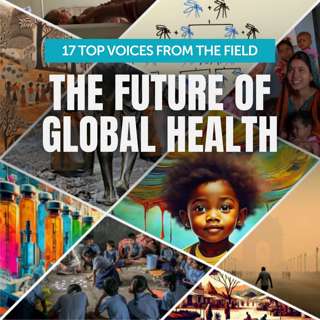
Village gossip, pesticide bans, and gene drives: 17 experts on the future of global health

Village gossip, pesticide bans, and gene drives: 17 experts on the future of global health

What does it really take to lift millions out of poverty and prevent needless deaths?In this special compilation episode, 17 past guests — including economists, nonprofit founders, and policy advisors...

7 Huhti 4h 6min

What everyone is missing about Anthropic vs the Pentagon. And: The Meta leaks are worse than you think.

What everyone is missing about Anthropic vs the Pentagon. And: The Meta leaks are worse than you think.

When the Pentagon tried to strong-arm Anthropic into dropping its ban on AI-only kill decisions and mass domestic surveillance, the company refused. Its critics went on the attack: Anthropic and its s...

3 Huhti 20min

#241 – Richard Moulange on how now AI codes viable genomes from scratch and outperforms virologists at lab work — what could go wrong?

#241 – Richard Moulange on how now AI codes viable genomes from scratch and outperforms virologists at lab work — what could go wrong?

Last September, scientists used an AI model to design genomes for entirely new bacteriophages (viruses that infect bacteria). They then built them in a lab. Many were viable. And despite being entirel...

31 Maalis 3h 7min

#240 – Samuel Charap on how a Ukraine ceasefire could accidentally set Europe up for a bigger war

#240 – Samuel Charap on how a Ukraine ceasefire could accidentally set Europe up for a bigger war

Many people believe a ceasefire in Ukraine will leave Europe safer. But today's guest lays out how a deal could potentially generate insidious new risks — leaving us in a situation that's equally dang...

24 Maalis 1h 12min
#239 – Rose Hadshar on why automating all human labour will break our political system

#239 – Rose Hadshar on why automating all human labour will break our political system

The most important political question in the age of advanced AI might not be who wins elections. It might be whether elections continue to matter at all.That’s the view of Rose Hadshar, researcher at ...

17 Maalis 2h 14min

Suosittua kategoriassa Koulutus

rss-murhan-anatomia
psykopodiaa-podcast
voi-hyvin-meditaatiot-2
adhd-podi
psykologia
rss-valo-minussa-2
rss-tietoinen-yhteys-podcast-2
rss-rahamania
rss-niinku-asia-on
kesken
rss-arkea-ja-aurinkoa-podcast-espanjasta
rahapuhetta
rss-liian-kuuma-peruna
rss-narsisti
dear-ladies
rss-eron-alkemiaa
rss-vapaudu-voimaasi
leikitaanko-laakaria
aamukahvilla
rss-uskonto-on-tylsaa