
#42 - Amanda Askell on moral empathy, the value of information & the ethics of infinity

#42 - Amanda Askell on moral empathy, the value of information & the ethics of infinity

Consider two familiar moments at a family reunion.

Our host, Uncle Bill, takes pride in his barbecuing skills. But his niece Becky says that she now refuses to eat meat. A groan goes round the table; the family mostly think of this as an annoying picky preference. But if seriously considered as a moral position, as they might if instead Becky were avoiding meat on religious grounds, it would usually receive a very different reaction.

An hour later Bill expresses a strong objection to abortion. Again, a groan goes round the table; the family mostly think that he has no business in trying to foist his regressive preference on anyone. But if considered not as a matter of personal taste, but rather as a moral position - that Bill genuinely believes he’s opposing mass-murder - his comment might start a serious conversation.

Amanda Askell, who recently completed a PhD in philosophy at NYU focused on the ethics of infinity, thinks that we often betray a complete lack of moral empathy. All sides of the political spectrum struggle to get inside the mind of people we disagree with and see issues from their point of view.

Links to learn more, summary and full transcript.

This often happens because of confusion between preferences and moral positions.

Assuming good faith on the part of the person you disagree with, and actually engaging with the beliefs they claim to hold, is perhaps the best remedy for our inability to make progress on controversial issues.

One potential path for progress surrounds contraception; a lot of people who are anti-abortion are also anti-contraception. But they’ll usually think that abortion is much worse than contraception, so why can’t we compromise and agree to have much more contraception available?

According to Amanda, a charitable explanation for this is that people who are anti-abortion and anti-contraception engage in moral reasoning and advocacy based on what, in their minds, is the best of all possible worlds: one where people neither use contraception nor get abortions.

So instead of arguing about abortion and contraception, we could discuss the underlying principle that one should advocate for the best possible world, rather than the best probable world.

Successfully break down such ethical beliefs, absent political toxicity, and it might be possible to actually converge on a key point of agreement.

Today’s episode blends such everyday topics with in-depth philosophy, including:

* What is 'moral cluelessness' and how can we work around it?
* Amanda's biggest criticisms of social justice activists, and of critics of social justice activists
* Is there an ethical difference between prison and corporal punishment?
* How to resolve 'infinitarian paralysis' - the inability to make decisions when infinities are involved.
* What’s effective altruism doing wrong?
* How should we think about jargon? Are a lot of people who don’t communicate clearly just scamming us?
* How can people be more successful within the cocoon of school and university?
* How did Amanda find doing a philosophy PhD, and how will she decide what to do now?

Links:
* Career review: Congressional staffer
* Randomised experiment on quitting
* Psychology replication quiz
* Should you focus on your comparative advantage.

Get this episode by subscribing: type 80,000 Hours into your podcasting app.

The 80,000 Hours podcast is produced by Keiran Harris.

Jaksot(321)

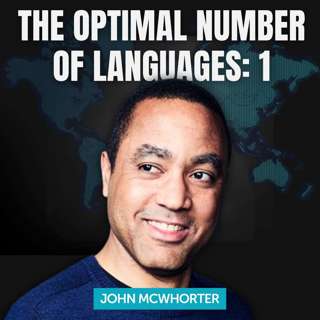
#142 Classic episode – John McWhorter on why the optimal number of languages might be one, and other provocative claims about language

#142 Classic episode – John McWhorter on why the optimal number of languages might be one, and other provocative claims about language

John McWhorter is a linguistics professor at Columbia University specialising in research on creole languages. He's also a content-producing machine, never afraid to give his frank opinion on anything...

6 Tammi 1h 35min

2025 Highlight-o-thon: Oops! All Bests

2025 Highlight-o-thon: Oops! All Bests

It’s that magical time of year once again — highlightapalooza! Stick around for one top bit from each episode we recorded this year, including:Kyle Fish explaining how Anthropic’s AI Claude descends i...

29 Joulu 20251h 40min

#232 – Andreas Mogensen on what we owe 'philosophical Vulcans' and unconscious beings

#232 – Andreas Mogensen on what we owe 'philosophical Vulcans' and unconscious beings

Most debates about the moral status of AI systems circle the same question: is there something that it feels like to be them? But what if that’s the wrong question to ask? Andreas Mogensen — a senior ...

19 Joulu 20252h 37min

#231 – Paul Scharre on how AI-controlled robots will and won't change war

#231 – Paul Scharre on how AI-controlled robots will and won't change war

In 1983, Stanislav Petrov, a Soviet lieutenant colonel, sat in a bunker watching a red screen flash “MISSILE LAUNCH.” Protocol demanded he report it to superiors, which would very likely trigger a ret...

17 Joulu 20252h 45min

AI might let a few people control everything — permanently (article by Rose Hadshar)

AI might let a few people control everything — permanently (article by Rose Hadshar)

Power is already concentrated today: over 800 million people live on less than $3 a day, the three richest men in the world are worth over $1 trillion, and almost six billion people live in countries ...

12 Joulu 20251h
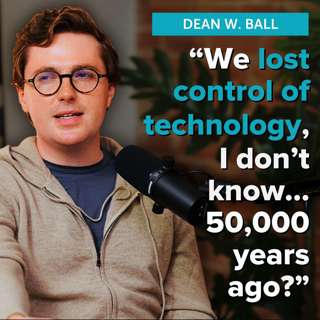
#230 – Dean Ball on how AI is a huge deal — but we shouldn’t regulate it yet

#230 – Dean Ball on how AI is a huge deal — but we shouldn’t regulate it yet

Former White House staffer Dean Ball thinks it's very likely some form of 'superintelligence' arrives in under 20 years. He thinks AI being used for bioweapon research is "a real threat model, obvious...

10 Joulu 20252h 54min

#229 – Marius Hobbhahn on the race to solve AI scheming before models go superhuman

#229 – Marius Hobbhahn on the race to solve AI scheming before models go superhuman

We often worry about AI models “hallucinating” or making honest mistakes. But what happens when a model knows the truth, but decides to deceive you anyway to achieve a goal of its own? This isn’t sci-...

3 Joulu 20253h 3min

Rob & Luisa chat kids, the 2016 fertility crash, and how the 50s invented parenting that makes us miserable

Rob & Luisa chat kids, the 2016 fertility crash, and how the 50s invented parenting that makes us miserable

Global fertility rates aren’t just falling: the rate of decline is accelerating. From 2006 to 2016, fertility dropped gradually, but since 2016 the rate of decline has increased 4.5-fold. In many weal...

25 Marras 20251h 59min

Suosittua kategoriassa Koulutus

rss-murhan-anatomia
rss-narsisti
psykopodiaa-podcast
voi-hyvin-meditaatiot-2
rss-liian-kuuma-peruna
rss-vapaudu-voimaasi
rss-hereilla
rss-valo-minussa-2
rss-uskonto-on-tylsaa
psykologia
kesken
dear-ladies
rss-luonnollinen-synnytys-podcast
rahapuhetta
rss-niinku-asia-on
ihminen-tavattavissa-tommy-hellsten-instituutti
leveli
rss-duodecim-lehti
rss-tietoinen-yhteys-podcast-2
rss-arkea-ja-aurinkoa-podcast-espanjasta