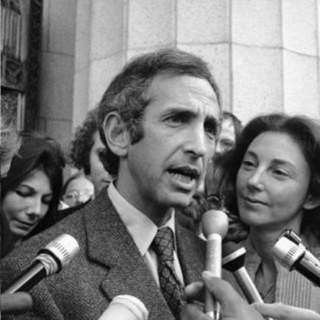
#43 - Daniel Ellsberg on the institutional insanity that maintains nuclear doomsday machines

#43 - Daniel Ellsberg on the institutional insanity that maintains nuclear doomsday machines

In Stanley Kubrick’s iconic film Dr. Strangelove, the American president is informed that the Soviet Union has created a secret deterrence system which will automatically wipe out humanity upon detection of a single nuclear explosion in Russia. With US bombs heading towards the USSR and unable to be recalled, Dr Strangelove points out that “the whole point of this Doomsday Machine is lost if you keep it a secret – why didn’t you tell the world, eh?” The Soviet ambassador replies that it was to be announced at the Party Congress the following Monday: “The Premier loves surprises”.

Daniel Ellsberg - leaker of the Pentagon Papers which helped end the Vietnam War and Nixon presidency - claims in his new book The Doomsday Machine: Confessions of a Nuclear War Planner that Dr. Strangelove might as well be a documentary. After attending the film in Washington DC in 1964, he and a colleague wondered how so many details of their nuclear planning had leaked.

Links to learn more, summary and full transcript.

The USSR did in fact develop a doomsday machine, Dead Hand, which probably remains active today.

If the system can’t contact military leaders, it checks for signs of a nuclear strike, and if it detects them, automatically launches all remaining Soviet weapons at targets across the northern hemisphere.

As in the film, the Soviet Union long kept Dead Hand completely secret, eliminating any strategic benefit, and rendering it a pointless menace to humanity.

You might think the United States would have a more sensible nuclear launch policy. You’d be wrong.

As Ellsberg explains, based on first-hand experience as a nuclear war planner in the 50s, that the notion that only the president is able to authorize the use of US nuclear weapons is a carefully cultivated myth.

The authority to launch nuclear weapons is delegated alarmingly far down the chain of command – significantly raising the chance that a lone wolf or communication breakdown could trigger a nuclear catastrophe.

The whole justification for this is to defend against a ‘decapitating attack’, where a first strike on Washington disables the ability of the US hierarchy to retaliate. In a moment of crisis, the Russians might view this as their best hope of survival.

Ostensibly, this delegation removes Russia’s temptation to attempt a decapitating attack – the US can retaliate even if its leadership is destroyed. This strategy only works, though, if the tell the enemy you’ve done it.

Instead, since the 50s this delegation has been one of the United States most closely guarded secrets, eliminating its strategic benefit, and rendering it another pointless menace to humanity.

Strategically, the setup is stupid. Ethically, it is monstrous.

So – how was such a system built? Why does it remain to this day? And how might we shrink our nuclear arsenals to the point they don’t risk the destruction of civilization?

Daniel explores these questions eloquently and urgently in his book. Today we cover:

* Why full disarmament today would be a mistake and the optimal number of nuclear weapons to hold
* How well are secrets kept in the government?
* What was the risk of the first atomic bomb test?
* The effect of Trump on nuclear security
* Do we have a reliable estimate of the magnitude of a ‘nuclear winter’?
* Why Gorbachev allowed Russia’s covert biological warfare program to continue

Get this episode by subscribing: type 80,000 Hours into your podcasting app.

The 80,000 Hours Podcast is produced by Keiran Harris.

Jaksot(325)

#28 - Owen Cotton-Barratt on why scientists should need insurance, PhD strategy & fast AI progresses

#28 - Owen Cotton-Barratt on why scientists should need insurance, PhD strategy & fast AI progresses

A researcher is working on creating a new virus – one more dangerous than any that exist naturally. They believe they’re being as careful as possible. After all, if things go wrong, their own life and...

27 Huhti 20181h 3min
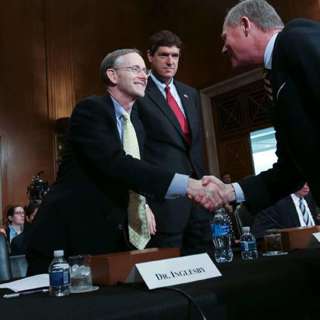
#27 - Dr Tom Inglesby on careers and policies that reduce global catastrophic biological risks

#27 - Dr Tom Inglesby on careers and policies that reduce global catastrophic biological risks

How about this for a movie idea: a main character has to prevent a new contagious strain of Ebola spreading around the world. She’s the best of the best. So good in fact, that her work on early detect...

18 Huhti 20182h 16min

#26 - Marie Gibbons on how exactly clean meat is made & what's needed to get it in every supermarket

#26 - Marie Gibbons on how exactly clean meat is made & what's needed to get it in every supermarket

First, decide on the type of animal. Next, pick the cell type. Then take a small, painless biopsy, and put the cells in a solution that makes them feel like they’re still in the body. Once the cells a...

10 Huhti 20181h 44min

#25 - Robin Hanson on why we have to lie to ourselves about why we do what we do

#25 - Robin Hanson on why we have to lie to ourselves about why we do what we do

On February 2, 1685, England’s King Charles II was struck by a sudden illness. Fortunately his physicians were the best of the best. To reassure the public they kept them abreast of the King’s treatme...

28 Maalis 20182h 39min
#24 - Stefan Schubert on why it’s a bad idea to break the rules, even if it’s for a good cause

#24 - Stefan Schubert on why it’s a bad idea to break the rules, even if it’s for a good cause

How honest should we be? How helpful? How friendly? If our society claims to value honesty, for instance, but in reality accepts an awful lot of lying – should we go along with those lax standards? Or...

20 Maalis 201855min
#23 - How to actually become an AI alignment researcher, according to Dr Jan Leike

#23 - How to actually become an AI alignment researcher, according to Dr Jan Leike

Want to help steer the 21st century’s most transformative technology? First complete an undergrad degree in computer science and mathematics. Prioritize harder courses over easier ones. Publish at lea...

16 Maalis 201845min

#22 - Leah Utyasheva on the non-profit that figured out how to massively cut suicide rates

#22 - Leah Utyasheva on the non-profit that figured out how to massively cut suicide rates

How people kill themselves varies enormously depending on which means are most easily available. In the United States, suicide by firearm stands out. In Hong Kong, where most people live in high rise ...

7 Maalis 20181h 8min
#21 - Holden Karnofsky on times philanthropy transformed the world & Open Phil’s plan to do the same

#21 - Holden Karnofsky on times philanthropy transformed the world & Open Phil’s plan to do the same

The Green Revolution averted mass famine during the 20th century. The contraceptive pill gave women unprecedented freedom in planning their own lives. Both are widely recognised as scientific breakthr...

27 Helmi 20182h 35min

Suosittua kategoriassa Koulutus

rss-murhan-anatomia
voi-hyvin-meditaatiot-2
rss-narsisti
adhd-podi
psykopodiaa-podcast
rss-uskonto-on-tylsaa
rss-rahamania
rss-duodecim-lehti
rss-valo-minussa-2
rss-vapaudu-voimaasi
rss-liian-kuuma-peruna
rahapuhetta
rss-niinku-asia-on
aloita-meditaatio
kesken
dear-ladies
mielipaivakirja
rss-eron-alkemiaa
rss-tietoinen-yhteys-podcast-2
aamukahvilla