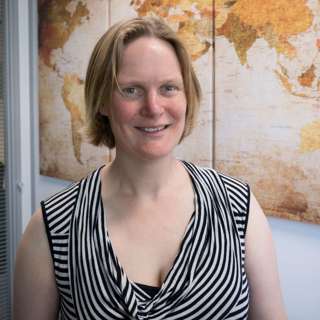

#46 - Hilary Greaves on moral cluelessness & tackling crucial questions in academia

#46 - Hilary Greaves on moral cluelessness & tackling crucial questions in academia

The barista gives you your coffee and change, and you walk away from the busy line. But you suddenly realise she gave you $1 less than she should have. Do you brush your way past the people now waiting, or just accept this as a dollar you’re never getting back? According to philosophy Professor Hilary Greaves - Director of Oxford University's Global Priorities Institute, which is hiring - this simple decision will completely change the long-term future by altering the identities of almost all future generations.

How? Because by rushing back to the counter, you slightly change the timing of everything else people in line do during that day - including changing the timing of the interactions they have with everyone else. Eventually these causal links will reach someone who was going to conceive a child.

By causing a child to be conceived a few fractions of a second earlier or later, you change the sperm that fertilizes their egg, resulting in a totally different person. So asking for that $1 has now made the difference between all the things that this actual child will do in their life, and all the things that the merely possible child - who didn't exist because of what you did - would have done if you decided not to worry about it.

As that child's actions ripple out to everyone else who conceives down the generations, ultimately the entire human population will become different, all for the sake of your dollar. Will your choice cause a future Hitler to be born, or not to be born? Probably both!

Links to learn more, summary and full transcript.

Some find this concerning. The actual long term effects of your decisions are so unpredictable, it looks like you’re totally clueless about what's going to lead to the best outcomes. It might lead to decision paralysis - you won’t be able to take any action at all.

Prof Greaves doesn’t share this concern for most real life decisions. If there’s no reasonable way to assign probabilities to far-future outcomes, then the possibility that you might make things better in completely unpredictable ways is more or less canceled out by equally likely opposite possibility.

But, if instead we’re talking about a decision that involves highly-structured, systematic reasons for thinking there might be a general tendency of your action to make things better or worse -- for example if we increase economic growth -- Prof Greaves says that we don’t get to just ignore the unforeseeable effects.

When there are complex arguments on both sides, it's unclear what probabilities you should assign to this or that claim. Yet, given its importance, whether you should take the action in question actually does depend on figuring out these numbers. So, what do we do?

Today’s episode blends philosophy with an exploration of the mission and research agenda of the Global Priorities Institute: to develop the effective altruism movement within academia. We cover:

* How controversial is the multiverse interpretation of quantum physics?
* Given moral uncertainty, how should population ethics affect our real life decisions?
* How should we think about archetypal decision theory problems?
* What are the consequences of cluelessness for those who based their donation advice on GiveWell style recommendations?
* How could reducing extinction risk be a good cause for risk-averse people?

Get this episode by subscribing: type '80,000 Hours' into your podcasting app.

The 80,000 Hours Podcast is produced by Keiran Harris.

Jaksot(321)

Benjamin Todd on the core of effective altruism and how to argue for it (80k team chat #3)

Benjamin Todd on the core of effective altruism and how to argue for it (80k team chat #3)

Today’s episode is the latest conversation between Arden Koehler, and our CEO, Ben Todd. Ben’s been thinking a lot about effective altruism recently, including what it really is, how it's framed, an...

22 Syys 20201h 24min

Ideas for high impact careers beyond our priority paths (Article)

Ideas for high impact careers beyond our priority paths (Article)

Today’s release is the latest in our series of audio versions of our articles. In this one, we go through some more career options beyond our priority paths that seem promising to us for positively ...

7 Syys 202027min

Benjamin Todd on varieties of longtermism and things 80,000 Hours might be getting wrong (80k team chat #2)

Benjamin Todd on varieties of longtermism and things 80,000 Hours might be getting wrong (80k team chat #2)

Today’s bonus episode is a conversation between Arden Koehler, and our CEO, Ben Todd. Ben’s been doing a bunch of research recently, and we thought it’d be interesting to hear about how he’s current...

1 Syys 202057min
Global issues beyond 80,000 Hours’ current priorities (Article)

Global issues beyond 80,000 Hours’ current priorities (Article)

Today’s release is the latest in our series of audio versions of our articles. In this one, we go through 30 global issues beyond the ones we usually prioritize most highly in our work, and that you...

28 Elo 202032min
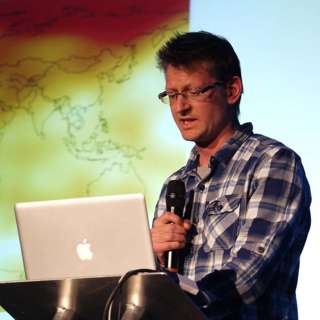
#85 - Mark Lynas on climate change, societal collapse & nuclear energy

#85 - Mark Lynas on climate change, societal collapse & nuclear energy

A golf-ball sized lump of uranium can deliver more than enough power to cover all of your lifetime energy use. To get the same energy from coal, you’d need 3,200 tonnes of black rock — a mass equivale...

20 Elo 20202h 8min
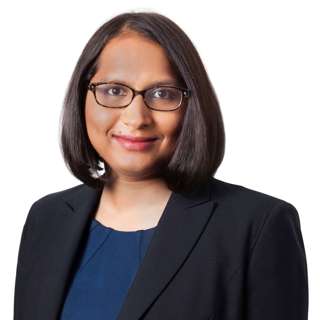
#84 – Shruti Rajagopalan on what India did to stop COVID-19 and how well it worked

#84 – Shruti Rajagopalan on what India did to stop COVID-19 and how well it worked

When COVID-19 struck the US, everyone was told that hand sanitizer needed to be saved for healthcare professionals, so they should just wash their hands instead. But in India, many homes lack reliable...

13 Elo 20202h 58min
#83 - Jennifer Doleac on preventing crime without police and prisons

#83 - Jennifer Doleac on preventing crime without police and prisons

The killing of George Floyd has prompted a great deal of debate over whether the US should reduce the size of its police departments. The research literature suggests that the presence of police offic...

31 Heinä 20202h 23min
#82 – James Forman Jr on reducing the cruelty of the US criminal legal system

#82 – James Forman Jr on reducing the cruelty of the US criminal legal system

No democracy has ever incarcerated as many people as the United States. To get its incarceration rate down to the global average, the US would have to release 3 in 4 people in its prisons today.  The ...

27 Heinä 20201h 28min

Suosittua kategoriassa Koulutus

rss-murhan-anatomia
psykopodiaa-podcast
voi-hyvin-meditaatiot-2
rss-narsisti
rss-liian-kuuma-peruna
rss-vapaudu-voimaasi
dear-ladies
psykologia
leveli
rss-duodecim-lehti
rss-valo-minussa-2
kesken
ihminen-tavattavissa-tommy-hellsten-instituutti
rss-uskonto-on-tylsaa
rss-hereilla
adhd-podi
rss-tietoinen-yhteys-podcast-2
rss-ai-mita-siskopodcast
rss-luonnollinen-synnytys-podcast
rss-arkea-ja-aurinkoa-podcast-espanjasta