#85 - Mark Lynas on climate change, societal collapse & nuclear energy

#85 - Mark Lynas on climate change, societal collapse & nuclear energy

A golf-ball sized lump of uranium can deliver more than enough power to cover all of your lifetime energy use. To get the same energy from coal, you’d need 3,200 tonnes of black rock — a mass equivalent to 800 adult elephants, which would produce more than 11,000 tonnes of CO2. That’s about 11,000 tonnes more than the uranium.

Many people aren’t comfortable with the danger posed by nuclear power. But given the climatic stakes, it’s worth asking: Just how much more dangerous is it compared to fossil fuels?

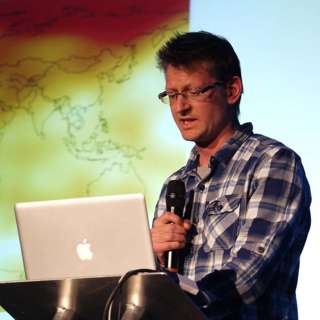
According to today’s guest, Mark Lynas — author of Six Degrees: Our Future on a Hotter Planet (winner of the prestigious Royal Society Prizes for Science Books) and Nuclear 2.0 — it’s actually much, much safer.

Links to learn more, summary and full transcript.

Climatologists James Hansen and Pushker Kharecha calculated that the use of nuclear power between 1971 and 2009 avoided the premature deaths of 1.84 million people by avoiding air pollution from burning coal.

What about radiation or nuclear disasters? According to Our World In Data, in generating a given amount of electricity, nuclear, wind, and solar all cause about the same number of deaths — and it's a tiny number.

So what’s going on? Why isn’t everyone demanding a massive scale-up of nuclear energy to save lives and stop climate change? Mark and many other activists believe that unchecked climate change will result in the collapse of human civilization, so the stakes could not be higher.

Mark says that many environmentalists — including him — simply grew up with anti-nuclear attitudes all around them (possibly stemming from a conflation of nuclear weapons and nuclear energy) and haven't thought to question them.

But he thinks that once you believe in the climate emergency, you have to rethink your opposition to nuclear energy.

At 80,000 Hours we haven’t analysed the merits and flaws of the case for nuclear energy — especially compared to wind and solar paired with gas, hydro, or battery power to handle intermittency — but Mark is convinced.

He says it comes down to physics: Nuclear power is just so much denser.

We need to find an energy source that provides carbon-free power to ~10 billion people, and we need to do it while humanity is doubling or tripling (or more) its energy demand.

How do you do that without destroying the world's ecology? Mark thinks that nuclear is the only way.

Read a more in-depth version of the case for nuclear energy in the full blog post.

For Mark, the only argument against nuclear power is a political one -- that people won't want or accept it.

He says that he knows people in all kinds of mainstream environmental groups — such as Greenpeace — who agree that nuclear must be a vital part of any plan to solve climate change. But, because they think they'll be ostracized if they speak up, they keep their mouths shut.

Mark thinks this willingness to indulge beliefs that contradict scientific evidence stands in the way of actually fully addressing climate change, and so he’s helping to build a movement of folks who are out and proud about their support for nuclear energy.

This is only one topic of many in today’s interview. Arden, Rob, and Mark also discuss:

• At what degrees of warming does societal collapse become likely
• Whether climate change could lead to human extinction
• What environmentalists are getting wrong about climate change
• And much more.

Get this episode by subscribing: type 80,000 Hours into your podcasting app. Or read the linked transcript.

Producer: Keiran Harris.
Audio mastering: Ben Cordell.
Transcriptions: Zakee Ulhaq.

Jaksot(333)

'95% of AI Pilots Fail': The hidden agenda behind the viral stat that misled millions

'95% of AI Pilots Fail': The hidden agenda behind the viral stat that misled millions

You might have heard that '95% of corporate AI pilots' are failing. It was one of the most widely cited AI statistics of 2025, parroted by media outlets everywhere. It helped trigger a Nasdaq selloff ...

28 Huhti 10min

#242 – Will MacAskill on how we survive the 'intelligence explosion,' AI character, and the case for 'viatopia'

#242 – Will MacAskill on how we survive the 'intelligence explosion,' AI character, and the case for 'viatopia'

Hundreds of millions already turn to AI on the most personal of topics — therapy, political opinions, and how to treat others. And as AI takes over more of the economy, the character of these systems ...

22 Huhti 3h 9min

Risks from power-seeking AI systems (article narration by Zershaaneh Qureshi)

Risks from power-seeking AI systems (article narration by Zershaaneh Qureshi)

Hundreds of prominent AI scientists and other notable figures signed a statement in 2023 saying that mitigating the risk of extinction from AI should be a global priority. At 80,000 Hours, we’ve consi...

16 Huhti 1h 29min

How scary is Claude Mythos? 303 pages in 21 minutes

How scary is Claude Mythos? 303 pages in 21 minutes

With Claude Mythos we have an AI that knows when it's being tested, can obscure its reasoning when it wants, and is better at breaking into (and out of) computers than any human alive. Rob Wiblin work...

10 Huhti 21min

Village gossip, pesticide bans, and gene drives: 17 experts on the future of global health

Village gossip, pesticide bans, and gene drives: 17 experts on the future of global health

What does it really take to lift millions out of poverty and prevent needless deaths?In this special compilation episode, 17 past guests — including economists, nonprofit founders, and policy advisors...

7 Huhti 4h 6min

What everyone is missing about Anthropic vs the Pentagon. And: The Meta leaks are worse than you think.

What everyone is missing about Anthropic vs the Pentagon. And: The Meta leaks are worse than you think.

When the Pentagon tried to strong-arm Anthropic into dropping its ban on AI-only kill decisions and mass domestic surveillance, the company refused. Its critics went on the attack: Anthropic and its s...

3 Huhti 20min

#241 – Richard Moulange on how now AI codes viable genomes from scratch and outperforms virologists at lab work — what could go wrong?

#241 – Richard Moulange on how now AI codes viable genomes from scratch and outperforms virologists at lab work — what could go wrong?

Last September, scientists used an AI model to design genomes for entirely new bacteriophages (viruses that infect bacteria). They then built them in a lab. Many were viable. And despite being entirel...

31 Maalis 3h 7min

#240 – Samuel Charap on how a Ukraine ceasefire could accidentally set Europe up for a bigger war

#240 – Samuel Charap on how a Ukraine ceasefire could accidentally set Europe up for a bigger war

Many people believe a ceasefire in Ukraine will leave Europe safer. But today's guest lays out how a deal could potentially generate insidious new risks — leaving us in a situation that's equally dang...

24 Maalis 1h 12min

Suosittua kategoriassa Koulutus

rss-murhan-anatomia
psykopodiaa-podcast
voi-hyvin-meditaatiot-2
adhd-podi
rss-arkea-ja-aurinkoa-podcast-espanjasta
rss-niinku-asia-on
rss-liian-kuuma-peruna
rss-rahamania
kesken
rss-valo-minussa-2
rss-narsisti
taytta-tavaraa
rahapuhetta
kehossa
ihminen-tavattavissa-tommy-hellsten-instituutti
rss-duodecim-lehti
rss-tietoinen-yhteys-podcast-2
rss-vapaudu-voimaasi
rss-tyohyvinvoinnin-aakkoset
filocast-filosofian-perusteet