#46 - Hilary Greaves on moral cluelessness & tackling crucial questions in academia

#46 - Hilary Greaves on moral cluelessness & tackling crucial questions in academia

The barista gives you your coffee and change, and you walk away from the busy line. But you suddenly realise she gave you $1 less than she should have. Do you brush your way past the people now waiting, or just accept this as a dollar you’re never getting back? According to philosophy Professor Hilary Greaves - Director of Oxford University's Global Priorities Institute, which is hiring - this simple decision will completely change the long-term future by altering the identities of almost all future generations.

How? Because by rushing back to the counter, you slightly change the timing of everything else people in line do during that day - including changing the timing of the interactions they have with everyone else. Eventually these causal links will reach someone who was going to conceive a child.

By causing a child to be conceived a few fractions of a second earlier or later, you change the sperm that fertilizes their egg, resulting in a totally different person. So asking for that $1 has now made the difference between all the things that this actual child will do in their life, and all the things that the merely possible child - who didn't exist because of what you did - would have done if you decided not to worry about it.

As that child's actions ripple out to everyone else who conceives down the generations, ultimately the entire human population will become different, all for the sake of your dollar. Will your choice cause a future Hitler to be born, or not to be born? Probably both!

Links to learn more, summary and full transcript.

Some find this concerning. The actual long term effects of your decisions are so unpredictable, it looks like you’re totally clueless about what's going to lead to the best outcomes. It might lead to decision paralysis - you won’t be able to take any action at all.

Prof Greaves doesn’t share this concern for most real life decisions. If there’s no reasonable way to assign probabilities to far-future outcomes, then the possibility that you might make things better in completely unpredictable ways is more or less canceled out by equally likely opposite possibility.

But, if instead we’re talking about a decision that involves highly-structured, systematic reasons for thinking there might be a general tendency of your action to make things better or worse -- for example if we increase economic growth -- Prof Greaves says that we don’t get to just ignore the unforeseeable effects.

When there are complex arguments on both sides, it's unclear what probabilities you should assign to this or that claim. Yet, given its importance, whether you should take the action in question actually does depend on figuring out these numbers. So, what do we do?

Today’s episode blends philosophy with an exploration of the mission and research agenda of the Global Priorities Institute: to develop the effective altruism movement within academia. We cover:

* How controversial is the multiverse interpretation of quantum physics?
* Given moral uncertainty, how should population ethics affect our real life decisions?
* How should we think about archetypal decision theory problems?
* What are the consequences of cluelessness for those who based their donation advice on GiveWell style recommendations?
* How could reducing extinction risk be a good cause for risk-averse people?

Get this episode by subscribing: type '80,000 Hours' into your podcasting app.

The 80,000 Hours Podcast is produced by Keiran Harris.

Jaksot(325)

#28 - Owen Cotton-Barratt on why scientists should need insurance, PhD strategy & fast AI progresses

#28 - Owen Cotton-Barratt on why scientists should need insurance, PhD strategy & fast AI progresses

A researcher is working on creating a new virus – one more dangerous than any that exist naturally. They believe they’re being as careful as possible. After all, if things go wrong, their own life and...

27 Huhti 20181h 3min
#27 - Dr Tom Inglesby on careers and policies that reduce global catastrophic biological risks

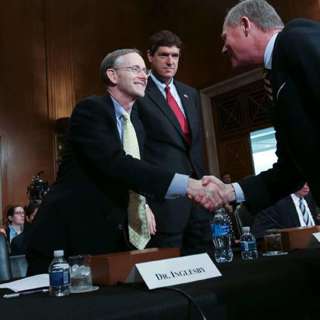
#27 - Dr Tom Inglesby on careers and policies that reduce global catastrophic biological risks

How about this for a movie idea: a main character has to prevent a new contagious strain of Ebola spreading around the world. She’s the best of the best. So good in fact, that her work on early detect...

18 Huhti 20182h 16min
#26 - Marie Gibbons on how exactly clean meat is made & what's needed to get it in every supermarket

#26 - Marie Gibbons on how exactly clean meat is made & what's needed to get it in every supermarket

First, decide on the type of animal. Next, pick the cell type. Then take a small, painless biopsy, and put the cells in a solution that makes them feel like they’re still in the body. Once the cells a...

10 Huhti 20181h 44min

#25 - Robin Hanson on why we have to lie to ourselves about why we do what we do

#25 - Robin Hanson on why we have to lie to ourselves about why we do what we do

On February 2, 1685, England’s King Charles II was struck by a sudden illness. Fortunately his physicians were the best of the best. To reassure the public they kept them abreast of the King’s treatme...

28 Maalis 20182h 39min
#24 - Stefan Schubert on why it’s a bad idea to break the rules, even if it’s for a good cause

#24 - Stefan Schubert on why it’s a bad idea to break the rules, even if it’s for a good cause

How honest should we be? How helpful? How friendly? If our society claims to value honesty, for instance, but in reality accepts an awful lot of lying – should we go along with those lax standards? Or...

20 Maalis 201855min
#23 - How to actually become an AI alignment researcher, according to Dr Jan Leike

#23 - How to actually become an AI alignment researcher, according to Dr Jan Leike

Want to help steer the 21st century’s most transformative technology? First complete an undergrad degree in computer science and mathematics. Prioritize harder courses over easier ones. Publish at lea...

16 Maalis 201845min
#22 - Leah Utyasheva on the non-profit that figured out how to massively cut suicide rates

#22 - Leah Utyasheva on the non-profit that figured out how to massively cut suicide rates

How people kill themselves varies enormously depending on which means are most easily available. In the United States, suicide by firearm stands out. In Hong Kong, where most people live in high rise ...

7 Maalis 20181h 8min
#21 - Holden Karnofsky on times philanthropy transformed the world & Open Phil’s plan to do the same

#21 - Holden Karnofsky on times philanthropy transformed the world & Open Phil’s plan to do the same

The Green Revolution averted mass famine during the 20th century. The contraceptive pill gave women unprecedented freedom in planning their own lives. Both are widely recognised as scientific breakthr...

27 Helmi 20182h 35min

Suosittua kategoriassa Koulutus

rss-murhan-anatomia
voi-hyvin-meditaatiot-2
rss-narsisti
psykopodiaa-podcast
adhd-podi
rss-rahamania
rss-valo-minussa-2
rss-vapaudu-voimaasi
rss-niinku-asia-on
mielipaivakirja
rss-uskonto-on-tylsaa
aamukahvilla
rss-duodecim-lehti
ilona-rauhala
kesken
psykologia
rss-eron-alkemiaa
rss-koira-haudattuna
rss-arkea-ja-aurinkoa-podcast-espanjasta
ihminen-tavattavissa-tommy-hellsten-instituutti