
#46 - Hilary Greaves on moral cluelessness & tackling crucial questions in academia

#46 - Hilary Greaves on moral cluelessness & tackling crucial questions in academia

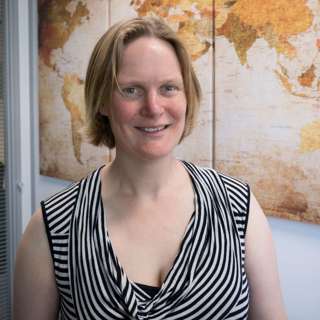
The barista gives you your coffee and change, and you walk away from the busy line. But you suddenly realise she gave you $1 less than she should have. Do you brush your way past the people now waiting, or just accept this as a dollar you’re never getting back? According to philosophy Professor Hilary Greaves - Director of Oxford University's Global Priorities Institute, which is hiring - this simple decision will completely change the long-term future by altering the identities of almost all future generations.

How? Because by rushing back to the counter, you slightly change the timing of everything else people in line do during that day - including changing the timing of the interactions they have with everyone else. Eventually these causal links will reach someone who was going to conceive a child.

By causing a child to be conceived a few fractions of a second earlier or later, you change the sperm that fertilizes their egg, resulting in a totally different person. So asking for that $1 has now made the difference between all the things that this actual child will do in their life, and all the things that the merely possible child - who didn't exist because of what you did - would have done if you decided not to worry about it.

As that child's actions ripple out to everyone else who conceives down the generations, ultimately the entire human population will become different, all for the sake of your dollar. Will your choice cause a future Hitler to be born, or not to be born? Probably both!

Links to learn more, summary and full transcript.

Some find this concerning. The actual long term effects of your decisions are so unpredictable, it looks like you’re totally clueless about what's going to lead to the best outcomes. It might lead to decision paralysis - you won’t be able to take any action at all.

Prof Greaves doesn’t share this concern for most real life decisions. If there’s no reasonable way to assign probabilities to far-future outcomes, then the possibility that you might make things better in completely unpredictable ways is more or less canceled out by equally likely opposite possibility.

But, if instead we’re talking about a decision that involves highly-structured, systematic reasons for thinking there might be a general tendency of your action to make things better or worse -- for example if we increase economic growth -- Prof Greaves says that we don’t get to just ignore the unforeseeable effects.

When there are complex arguments on both sides, it's unclear what probabilities you should assign to this or that claim. Yet, given its importance, whether you should take the action in question actually does depend on figuring out these numbers. So, what do we do?

Today’s episode blends philosophy with an exploration of the mission and research agenda of the Global Priorities Institute: to develop the effective altruism movement within academia. We cover:

* How controversial is the multiverse interpretation of quantum physics?
* Given moral uncertainty, how should population ethics affect our real life decisions?
* How should we think about archetypal decision theory problems?
* What are the consequences of cluelessness for those who based their donation advice on GiveWell style recommendations?
* How could reducing extinction risk be a good cause for risk-averse people?

Get this episode by subscribing: type '80,000 Hours' into your podcasting app.

The 80,000 Hours Podcast is produced by Keiran Harris.

Jaksot(323)

#218 – Hugh White on why Trump is abandoning US hegemony – and that’s probably good

#218 – Hugh White on why Trump is abandoning US hegemony – and that’s probably good

For decades, US allies have slept soundly under the protection of America’s overwhelming military might. Donald Trump — with his threats to ditch NATO, seize Greenland, and abandon Taiwan — seems hell...

12 Kesä 20252h 48min

#217 – Beth Barnes on the most important graph in AI right now — and the 7-month rule that governs its progress

#217 – Beth Barnes on the most important graph in AI right now — and the 7-month rule that governs its progress

AI models today have a 50% chance of successfully completing a task that would take an expert human one hour. Seven months ago, that number was roughly 30 minutes — and seven months before that, 15 mi...

2 Kesä 20253h 47min

Beyond human minds: The bewildering frontier of consciousness in insects, AI, and more

Beyond human minds: The bewildering frontier of consciousness in insects, AI, and more

What if there’s something it’s like to be a shrimp — or a chatbot?For centuries, humans have debated the nature of consciousness, often placing ourselves at the very top. But what about the minds of o...

23 Touko 20253h 34min

Don’t believe OpenAI’s “nonprofit” spin (emergency pod with Tyler Whitmer)

Don’t believe OpenAI’s “nonprofit” spin (emergency pod with Tyler Whitmer)

OpenAI’s recent announcement that its nonprofit would “retain control” of its for-profit business sounds reassuring. But this seemingly major concession, celebrated by so many, is in itself largely me...

15 Touko 20251h 12min

The case for and against AGI by 2030 (article by Benjamin Todd)

The case for and against AGI by 2030 (article by Benjamin Todd)

More and more people have been saying that we might have AGI (artificial general intelligence) before 2030. Is that really plausible? This article by Benjamin Todd looks into the cases for and against...

12 Touko 20251h

Emergency pod: Did OpenAI give up, or is this just a new trap? (with Rose Chan Loui)

Emergency pod: Did OpenAI give up, or is this just a new trap? (with Rose Chan Loui)

When attorneys general intervene in corporate affairs, it usually means something has gone seriously wrong. In OpenAI’s case, it appears to have forced a dramatic reversal of the company’s plans to si...

8 Touko 20251h 2min

#216 – Ian Dunt on why governments in Britain and elsewhere can't get anything done – and how to fix it

#216 – Ian Dunt on why governments in Britain and elsewhere can't get anything done – and how to fix it

When you have a system where ministers almost never understand their portfolios, civil servants change jobs every few months, and MPs don't grasp parliamentary procedure even after decades in office —...

2 Touko 20253h 14min

Serendipity, weird bets, & cold emails that actually work: Career advice from 16 former guests

Serendipity, weird bets, & cold emails that actually work: Career advice from 16 former guests

How do you navigate a career path when the future of work is uncertain? How important is mentorship versus immediate impact? Is it better to focus on your strengths or on the world’s most pressing pro...

24 Huhti 20252h 18min

Suosittua kategoriassa Koulutus

rss-murhan-anatomia
voi-hyvin-meditaatiot-2
rss-narsisti
psykopodiaa-podcast
psykologia
rss-uskonto-on-tylsaa
rss-vapaudu-voimaasi
rss-liian-kuuma-peruna
kesken
rahapuhetta
rss-niinku-asia-on
adhd-podi
rss-taloustaito-podcast
jari-sarasvuo-podcast
rss-the-amicast
rss-valo-minussa-2
rss-xamk-podcast
rss-arkea-ja-aurinkoa-podcast-espanjasta
rss-opi-espanjaa
rss-hereilla