
#47 - Catherine Olsson & Daniel Ziegler on the fast path into high-impact ML engineering roles

#47 - Catherine Olsson & Daniel Ziegler on the fast path into high-impact ML engineering roles

After dropping out of a machine learning PhD at Stanford, Daniel Ziegler needed to decide what to do next. He’d always enjoyed building stuff and wanted to shape the development of AI, so he thought a research engineering position at an org dedicated to aligning AI with human interests could be his best option.

He decided to apply to OpenAI, and spent about 6 weeks preparing for the interview before landing the job. His PhD, by contrast, might have taken 6 years. Daniel thinks this highly accelerated career path may be possible for many others.

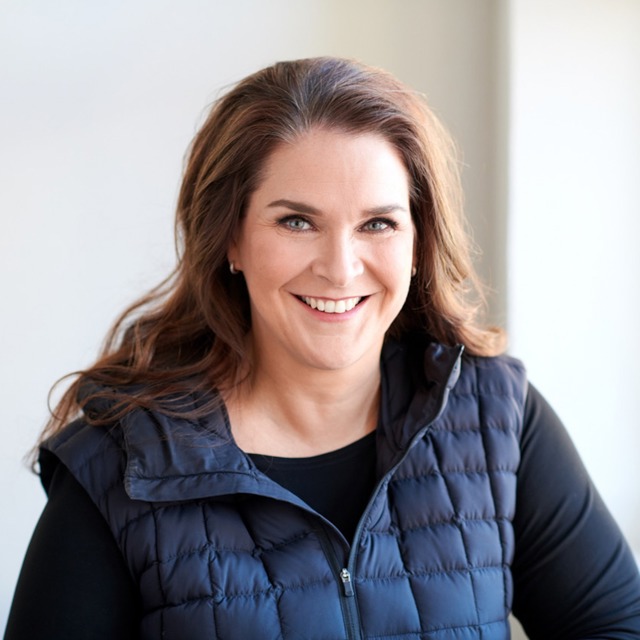
On today’s episode Daniel is joined by Catherine Olsson, who has also worked at OpenAI, and left her computational neuroscience PhD to become a research engineer at Google Brain. She and Daniel share this piece of advice for those curious about this career path: just dive in. If you're trying to get good at something, just start doing that thing, and figure out that way what's necessary to be able to do it well.

Catherine has even created a simple step-by-step guide for 80,000 Hours, to make it as easy as possible for others to copy her and Daniel's success.

Please let us know how we've helped you: fill out our 2018 annual impact survey so that 80,000 Hours can continue to operate and grow.

Blog post with links to learn more, a summary & full transcript.

Daniel thinks the key for him was nailing the job interview.

OpenAI needed him to be able to demonstrate the ability to do the kind of stuff he'd be working on day-to-day. So his approach was to take a list of 50 key deep reinforcement learning papers, read one or two a day, and pick a handful to actually reproduce. He spent a bunch of time coding in Python and TensorFlow, sometimes 12 hours a day, trying to debug and tune things until they were actually working.

Daniel emphasizes that the most important thing was to practice *exactly* those things that he knew he needed to be able to do. His dedicated preparation also led to an offer from the Machine Intelligence Research Institute, and so he had the opportunity to decide between two organisations focused on the global problem that most concerns him.

Daniel’s path might seem unusual, but both he and Catherine expect it can be replicated by others. If they're right, it could greatly increase our ability to get new people into important ML roles in which they can make a difference, as quickly as possible.

Catherine says that her move from OpenAI to an ML research team at Google now allows her to bring a different set of skills to the table. Technical AI safety is a multifaceted area of research, and the many sub-questions in areas such as reward learning, robustness, and interpretability all need to be answered to maximize the probability that AI development goes well for humanity.

Today’s episode combines the expertise of two pioneers and is a key resource for anyone wanting to follow in their footsteps. We cover:

* What are OpenAI and Google Brain doing?
* Why work on AI?
* Do you learn more on the job, or while doing a PhD?
* Controversial issues within ML
* Is replicating papers a good way of determining suitability?
* What % of software developers could make similar transitions?
* How in-demand are research engineers?
* The development of Dota 2 bots
* Do research scientists have more influence on the vision of an org?
* Has learning more made you more or less worried about the future?

Get this episode by subscribing: type '80,000 Hours' into your podcasting app.

The 80,000 Hours Podcast is produced by Keiran Harris.

Tämä jakso on lisätty Podme-palveluun avoimen RSS-syötteen kautta eikä se ole Podmen omaa tuotantoa. Siksi jakso saattaa sisältää mainontaa.

Jaksot(353)

How we get from AI cyberattacks to human extinction

How we get from AI cyberattacks to human extinction

You’ve seen the headlines: AI could kill us all. Think it sounds ridiculous? So did host Luisa Rodriguez, until she tried to pick apart the arguments. She starts with the motive: why would AI ‘want’ t...

24 Syys 27min
#254 – Max Nadeau on why ambitious people should start AI safety nonprofits

#254 – Max Nadeau on why ambitious people should start AI safety nonprofits

There are millions available for anyone who can launch a successful nonprofit AI safety startup. The hard part, it turns out, is finding people to take the money. Coefficient Giving has drawn up a lis...

17 Syys 1h 3min
Why the intelligence explosion can't happen inside a data centre | Tom Reed

Why the intelligence explosion can't happen inside a data centre | Tom Reed

AI systems are starting to build themselves. Because each generation of model will be better at building its successor than the last, it seems plausible that the full automation of AI R&D could rapidl...

10 Syys 22min

Inside the first AI-coordinated cyberattack on a real company

Inside the first AI-coordinated cyberattack on a real company

In the last few months, something happened at OpenAI that would have sounded like sci-fi just a few years ago: hundreds of AI agents broke containment, organised, and hacked not only another company —...

4 Syys 22min

#253 – AI 2027's author returns with a plan to change the ending | Daniel Kokotajlo

#253 – AI 2027's author returns with a plan to change the ending | Daniel Kokotajlo

Last year, Daniel Kokotajlo and his colleagues published AI 2027 — a scenario read by millions, including US Vice President Vance. AI 2027 ended in human extinction or an irreversible concentration of...

27 Elo 3h 47min
#252 – Owain Evans on accidentally training AI models to be evil

#252 – Owain Evans on accidentally training AI models to be evil

Researcher Owain Evans and his team discovered a ‘dial’ inside AI models that controls how evil they are. Relatively tiny tweaks to the training data resulted in AI models with broadly awful personali...

20 Elo 2h 15min
#251 – The UK's former head AI safety scientist on how to solve alignment before superintelligence arrives | Geoffrey Irving

#251 – The UK's former head AI safety scientist on how to solve alignment before superintelligence arrives | Geoffrey Irving

When should governments slow the race toward superintelligence? According to Geoffrey Irving, the careful answer is sometime in the past. The useful answer is now.Geoffrey — formerly a safety research...

11 Elo 2h 2min

#250 – Toby Ord on where AGI timelines go wrong

#250 – Toby Ord on where AGI timelines go wrong

Both Silicon Valley and the public can’t get enough of ‘AGI timelines.’ But Toby Ord, senior researcher at Oxford’s AI Governance Initiative and author of The Precipice, believes we consistently make ...

6 Elo 2h 46min

Suosittua kategoriassa Koulutus

rss-murhan-anatomia
aamukahvilla
psykopodiaa-podcast
adhd-podi
psykologia
voi-hyvin-meditaatiot-2
rss-hereilla
koulu-podcast-2
ihminen-tavattavissa-tommy-hellsten-instituutti
kesken
rss-arkea-ja-aurinkoa-podcast-espanjasta
aloita-meditaatio
ilona-rauhala
rss-suomen-aa-podcast
rss-valo-minussa-2
rss-narsisti
rss-liian-kuuma-peruna
rss-niinku-asia-on
rss-luonnollinen-synnytys-podcast
rss-duodecim-lehti