
#47 - Catherine Olsson & Daniel Ziegler on the fast path into high-impact ML engineering roles

#47 - Catherine Olsson & Daniel Ziegler on the fast path into high-impact ML engineering roles

After dropping out of a machine learning PhD at Stanford, Daniel Ziegler needed to decide what to do next. He’d always enjoyed building stuff and wanted to shape the development of AI, so he thought a research engineering position at an org dedicated to aligning AI with human interests could be his best option.

He decided to apply to OpenAI, and spent about 6 weeks preparing for the interview before landing the job. His PhD, by contrast, might have taken 6 years. Daniel thinks this highly accelerated career path may be possible for many others.

On today’s episode Daniel is joined by Catherine Olsson, who has also worked at OpenAI, and left her computational neuroscience PhD to become a research engineer at Google Brain. She and Daniel share this piece of advice for those curious about this career path: just dive in. If you're trying to get good at something, just start doing that thing, and figure out that way what's necessary to be able to do it well.

Catherine has even created a simple step-by-step guide for 80,000 Hours, to make it as easy as possible for others to copy her and Daniel's success.

Please let us know how we've helped you: fill out our 2018 annual impact survey so that 80,000 Hours can continue to operate and grow.

Blog post with links to learn more, a summary & full transcript.

Daniel thinks the key for him was nailing the job interview.

OpenAI needed him to be able to demonstrate the ability to do the kind of stuff he'd be working on day-to-day. So his approach was to take a list of 50 key deep reinforcement learning papers, read one or two a day, and pick a handful to actually reproduce. He spent a bunch of time coding in Python and TensorFlow, sometimes 12 hours a day, trying to debug and tune things until they were actually working.

Daniel emphasizes that the most important thing was to practice *exactly* those things that he knew he needed to be able to do. His dedicated preparation also led to an offer from the Machine Intelligence Research Institute, and so he had the opportunity to decide between two organisations focused on the global problem that most concerns him.

Daniel’s path might seem unusual, but both he and Catherine expect it can be replicated by others. If they're right, it could greatly increase our ability to get new people into important ML roles in which they can make a difference, as quickly as possible.

Catherine says that her move from OpenAI to an ML research team at Google now allows her to bring a different set of skills to the table. Technical AI safety is a multifaceted area of research, and the many sub-questions in areas such as reward learning, robustness, and interpretability all need to be answered to maximize the probability that AI development goes well for humanity.

Today’s episode combines the expertise of two pioneers and is a key resource for anyone wanting to follow in their footsteps. We cover:

* What are OpenAI and Google Brain doing?
* Why work on AI?
* Do you learn more on the job, or while doing a PhD?
* Controversial issues within ML
* Is replicating papers a good way of determining suitability?
* What % of software developers could make similar transitions?
* How in-demand are research engineers?
* The development of Dota 2 bots
* Do research scientists have more influence on the vision of an org?
* Has learning more made you more or less worried about the future?

Get this episode by subscribing: type '80,000 Hours' into your podcasting app.

The 80,000 Hours Podcast is produced by Keiran Harris.

Jaksot(333)

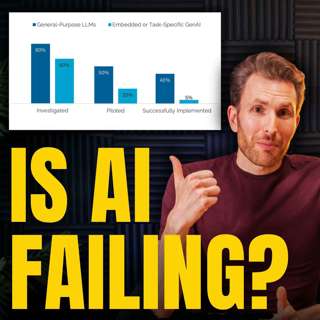
"AI doesn't work" – the story behind the stat that misled millions

"AI doesn't work" – the story behind the stat that misled millions

You might have heard that 95% of corporate AI pilots are failing. It was a widely cited AI statistic in 2025, repeated by media outlets and commentators everywhere. It helped trigger a Nasdaq selloff ...

28 Huhti 10min
#242 – Will MacAskill on how we survive the 'intelligence explosion,' AI character, and the case for 'viatopia'

#242 – Will MacAskill on how we survive the 'intelligence explosion,' AI character, and the case for 'viatopia'

Hundreds of millions already turn to AI on the most personal of topics — therapy, political opinions, and how to treat others. And as AI takes over more of the economy, the character of these systems ...

22 Huhti 3h 9min
Risks from power-seeking AI systems (article narration by Zershaaneh Qureshi)

Risks from power-seeking AI systems (article narration by Zershaaneh Qureshi)

Hundreds of prominent AI scientists and other notable figures signed a statement in 2023 saying that mitigating the risk of extinction from AI should be a global priority. At 80,000 Hours, we’ve consi...

16 Huhti 1h 29min

How scary is Claude Mythos? 303 pages in 21 minutes

How scary is Claude Mythos? 303 pages in 21 minutes

With Claude Mythos we have an AI that knows when it's being tested, can obscure its reasoning when it wants, and is better at breaking into (and out of) computers than any human alive. Rob Wiblin work...

10 Huhti 21min
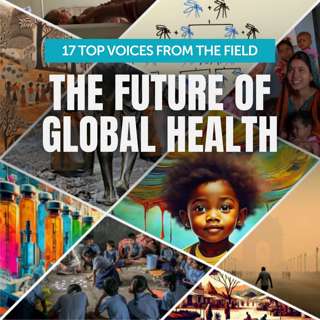
Village gossip, pesticide bans, and gene drives: 17 experts on the future of global health

Village gossip, pesticide bans, and gene drives: 17 experts on the future of global health

What does it really take to lift millions out of poverty and prevent needless deaths?In this special compilation episode, 17 past guests — including economists, nonprofit founders, and policy advisors...

7 Huhti 4h 6min

What everyone is missing about Anthropic vs the Pentagon. And: The Meta leaks are worse than you think.

What everyone is missing about Anthropic vs the Pentagon. And: The Meta leaks are worse than you think.

When the Pentagon tried to strong-arm Anthropic into dropping its ban on AI-only kill decisions and mass domestic surveillance, the company refused. Its critics went on the attack: Anthropic and its s...

3 Huhti 20min

#241 – Richard Moulange on how now AI codes viable genomes from scratch and outperforms virologists at lab work — what could go wrong?

#241 – Richard Moulange on how now AI codes viable genomes from scratch and outperforms virologists at lab work — what could go wrong?

Last September, scientists used an AI model to design genomes for entirely new bacteriophages (viruses that infect bacteria). They then built them in a lab. Many were viable. And despite being entirel...

31 Maalis 3h 7min

#240 – Samuel Charap on how a Ukraine ceasefire could accidentally set Europe up for a bigger war

#240 – Samuel Charap on how a Ukraine ceasefire could accidentally set Europe up for a bigger war

Many people believe a ceasefire in Ukraine will leave Europe safer. But today's guest lays out how a deal could potentially generate insidious new risks — leaving us in a situation that's equally dang...

24 Maalis 1h 12min

Suosittua kategoriassa Koulutus

rss-murhan-anatomia
psykopodiaa-podcast
voi-hyvin-meditaatiot-2
adhd-podi
rss-niinku-asia-on
rss-rahamania
rss-liian-kuuma-peruna
rss-valo-minussa-2
rss-tietoinen-yhteys-podcast-2
kesken
jari-sarasvuo-podcast
rss-uskonto-on-tylsaa
rss-vapaudu-voimaasi
psykologia
rss-arkea-ja-aurinkoa-podcast-espanjasta
rahapuhetta
ihminen-tavattavissa-tommy-hellsten-instituutti
rss-luonnollinen-synnytys-podcast
rss-narsisti
rss-hereilla


















