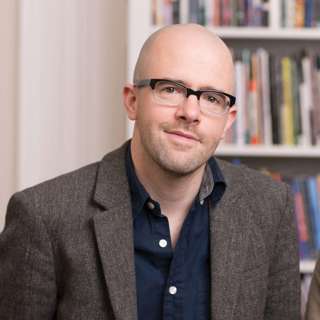

#48 - Brian Christian on better living through the wisdom of computer science
80,000 Hours Podcast22 Marras 2018

#48 - Brian Christian on better living through the wisdom of computer science

Please let us know if we've helped you: Fill out our annual impact survey

Ever felt that you were so busy you spent all your time paralysed trying to figure out where to start, and couldn't get much done? Computer scientists have a term for this - thrashing - and it's a common reason our computers freeze up. The solution, for people as well as laptops, is to 'work dumber': pick something at random and finish it, without wasting time thinking about the bigger picture.

Bestselling author Brian Christian studied computer science, and in the book Algorithms to Live By he's out to find the lessons it can offer for a better life. He investigates into when to quit your job, when to marry, the best way to sell your house, how long to spend on a difficult decision, and how much randomness to inject into your life. In each case computer science gives us a theoretically optimal solution, and in this episode we think hard about whether its models match our reality.

Links to learn more, summary and full transcript.

One genre of problems Brian explores in his book are 'optimal stopping problems', the canonical example of which is ‘the secretary problem’. Imagine you're hiring a secretary, you receive *n* applicants, they show up in a random order, and you interview them one after another. You either have to hire that person on the spot and dismiss everybody else, or send them away and lose the option to hire them in future.

It turns out most of life can be viewed this way - a series of unique opportunities you pass by that will never be available in exactly the same way again.

So how do you attempt to hire the very best candidate in the pool? There's a risk that you stop before finding the best, and a risk that you set your standards too high and let the best candidate pass you by.

Mathematicians of the mid-twentieth century produced an elegant optimal approach: spend exactly one over *e*, or approximately 37% of your search, just establishing a baseline without hiring anyone, no matter how promising they seem. Then immediately hire the next person who's better than anyone you've seen so far.

It turns out that your odds of success in this scenario are also 37%. And the optimal strategy and the odds of success are identical regardless of the size of the pool. So as *n* goes to infinity you still want to follow this 37% rule, and you still have a 37% chance of success. Even if you interview a million people.

But if you have the option to go back, say by apologising to the first applicant and begging them to come work with you, and you have a 50% chance of your apology being accepted, then the optimal explore percentage rises all the way to 61%.

Today’s episode focuses on Brian’s book-length exploration of how insights from computer algorithms can and can't be applied to our everyday lives. We cover:

* Computational kindness, and the best way to schedule meetings
* How can we characterize a computational model of what people are actually doing, and is there a rigorous way to analyse just how good their instincts actually are?
* What’s it like being a human confederate in the Turing test competition?
* Is trying to detect fake social media accounts a losing battle?
* The canonical explore/exploit problem in computer science: the multi-armed bandit
* What’s the optimal way to buy or sell a house?
* Why is information economics so important?
* What kind of decisions should people randomize more in life?
* How much time should we spend on prioritisation?

Get this episode by subscribing: type '80,000 Hours' into your podcasting app.

The 80,000 Hours Podcast is produced by Keiran Harris.

Jaksot(323)

#206 – Anil Seth on the predictive brain and how to study consciousness

#206 – Anil Seth on the predictive brain and how to study consciousness

"In that famous example of the dress, half of the people in the world saw [blue and black], half saw [white and gold]. It turns out there’s individual differences in how brains take into account ambie...

1 Marras 20242h 33min
How much does a vote matter? (Article)

How much does a vote matter? (Article)

If you care about social impact, is voting important? In this piece, Rob investigates the two key things that determine the impact of your vote:The chances of your vote changing an election’s outcome....

28 Loka 202432min

#205 – Sébastien Moro on the most insane things fish can do

#205 – Sébastien Moro on the most insane things fish can do

"You have a tank split in two parts: if the fish gets in the compartment with a red circle, it will receive food, and food will be delivered in the other tank as well. If the fish takes the blue trian...

23 Loka 20243h 11min

#204 – Nate Silver on making sense of SBF, and his biggest critiques of effective altruism

#204 – Nate Silver on making sense of SBF, and his biggest critiques of effective altruism

Rob Wiblin speaks with FiveThirtyEight election forecaster and author Nate Silver about his new book: On the Edge: The Art of Risking Everything.Links to learn more, highlights, video, and full transc...

16 Loka 20241h 57min

#203 – Peter Godfrey-Smith on interfering with wild nature, accepting death, and the origin of complex civilisation

#203 – Peter Godfrey-Smith on interfering with wild nature, accepting death, and the origin of complex civilisation

"In the human case, it would be mistaken to give a kind of hour-by-hour accounting. You know, 'I had +4 level of experience for this hour, then I had -2 for the next hour, and then I had -1' — and you...

3 Loka 20241h 25min

Luisa and Keiran on free will, and the consequences of never feeling enduring guilt or shame

Luisa and Keiran on free will, and the consequences of never feeling enduring guilt or shame

In this episode from our second show, 80k After Hours, Luisa Rodriguez and Keiran Harris chat about the consequences of letting go of enduring guilt, shame, anger, and pride.Links to learn more, highl...

27 Syys 20241h 36min
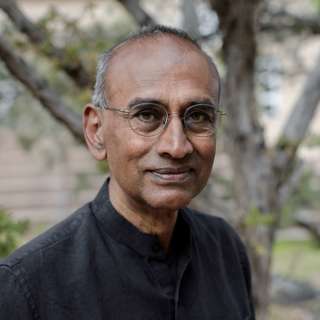
#202 – Venki Ramakrishnan on the cutting edge of anti-ageing science

#202 – Venki Ramakrishnan on the cutting edge of anti-ageing science

"For every far-out idea that turns out to be true, there were probably hundreds that were simply crackpot ideas. In general, [science] advances building on the knowledge we have, and seeing what the n...

19 Syys 20242h 20min

#201 – Ken Goldberg on why your robot butler isn’t here yet

#201 – Ken Goldberg on why your robot butler isn’t here yet

"Perception is quite difficult with cameras: even if you have a stereo camera, you still can’t really build a map of where everything is in space. It’s just very difficult. And I know that sounds surp...

13 Syys 20242h 1min

Suosittua kategoriassa Koulutus

rss-murhan-anatomia
voi-hyvin-meditaatiot-2
rss-narsisti
psykopodiaa-podcast
rss-uskonto-on-tylsaa
rss-vapaudu-voimaasi
psykologia
kesken
rss-liian-kuuma-peruna
rahapuhetta
adhd-podi
rss-taloustaito-podcast
rss-niinku-asia-on
jari-sarasvuo-podcast
ihminen-tavattavissa-tommy-hellsten-instituutti
rss-the-amicast
rss-xamk-podcast
rss-arkea-ja-aurinkoa-podcast-espanjasta
rss-opi-espanjaa
rss-tyohyvinvoinnin-aakkoset