#52 - Glen Weyl on uprooting capitalism and democracy for a just society

#52 - Glen Weyl on uprooting capitalism and democracy for a just society

Pro-market economists love to wax rhapsodic about the capacity of markets to pull together the valuable local information spread across all of society about what people want and how to make it.

But when it comes to politics and voting - which also aim to aggregate the preferences and knowledge found in millions of individuals - the enthusiasm for finding clever institutional designs often turns to skepticism.

Today's guest, freewheeling economist Glen Weyl, won't have it, and is on a warpath to reform liberal democratic institutions in order to save them. Just last year he wrote Radical Markets: Uprooting Capitalism and Democracy for a Just Society with Eric Posner, but has already moved on, saying "in the 6 months since the book came out I've made more intellectual progress than in the whole 10 years before that."

Weyl believes we desperately need more efficient, equitable and decentralised ways to organise society, that take advantage of what each person knows, and his research agenda has already been making breakthroughs.

Links to learn more, summary and full transcript

Our high impact job board

Join our newsletter

Despite a history in the best economics departments in the world - Harvard, Princeton, Yale and the University of Chicago - he is too worried for the future to sit in his office writing papers. Instead he has left the academy to try to inspire a social movement, RadicalxChange, with a vision of social reform as expansive as his own.

You can sign up for their conference in Detroit in March here

Economist Alex Tabarrok called his latest proposal, known as 'liberal radicalism', "a quantum leap in public-goods mechanism-design" - we explain how it works in the show. But the proposal, however good in theory, might struggle in the real world because it requires large subsidies, and compensates for people's selfishness so effectively that it might even be an overcorrection.

An earlier mechanism - 'quadratic voting' (QV) - would allow people to express the relative strength of their preferences in the democratic process. No longer would 51 people who support a proposal, but barely care about the issue, outvote 49 incredibly passionate opponents, predictably making society worse in the process. We explain exactly how in the episode.

Weyl points to studies showing that people are more likely to vote strongly not only about issues they *care* more about, but issues they *know* more about. He expects that allowing people to specialise and indicate when they know what they're talking about will create a democracy that does more to aggregate careful judgement, rather than just passionate ignorance.

But these and indeed all of Weyl's ideas have faced criticism. Some say the risk of unintended consequences is too great, or that they solve the wrong problem. Others see these proposals as unproven, impractical, or just another example of an intellectual engaged in grand social planning. I raise these concerns to see how he responds.

As big a topic as all of that is, this extended conversation also goes into the blockchain, problems with the effective altruism community and how auctions could replace private property. Don't miss it.

Get this episode by subscribing to our podcast on the world’s most pressing problems and how to solve them: type '80,000 Hours' into your podcasting app.

The 80,000 Hours Podcast is produced by Keiran Harris.

Jaksot(325)

#28 - Owen Cotton-Barratt on why scientists should need insurance, PhD strategy & fast AI progresses

#28 - Owen Cotton-Barratt on why scientists should need insurance, PhD strategy & fast AI progresses

A researcher is working on creating a new virus – one more dangerous than any that exist naturally. They believe they’re being as careful as possible. After all, if things go wrong, their own life and...

27 Huhti 20181h 3min

#27 - Dr Tom Inglesby on careers and policies that reduce global catastrophic biological risks

#27 - Dr Tom Inglesby on careers and policies that reduce global catastrophic biological risks

How about this for a movie idea: a main character has to prevent a new contagious strain of Ebola spreading around the world. She’s the best of the best. So good in fact, that her work on early detect...

18 Huhti 20182h 16min
#26 - Marie Gibbons on how exactly clean meat is made & what's needed to get it in every supermarket

#26 - Marie Gibbons on how exactly clean meat is made & what's needed to get it in every supermarket

First, decide on the type of animal. Next, pick the cell type. Then take a small, painless biopsy, and put the cells in a solution that makes them feel like they’re still in the body. Once the cells a...

10 Huhti 20181h 44min

#25 - Robin Hanson on why we have to lie to ourselves about why we do what we do

#25 - Robin Hanson on why we have to lie to ourselves about why we do what we do

On February 2, 1685, England’s King Charles II was struck by a sudden illness. Fortunately his physicians were the best of the best. To reassure the public they kept them abreast of the King’s treatme...

28 Maalis 20182h 39min
#24 - Stefan Schubert on why it’s a bad idea to break the rules, even if it’s for a good cause

#24 - Stefan Schubert on why it’s a bad idea to break the rules, even if it’s for a good cause

How honest should we be? How helpful? How friendly? If our society claims to value honesty, for instance, but in reality accepts an awful lot of lying – should we go along with those lax standards? Or...

20 Maalis 201855min
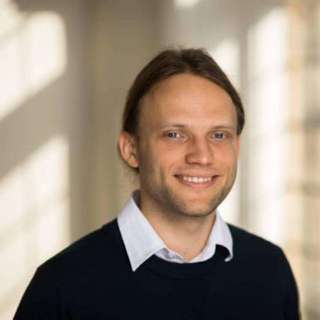
#23 - How to actually become an AI alignment researcher, according to Dr Jan Leike

#23 - How to actually become an AI alignment researcher, according to Dr Jan Leike

Want to help steer the 21st century’s most transformative technology? First complete an undergrad degree in computer science and mathematics. Prioritize harder courses over easier ones. Publish at lea...

16 Maalis 201845min
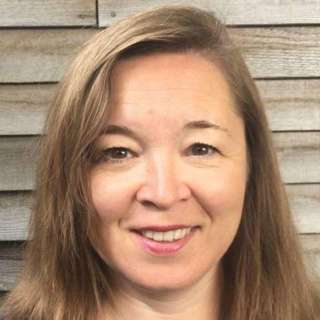
#22 - Leah Utyasheva on the non-profit that figured out how to massively cut suicide rates

#22 - Leah Utyasheva on the non-profit that figured out how to massively cut suicide rates

How people kill themselves varies enormously depending on which means are most easily available. In the United States, suicide by firearm stands out. In Hong Kong, where most people live in high rise ...

7 Maalis 20181h 8min
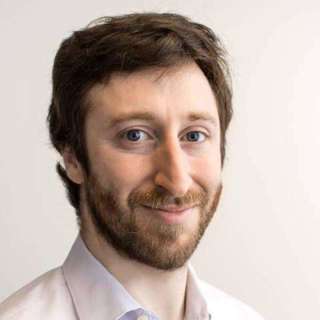
#21 - Holden Karnofsky on times philanthropy transformed the world & Open Phil’s plan to do the same

#21 - Holden Karnofsky on times philanthropy transformed the world & Open Phil’s plan to do the same

The Green Revolution averted mass famine during the 20th century. The contraceptive pill gave women unprecedented freedom in planning their own lives. Both are widely recognised as scientific breakthr...

27 Helmi 20182h 35min

Suosittua kategoriassa Koulutus

rss-murhan-anatomia
voi-hyvin-meditaatiot-2
rss-narsisti
adhd-podi
psykopodiaa-podcast
rss-uskonto-on-tylsaa
rss-rahamania
rss-duodecim-lehti
rss-valo-minussa-2
rss-vapaudu-voimaasi
rss-liian-kuuma-peruna
rahapuhetta
rss-niinku-asia-on
aloita-meditaatio
kesken
dear-ladies
mielipaivakirja
rss-eron-alkemiaa
rss-tietoinen-yhteys-podcast-2
aamukahvilla