
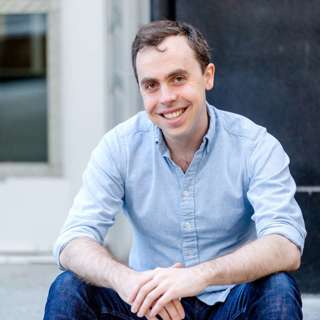
#55 – Lutter & Winter on founding charter cities with outstanding governance to end poverty
80,000 Hours Podcast31 Maalis 2019

#55 – Lutter & Winter on founding charter cities with outstanding governance to end poverty

Governance matters. Policy change quickly took China from famine to fortune; Singapore from swamps to skyscrapers; and Hong Kong from fishing village to financial centre. Unfortunately, many governments are hard to reform and — to put it mildly — it's not easy to found a new country.

This has prompted poverty-fighters and political dreamers to look for creative ways to get new and better 'pseudo-countries' off the ground. The poor could then voluntary migrate to in search of security and prosperity. And innovators would be free to experiment with new political and legal systems without having to impose their ideas on existing jurisdictions.

The 'seasteading movement' imagined founding new self-governing cities on the sea, but obvious challenges have kept that one on the drawing board. Nobel Prize winner and World Bank President Paul Romer suggested 'charter cities', where a host country would volunteer for another country with better legal institutions to effectively govern some of its territory. But that idea too ran aground for political, practical and personal reasons.

Now Mark Lutter and Tamara Winter, of The Center for Innovative Governance Research (CIGR), are reviving the idea of 'charter cities', with some modifications. Gone is the idea of transferring sovereignty. Instead these cities would look more like the 'special economic zones' that worked miracles for Taiwan and China among others. But rather than keep the rest of the country's rules with a few pieces removed, they hope to start from scratch, opting in to the laws they want to keep, in order to leap forward to "best practices in commercial law."

Links to learn more, summary and full transcript.

Rob on The Good Life: Andrew Leigh in Conversation — on 'making the most of your 80,000 hours'.

The project has quickly gotten attention, with Mark and Tamara receiving funding from Tyler Cowen's Emergent Ventures (discussed in episode 45) and winning a Pioneer tournament.

Starting afresh with a new city makes it possible to clear away thousands of harmful rules without having to fight each of the thousands of interest groups that will viciously defend their privileges. Initially the city can fund infrastructure and public services by gradually selling off its land, which appreciates as the city flourishes. And with 40 million people relocating to cities every year, there are plenty of prospective migrants.

CIGR is fleshing out how these arrangements would work, advocating for them, and developing supporting services that make it easier for any jurisdiction to implement. They're currently in the process of influencing a new prospective satellite city in Zambia.

Of course, one can raise many criticisms of this idea: Is it likely to be taken up? Is CIGR really doing the right things to make it happen? Will it really reduce poverty if it is?

We discuss those questions, as well as:

• How did Mark get a new organisation off the ground, with fundraising and other staff?
• What made China's 'special economic zones' so successful?
• What are the biggest challenges in getting new cities off the ground?
• How did Mark find and hire Tamara? How did he know this was a good idea?
• Should people care about this idea if they aren't focussed on tackling poverty?
• Why aren't people already doing this?
• Why does Tamara support more people starting families?

Get this episode by subscribing to our podcast on the world’s most pressing problems and how to solve them: type 80,000 Hours into your podcasting app.

The 80,000 Hours Podcast is produced by Keiran Harris.

Jaksot(324)

#44 Classic episode - Paul Christiano on finding real solutions to the AI alignment problem

#44 Classic episode - Paul Christiano on finding real solutions to the AI alignment problem

Rebroadcast: this episode was originally released in October 2018. Paul Christiano is one of the smartest people I know. After our first session produced such great material, we decided to do a seco...

15 Tammi 20203h 51min
#33 Classic episode - Anders Sandberg on cryonics, solar flares, and the annual odds of nuclear war

#33 Classic episode - Anders Sandberg on cryonics, solar flares, and the annual odds of nuclear war

Rebroadcast: this episode was originally released in May 2018. Joseph Stalin had a life-extension program dedicated to making himself immortal. What if he had succeeded? According to Bryan Caplan ...

8 Tammi 20201h 25min

#17 Classic episode - Will MacAskill on moral uncertainty, utilitarianism & how to avoid being a moral monster

#17 Classic episode - Will MacAskill on moral uncertainty, utilitarianism & how to avoid being a moral monster

Rebroadcast: this episode was originally released in January 2018. Immanuel Kant is a profoundly influential figure in modern philosophy, and was one of the earliest proponents for universal democracy...

31 Joulu 20191h 52min

#67 – David Chalmers on the nature and ethics of consciousness

#67 – David Chalmers on the nature and ethics of consciousness

What is it like to be you right now? You're seeing this text on the screen, smelling the coffee next to you, and feeling the warmth of the cup. There’s a lot going on in your head — your conscious exp...

16 Joulu 20194h 41min
#66 – Peter Singer on being provocative, effective altruism, & how his moral views have changed

#66 – Peter Singer on being provocative, effective altruism, & how his moral views have changed

In 1989, the professor of moral philosophy Peter Singer was all over the news for his inflammatory opinions about abortion. But the controversy stemmed from Practical Ethics — a book he’d actually rel...

5 Joulu 20192h 1min

#65 – Ambassador Bonnie Jenkins on 8 years pursuing WMD arms control, & diversity in diplomacy

#65 – Ambassador Bonnie Jenkins on 8 years pursuing WMD arms control, & diversity in diplomacy

"…it started when the Soviet Union fell apart and there was a real desire to ensure security of nuclear materials and pathogens, and that scientists with [WMD-related] knowledge could get paid so that...

19 Marras 20191h 40min
#64 – Bruce Schneier on how insecure electronic voting could break the United States — and surveillance without tyranny

#64 – Bruce Schneier on how insecure electronic voting could break the United States — and surveillance without tyranny

November 3 2020, 10:32PM: CNN, NBC, and FOX report that Donald Trump has narrowly won Florida, and with it, re-election.  November 3 2020, 11:46PM: The NY Times and Wall Street Journal report that so...

25 Loka 20192h 11min

Rob Wiblin on plastic straws, nicotine, doping, & whether changing the long-term is really possible

Rob Wiblin on plastic straws, nicotine, doping, & whether changing the long-term is really possible

Today's episode is a compilation of interviews I recently recorded for two other shows, Love Your Work and The Neoliberal Podcast.  If you've listened to absolutely everything on this podcast feed, y...

25 Syys 20193h 14min

Suosittua kategoriassa Koulutus

rss-murhan-anatomia
voi-hyvin-meditaatiot-2
rss-narsisti
psykopodiaa-podcast
rss-niinku-asia-on
rss-vapaudu-voimaasi
adhd-podi
psykologia
rss-duodecim-lehti
rss-rahamania
rss-valo-minussa-2
kesken
rss-uskonto-on-tylsaa
aamukahvilla
koulu-podcast-2
rss-liian-kuuma-peruna
rss-koira-haudattuna
avara-mieli
rss-turun-yliopisto
rss-arkea-ja-aurinkoa-podcast-espanjasta