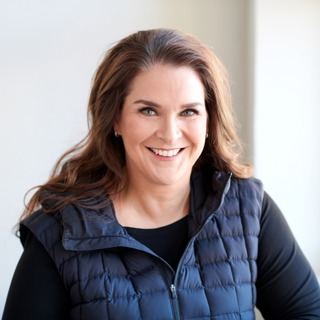

#56 - Persis Eskander on wild animal welfare and what, if anything, to do about it

#56 - Persis Eskander on wild animal welfare and what, if anything, to do about it

Elephants in chains at travelling circuses; pregnant pigs trapped in coffin sized crates at factory farms; deers living in the wild. We should welcome the last as a pleasant break from the horror, right?

Maybe, but maybe not. While we tend to have a romanticised view of nature, life in the wild includes a range of extremely negative experiences.

Many animals are hunted by predators, and constantly have to remain vigilant about the risk of being killed, and perhaps experiencing the horror of being eaten alive. Resource competition often leads to chronic hunger or starvation. Their diseases and injuries are never treated. In winter animals freeze to death; in droughts they die of heat or thirst.

There are fewer than 20 people in the world dedicating their lives to researching these problems.

But according to Persis Eskander, researcher at the Open Philanthropy Project, if we sum up the negative experiences of all wild animals, their sheer number could make the scale of the problem larger than most other near-term concerns.

Links to learn more, summary and full transcript.

Persis urges us to recognise that nature isn’t inherently good or bad, but rather the result of an amoral evolutionary process. For those that can't survive the brutal indifference of their environment, life is often a series of bad experiences, followed by an even worse death.

But should we actually intervene? How do we know what animals are sentient? How often do animals feel hunger, cold, fear, happiness, satisfaction, boredom, and intense agony? Are there long-term technologies that could eventually allow us to massively improve wild animal welfare?

For most of these big questions, the answer is: we don’t know. And Persis thinks we're far away from knowing enough to start interfering with ecosystems. But that's all the more reason to start looking at these questions.

There are some concrete steps we could take today, like improving the way wild caught fish are slaughtered. Fish might lack the charisma of a lion or the intelligence of a pig, but if they have the capacity to suffer — and evidence suggests that they do — we should be thinking of ways to kill them painlessly rather than allowing them to suffocate to death over hours.

In today’s interview we explore wild animal welfare as a new field of research, and discuss:

• Do we have a moral duty towards wild animals or not?
• How should we measure the number of wild animals?
• What are some key activities that generate a lot of suffering or pleasure for wild animals that people might not fully appreciate?
• Is there a danger in imagining how we as humans would feel if we were put into their situation?
• Should we eliminate parasites and predators?
• How important are insects?
• How strongly should we focus on just avoiding humans going in and making things worse?
• How does this compare to work on farmed animal suffering?
• The most compelling arguments for humanity not dedicating resources to wild animal welfare
• Is there much of a case for the idea that this work could improve the very long-term future of humanity?

Rob is then joined by two of his colleagues — Niel Bowerman and Michelle Hutchinson — to quickly discuss:

• The importance of figuring out your values
• Chemistry, psychology, and other different paths towards working on wild animal welfare
• How to break into new fields

Get this episode by subscribing to our podcast on the world’s most pressing problems and how to solve them: type 80,000 Hours into your podcasting app.

The 80,000 Hours Podcast is produced by Keiran Harris.

Jaksot(324)

#44 Classic episode - Paul Christiano on finding real solutions to the AI alignment problem

#44 Classic episode - Paul Christiano on finding real solutions to the AI alignment problem

Rebroadcast: this episode was originally released in October 2018. Paul Christiano is one of the smartest people I know. After our first session produced such great material, we decided to do a seco...

15 Tammi 20203h 51min
#33 Classic episode - Anders Sandberg on cryonics, solar flares, and the annual odds of nuclear war

#33 Classic episode - Anders Sandberg on cryonics, solar flares, and the annual odds of nuclear war

Rebroadcast: this episode was originally released in May 2018. Joseph Stalin had a life-extension program dedicated to making himself immortal. What if he had succeeded? According to Bryan Caplan ...

8 Tammi 20201h 25min

#17 Classic episode - Will MacAskill on moral uncertainty, utilitarianism & how to avoid being a moral monster

#17 Classic episode - Will MacAskill on moral uncertainty, utilitarianism & how to avoid being a moral monster

Rebroadcast: this episode was originally released in January 2018. Immanuel Kant is a profoundly influential figure in modern philosophy, and was one of the earliest proponents for universal democracy...

31 Joulu 20191h 52min

#67 – David Chalmers on the nature and ethics of consciousness

#67 – David Chalmers on the nature and ethics of consciousness

What is it like to be you right now? You're seeing this text on the screen, smelling the coffee next to you, and feeling the warmth of the cup. There’s a lot going on in your head — your conscious exp...

16 Joulu 20194h 41min

#66 – Peter Singer on being provocative, effective altruism, & how his moral views have changed

#66 – Peter Singer on being provocative, effective altruism, & how his moral views have changed

In 1989, the professor of moral philosophy Peter Singer was all over the news for his inflammatory opinions about abortion. But the controversy stemmed from Practical Ethics — a book he’d actually rel...

5 Joulu 20192h 1min

#65 – Ambassador Bonnie Jenkins on 8 years pursuing WMD arms control, & diversity in diplomacy

#65 – Ambassador Bonnie Jenkins on 8 years pursuing WMD arms control, & diversity in diplomacy

"…it started when the Soviet Union fell apart and there was a real desire to ensure security of nuclear materials and pathogens, and that scientists with [WMD-related] knowledge could get paid so that...

19 Marras 20191h 40min
#64 – Bruce Schneier on how insecure electronic voting could break the United States — and surveillance without tyranny

#64 – Bruce Schneier on how insecure electronic voting could break the United States — and surveillance without tyranny

November 3 2020, 10:32PM: CNN, NBC, and FOX report that Donald Trump has narrowly won Florida, and with it, re-election.  November 3 2020, 11:46PM: The NY Times and Wall Street Journal report that so...

25 Loka 20192h 11min
Rob Wiblin on plastic straws, nicotine, doping, & whether changing the long-term is really possible

Rob Wiblin on plastic straws, nicotine, doping, & whether changing the long-term is really possible

Today's episode is a compilation of interviews I recently recorded for two other shows, Love Your Work and The Neoliberal Podcast.  If you've listened to absolutely everything on this podcast feed, y...

25 Syys 20193h 14min

Suosittua kategoriassa Koulutus

rss-murhan-anatomia
rss-narsisti
voi-hyvin-meditaatiot-2
psykopodiaa-podcast
adhd-podi
rss-rahamania
rss-niinku-asia-on
rss-valo-minussa-2
rss-vapaudu-voimaasi
psykologia
aamukahvilla
kesken
rss-koira-haudattuna
koulu-podcast-2
mielipaivakirja
rss-uskonto-on-tylsaa
rss-tietoinen-yhteys-podcast-2
ilona-rauhala
rss-duodecim-lehti
rss-opi-espanjaa