

#59 – Cass Sunstein on how change happens, and why it's so often abrupt & unpredictable

#59 – Cass Sunstein on how change happens, and why it's so often abrupt & unpredictable

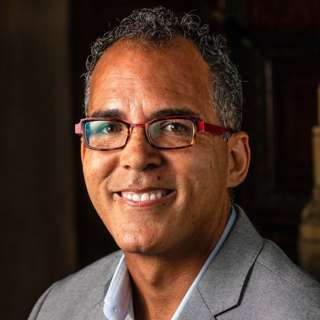
It can often feel hopeless to be an activist seeking social change on an obscure issue where most people seem opposed or at best indifferent to you. But according to a new book by Professor Cass Sunstein, they shouldn't despair. Large social changes are often abrupt and unexpected, arising in an environment of seeming public opposition.

The Communist Revolution in Russia spread so swiftly it confounded even Lenin. Seventy years later the Soviet Union collapsed just as quickly and unpredictably.

In the modern era we have gay marriage, #metoo and the Arab Spring, as well as nativism, Euroskepticism and Hindu nationalism.

How can a society that so recently seemed to support the status quo bring about change in years, months, or even weeks?

Sunstein — coauthor of Nudge, Obama White House official, and by far the most cited legal scholar of the late 2000s — aims to unravel the mystery and figure out the implications in his new book How Change Happens.

He pulls together three phenomena which social scientists have studied in recent decades: preference falsification, variable thresholds for action, and group polarisation. If Sunstein is to be believed, together these are a cocktail for social shifts that are chaotic and fundamentally unpredictable.

Links to learn more, summary and full transcript.
80,000 Hours Annual Review 2018.
How to donate to 80,000 Hours.

In brief, people constantly misrepresent their true views, even to close friends and family. They themselves aren't quite sure how socially acceptable their feelings would have to become, before they revealed them, or joined a campaign for social change. And a chance meeting between a few strangers can be the spark that radicalises a handful of people, who then find a message that can spread their views to millions.

According to Sunstein, it's "much, much easier" to create social change when large numbers of people secretly or latently agree with you. But 'preference falsification' is so pervasive that it's no simple matter to figure out when that's the case.

In today's interview, we debate with Sunstein whether this model of cultural change is accurate, and if so, what lessons it has for those who would like to shift the world in a more humane direction. We discuss:

• How much people misrepresent their views in democratic countries.
• Whether the finding that groups with an existing view tend towards a more extreme position would stand up in the replication crisis.
• When is it justified to encourage your own group to polarise?
• Sunstein's difficult experiences as a pioneer of animal rights law.
• Whether activists can do better by spending half their resources on public opinion surveys.
• Should people be more or less outspoken about their true views?
• What might be the next social revolution to take off?
• How can we learn about social movements that failed and disappeared?
• How to find out what people really think.

Chapters:
• Rob’s intro (00:00:00)
• Cass's Harvard lecture on How Change Happens (00:02:59)
• Rob & Cass's conversation about the book (00:41:43)

The 80,000 Hours Podcast is produced by Keiran Harris.

Jaksot(323)

#83 - Jennifer Doleac on preventing crime without police and prisons

#83 - Jennifer Doleac on preventing crime without police and prisons

The killing of George Floyd has prompted a great deal of debate over whether the US should reduce the size of its police departments. The research literature suggests that the presence of police offic...

31 Heinä 20202h 23min
#82 – James Forman Jr on reducing the cruelty of the US criminal legal system

#82 – James Forman Jr on reducing the cruelty of the US criminal legal system

No democracy has ever incarcerated as many people as the United States. To get its incarceration rate down to the global average, the US would have to release 3 in 4 people in its prisons today.  The ...

27 Heinä 20201h 28min

#81 - Ben Garfinkel on scrutinising classic AI risk arguments

#81 - Ben Garfinkel on scrutinising classic AI risk arguments

80,000 Hours, along with many other members of the effective altruism movement, has argued that helping to positively shape the development of artificial intelligence may be one of the best ways to ha...

9 Heinä 20202h 38min

Advice on how to read our advice (Article)

Advice on how to read our advice (Article)

This is the fourth release in our new series of audio articles. If you want to read the original article or check out the links within it, you can find them here. "We’ve found that readers sometimes...

29 Kesä 202015min

#80 – Stuart Russell on why our approach to AI is broken and how to fix it

#80 – Stuart Russell on why our approach to AI is broken and how to fix it

Stuart Russell, Professor at UC Berkeley and co-author of the most popular AI textbook, thinks the way we approach machine learning today is fundamentally flawed. In his new book, Human Compatible, he...

22 Kesä 20202h 13min

What anonymous contributors think about important life and career questions (Article)

What anonymous contributors think about important life and career questions (Article)

Today we’re launching the final entry of our ‘anonymous answers' series on the website. It features answers to 23 different questions including “How have you seen talented people fail in their work?...

5 Kesä 202037min

#79 – A.J. Jacobs on radical honesty, following the whole Bible, and reframing global problems as puzzles

#79 – A.J. Jacobs on radical honesty, following the whole Bible, and reframing global problems as puzzles

Today’s guest, New York Times bestselling author A.J. Jacobs, always hated Judge Judy. But after he found out that she was his seventh cousin, he thought, "You know what? She's not so bad." Hijacking ...

1 Kesä 20202h 38min

#78 – Danny Hernandez on forecasting and the drivers of AI progress

#78 – Danny Hernandez on forecasting and the drivers of AI progress

Companies use about 300,000 times more computation training the best AI systems today than they did in 2012 and algorithmic innovations have also made them 25 times more efficient at the same tasks.Th...

22 Touko 20202h 11min

Suosittua kategoriassa Koulutus

rss-murhan-anatomia
voi-hyvin-meditaatiot-2
rss-narsisti
psykopodiaa-podcast
rss-uskonto-on-tylsaa
rss-vapaudu-voimaasi
psykologia
kesken
rss-liian-kuuma-peruna
rahapuhetta
adhd-podi
rss-taloustaito-podcast
rss-niinku-asia-on
jari-sarasvuo-podcast
ihminen-tavattavissa-tommy-hellsten-instituutti
rss-the-amicast
rss-xamk-podcast
rss-arkea-ja-aurinkoa-podcast-espanjasta
rss-opi-espanjaa
rss-tyohyvinvoinnin-aakkoset