#60 - Phil Tetlock on why accurate forecasting matters for everything, and how you can do it better

#60 - Phil Tetlock on why accurate forecasting matters for everything, and how you can do it better

Have you ever been infuriated by a doctor's unwillingness to give you an honest, probabilistic estimate about what to expect? Or a lawyer who won't tell you the chances you'll win your case?

Their behaviour is so frustrating because accurately predicting the future is central to every action we take. If we can't assess the likelihood of different outcomes we're in a complete bind, whether the decision concerns war and peace, work and study, or Black Mirror and RuPaul's Drag Race.

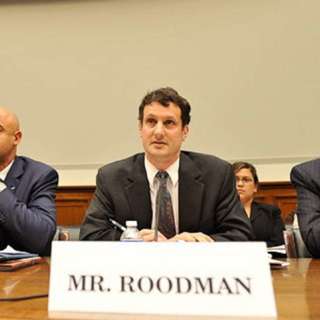
Which is why the research of Professor Philip Tetlock is relevant for all of us each and every day.

He has spent 40 years as a meticulous social scientist, collecting millions of predictions from tens of thousands of people, in order to figure out how good humans really are at foreseeing the future, and what habits of thought allow us to do better.

Along with other psychologists, he identified that many ordinary people are attracted to a 'folk probability' that draws just three distinctions — 'impossible', 'possible' and 'certain' — and which leads to major systemic mistakes. But with the right mindset and training we can become capable of accurately discriminating between differences as fine as 56% as against 57% likely.

Links to learn more, summary and full transcript
The calibration training app
Sign up for the Civ-5 counterfactual forecasting tournament
A review of the evidence on good forecasting practices
Learn more about Effective Altruism Global

In the aftermath of Iraq and WMDs the US intelligence community hired him to prevent the same ever happening again, and his guide — Superforecasting: The Art and Science of Prediction — became a bestseller back in 2014.

That was five years ago. In today's interview, Tetlock explains how his research agenda continues to advance, today using the game Civilization 5 to see how well we can predict what would have happened in elusive counterfactual worlds we never get to see, and discovering how simple algorithms can complement or substitute for human judgement.

We discuss how his work can be applied to your personal life to answer high-stakes questions, like how likely you are to thrive in a given career path, or whether your business idea will be a billion-dollar unicorn — or fall apart catastrophically. (To help you get better at figuring those things out, our site now has a training app developed by the Open Philanthropy Project and Clearer Thinking that teaches you to distinguish your '70 percents' from your '80 percents'.)

We also bring some tough methodological questions raised by the author of a recent review of the forecasting literature. And we find out what jobs people can take to make improving the reasonableness of decision-making in major institutions that shape the world their profession, as it has been for Tetlock over many decades.

We view Tetlock's work as so core to living well that we've brought him back for a second and longer appearance on the show — his first was back in episode 15.

Get this episode by subscribing to our podcast on the world’s most pressing problems and how to solve them: type 80,000 Hours into your podcasting app.

The 80,000 Hours Podcast is produced by Keiran Harris.

Jaksot(324)

Rob Wiblin on the art/science of a high impact career

Rob Wiblin on the art/science of a high impact career

Today's episode is a cross-post of an interview I did with The Jolly Swagmen Podcast which came out this week. I recommend regular listeners skip to 24 minutes in to avoid hearing things they already ...

8 Kesä 20181h 31min

#34 - We use the worst voting system that exists. Here's how Aaron Hamlin is going to fix it.

#34 - We use the worst voting system that exists. Here's how Aaron Hamlin is going to fix it.

In 1991 Edwin Edwards won the Louisiana gubernatorial election. In 2001, he was found guilty of racketeering and received a 10 year invitation to Federal prison. The strange thing about that election?...

1 Kesä 20182h 18min

#33 - Anders Sandberg on what if we ended ageing, solar flares & the annual risk of nuclear war

#33 - Anders Sandberg on what if we ended ageing, solar flares & the annual risk of nuclear war

Joseph Stalin had a life-extension program dedicated to making himself immortal. What if he had succeeded?  According to our last guest, Bryan Caplan, there’s an 80% chance that Stalin would still be ...

29 Touko 20181h 24min

#32 - Bryan Caplan on whether his Case Against Education holds up, totalitarianism, & open borders

#32 - Bryan Caplan on whether his Case Against Education holds up, totalitarianism, & open borders

Bryan Caplan’s claim in *The Case Against Education* is striking: education doesn’t teach people much, we use little of what we learn, and college is mostly about trying to seem smarter than other peo...

22 Touko 20182h 25min

#31 - Allan Dafoe on defusing the political & economic risks posed by existing AI capabilities

#31 - Allan Dafoe on defusing the political & economic risks posed by existing AI capabilities

The debate around the impacts of artificial intelligence often centres on ‘superintelligence’ - a general intellect that is much smarter than the best humans, in practically every field. But according...

18 Touko 201848min

#30 - Eva Vivalt on how little social science findings generalize from one study to another

#30 - Eva Vivalt on how little social science findings generalize from one study to another

If we have a study on the impact of a social program in a particular place and time, how confident can we be that we’ll get a similar result if we study the same program again somewhere else? Dr Eva V...

15 Touko 20182h 1min

#29 - Anders Sandberg on 3 new resolutions for the Fermi paradox & how to colonise the universe

#29 - Anders Sandberg on 3 new resolutions for the Fermi paradox & how to colonise the universe

Part 2 out now: #33 - Dr Anders Sandberg on what if we ended ageing, solar flares & the annual risk of nuclear war The universe is so vast, yet we don’t see any alien civilizations. If they exist, whe...

8 Touko 20181h 21min

#28 - Owen Cotton-Barratt on why scientists should need insurance, PhD strategy & fast AI progresses

#28 - Owen Cotton-Barratt on why scientists should need insurance, PhD strategy & fast AI progresses

A researcher is working on creating a new virus – one more dangerous than any that exist naturally. They believe they’re being as careful as possible. After all, if things go wrong, their own life and...

27 Huhti 20181h 3min

Suosittua kategoriassa Koulutus

rss-murhan-anatomia
voi-hyvin-meditaatiot-2
rss-narsisti
psykopodiaa-podcast
rss-niinku-asia-on
rss-vapaudu-voimaasi
adhd-podi
psykologia
rss-duodecim-lehti
rss-rahamania
rss-valo-minussa-2
kesken
rss-uskonto-on-tylsaa
aamukahvilla
koulu-podcast-2
rss-liian-kuuma-peruna
rss-koira-haudattuna
avara-mieli
rss-turun-yliopisto
rss-arkea-ja-aurinkoa-podcast-espanjasta