
#66 – Peter Singer on being provocative, effective altruism, & how his moral views have changed

#66 – Peter Singer on being provocative, effective altruism, & how his moral views have changed

In 1989, the professor of moral philosophy Peter Singer was all over the news for his inflammatory opinions about abortion. But the controversy stemmed from Practical Ethics — a book he’d actually released way back in 1979. It took a German translation ten years on for protests to kick off.

According to Singer, he honestly didn’t expect this view to be as provocative as it became, and he certainly wasn’t aiming to stir up trouble and get attention.

But after the protests and the increasing coverage of his work in German media, the previously flat sales of Practical Ethics shot up. And the negative attention he received ultimately led him to a weekly opinion column in The New York Times.

• Singer's book The Life You Can Save has just been re-released as a 10th anniversary edition, available as a free e-book and audiobook, read by a range of celebrities. Get it here.
Links to learn more, summary and full transcript.

Singer points out that as a result of this increased attention, many more people also read the rest of the book — which includes chapters with a real ability to do good, covering global poverty, animal ethics, and other important topics. So should people actively try to court controversy with one view, in order to gain attention for another more important one?

Perhaps sometimes, but controversy can also just have bad consequences. His critics may view him as someone who says whatever he thinks, hang the consequences, but Singer says that he gives public relations considerations plenty of thought.

One example is that Singer opposes efforts to advocate for open borders. Not because he thinks a world with freedom of movement is a bad idea per se, but rather because it may help elect leaders like Mr Trump.

Another is the focus of the effective altruism community. Singer certainly respects those who are focused on improving the long-term future of humanity, and thinks this is important work that should continue. But he’s troubled by the possibility of extinction risks becoming the public face of the movement.

He suspects there's a much narrower group of people who are likely to respond to that kind of appeal, compared to those who are drawn to work on global poverty or preventing animal suffering. And that to really transform philanthropy and culture more generally, the effective altruism community needs to focus on smaller donors with more conventional concerns.

Rob is joined in this interview by Arden Koehler, the newest addition to the 80,000 Hours team, both for the interview and a post-episode discussion. They only had an hour with Peter, but also cover:

• What does he think is the most plausible alternatives to consequentialism?
• Is it more humane to eat wild caught animals than farmed animals?
• The re-release of The Life You Can Save
• His most and least strategic career decisions
• Population ethics, and other arguments for and against prioritising the long-term future
• What led to his changing his mind on significant questions in moral philosophy?
• And more.

In the post-episode discussion, Rob and Arden continue talking about:

• The pros and cons of keeping EA as one big movement
• Singer’s thoughts on immigration
• And consequentialism with side constraints.

Get this episode by subscribing to our podcast on the world’s most pressing problems and how to solve them: type 80,000 Hours into your podcasting app. Or read the linked transcript.

Producer: Keiran Harris.
Audio mastering: Ben Cordell.
Transcriptions: Zakee Ulhaq.
Illustration of Singer: Matthias Seifarth.

Jaksot(325)

#225 – Daniel Kokotajlo on what a hyperspeed robot economy might look like

#225 – Daniel Kokotajlo on what a hyperspeed robot economy might look like

When Daniel Kokotajlo talks to security experts at major AI labs, they tell him something chilling: “Of course we’re probably penetrated by the CCP already, and if they really wanted something, they c...

27 Loka 20252h 12min
#224 – There's a cheap and low-tech way to save humanity from any engineered disease | Andrew Snyder-Beattie

#224 – There's a cheap and low-tech way to save humanity from any engineered disease | Andrew Snyder-Beattie

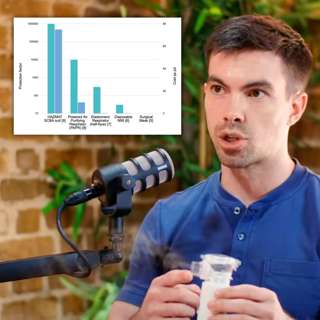
Conventional wisdom is that safeguarding humanity from the worst biological risks — microbes optimised to kill as many as possible — is difficult bordering on impossible, making bioweapons humanity’s ...

2 Loka 20252h 31min

Inside the Biden admin’s AI policy approach | Jake Sullivan, Biden’s NSA | via The Cognitive Revolution

Inside the Biden admin’s AI policy approach | Jake Sullivan, Biden’s NSA | via The Cognitive Revolution

Jake Sullivan was the US National Security Advisor from 2021-2025. He joined our friends on The Cognitive Revolution podcast in August to discuss AI as a critical national security issue. We thought i...

26 Syys 20251h 5min
#223 – Neel Nanda on leading a Google DeepMind team at 26 – and advice if you want to work at an AI company (part 2)

#223 – Neel Nanda on leading a Google DeepMind team at 26 – and advice if you want to work at an AI company (part 2)

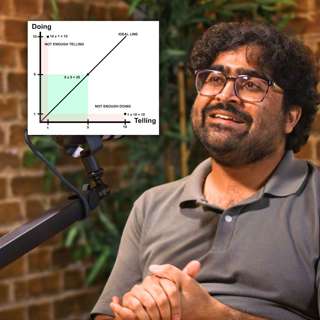
At 26, Neel Nanda leads an AI safety team at Google DeepMind, has published dozens of influential papers, and mentored 50 junior researchers — seven of whom now work at major AI companies. His secret?...

15 Syys 20251h 46min
#222 – Can we tell if an AI is loyal by reading its mind? DeepMind's Neel Nanda (part 1)

#222 – Can we tell if an AI is loyal by reading its mind? DeepMind's Neel Nanda (part 1)

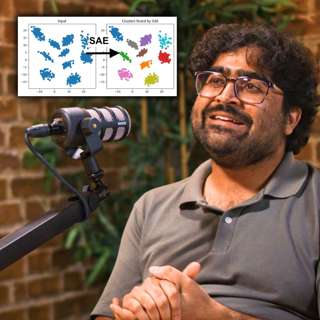
We don’t know how AIs think or why they do what they do. Or at least, we don’t know much. That fact is only becoming more troubling as AIs grow more capable and appear on track to wield enormous cultu...

8 Syys 20253h 1min

#221 – Kyle Fish on the most bizarre findings from 5 AI welfare experiments

#221 – Kyle Fish on the most bizarre findings from 5 AI welfare experiments

What happens when you lock two AI systems in a room together and tell them they can discuss anything they want?According to experiments run by Kyle Fish — Anthropic’s first AI welfare researcher — som...

28 Elo 20252h 28min

How not to lose your job to AI (article by Benjamin Todd)

How not to lose your job to AI (article by Benjamin Todd)

About half of people are worried they’ll lose their job to AI. They’re right to be concerned: AI can now complete real-world coding tasks on GitHub, generate photorealistic video, drive a taxi more sa...

31 Heinä 202551min

Rebuilding after apocalypse: What 13 experts say about bouncing back

Rebuilding after apocalypse: What 13 experts say about bouncing back

What happens when civilisation faces its greatest tests?This compilation brings together insights from researchers, defence experts, philosophers, and policymakers on humanity’s ability to survive and...

15 Heinä 20254h 26min

Suosittua kategoriassa Koulutus

rss-murhan-anatomia
voi-hyvin-meditaatiot-2
rss-narsisti
adhd-podi
psykopodiaa-podcast
rss-uskonto-on-tylsaa
rss-rahamania
rss-valo-minussa-2
rss-duodecim-lehti
rss-niinku-asia-on
mielipaivakirja
rahapuhetta
aamukahvilla
rss-liian-kuuma-peruna
rss-vapaudu-voimaasi
aloita-meditaatio
kesken
dear-ladies
rss-eron-alkemiaa
rss-arkea-ja-aurinkoa-podcast-espanjasta