

#67 – David Chalmers on the nature and ethics of consciousness

#67 – David Chalmers on the nature and ethics of consciousness

What is it like to be you right now? You're seeing this text on the screen, smelling the coffee next to you, and feeling the warmth of the cup. There’s a lot going on in your head — your conscious experience.

Now imagine beings that are identical to humans, but for one thing: they lack this conscious experience. If you spill your coffee on them, they’ll jump like anyone else, but inside they'll feel no pain and have no thoughts: the lights are off.

The concept of these so-called 'philosophical zombies' was popularised by today’s guest — celebrated philosophy professor David Chalmers — in order to explore the nature of consciousness. In a forthcoming book he poses a classic 'trolley problem':

"Suppose you have a conscious human on one train track, and five non-conscious humanoid zombies on another. If you do nothing, a trolley will hit and kill the conscious human. If you flip a switch to redirect the trolley, you can save the conscious human, but in so doing kill the five non-conscious humanoid zombies. What should you do?"

Many people think you should divert the trolley, precisely because the lack of conscious experience means the moral status of the zombies is much reduced or absent entirely.

So, which features of consciousness qualify someone for moral consideration? One view is that the only conscious states that matter are those that have a positive or negative quality, like pleasure and suffering. But Dave’s intuitions are quite different.

Links to learn more, summary and full transcript.
Advice on how to read our advice.
Anonymous answers on: bad habits, risk and failure.

Instead of zombies he asks us to consider 'Vulcans', who can see and hear and reflect on the world around them, but are incapable of experiencing pleasure or pain.

Now imagine a further trolley problem: suppose you have a normal human on one track, and five Vulcans on the other. Should you divert the trolley to kill the five Vulcans in order to save the human?

Dave firmly believes the answer is no, and if he's right, pleasure and suffering can’t be the only things required for moral status. The fact that Vulcans are conscious in other ways must matter in itself.

Dave is one of the world's top experts on the philosophy of consciousness. He helped return the question 'what is consciousness?' to the centre stage of philosophy with his 1996 book 'The Conscious Mind', which argued against then-dominant materialist theories of consciousness.

This comprehensive interview, at over four hours long, outlines each contemporary theory of consciousness, what they have going for them, and their likely ethical implications. Those theories span the full range from illusionism, the idea that consciousness is in some sense an 'illusion', to panpsychism, according to which it's a fundamental physical property present in all matter.

These questions are absolutely central for anyone who wants to build a positive future. If insects were conscious our treatment of them could already be an atrocity. If computer simulations of people will one day be conscious, how will we know, and how should we treat them? And what is it about consciousness that matters, if anything?

Dave Chalmers is probably the best person on the planet to ask these questions, and Rob & Arden cover this and much more over the course of what is both our longest ever episode, and our personal favourite so far.

Chapters:

  • Rob's intro (00:00:00)
  • The interview begins (00:02:11)
  • Philosopher’s survey (00:06:37)
  • Free will (00:13:37)
  • Survey correlations (00:20:06)
  • Progress in philosophy (00:35:01)
  • Simulations (00:51:30)
  • The problem of consciousness (01:13:01)
  • Dualism and panpsychism (01:26:52)
  • Is consciousness an illusion? (01:34:52)
  • Idealism (01:43:13)
  • Integrated information theory (01:51:08)
  • Moral status and consciousness (02:06:10)
  • Higher order views of consciousness (02:11:46)
  • The views of philosophers on eating meat (02:20:23)
  • Artificial consciousness (02:34:25)
  • The zombie and vulcan trolley problems (02:38:43)
  • Illusionism and moral status (02:56:12)
  • Panpsychism and moral status (03:06:19)
  • Mind uploading (03:15:58)
  • Personal identity (03:22:51)
  • Virtual reality and the experience machine (03:28:56)
  • Singularity (03:42:44)
  • AI alignment (04:07:39)
  • Careers in academia (04:23:37)
  • Having fun disagreements (04:32:54)
  • Rob’s outro (04:42:14)


Producer: Keiran Harris.

Jaksot(317)

AI might let a few people control everything — permanently (article by Rose Hadshar)

AI might let a few people control everything — permanently (article by Rose Hadshar)

Power is already concentrated today: over 800 million people live on less than $3 a day, the three richest men in the world are worth over $1 trillion, and almost six billion people live in countries ...

12 Joulu 20251h

#230 – Dean Ball on how AI is a huge deal — but we shouldn’t regulate it yet

#230 – Dean Ball on how AI is a huge deal — but we shouldn’t regulate it yet

Former White House staffer Dean Ball thinks it's very likely some form of 'superintelligence' arrives in under 20 years. He thinks AI being used for bioweapon research is "a real threat model, obvious...

10 Joulu 20252h 54min

#229 – Marius Hobbhahn on the race to solve AI scheming before models go superhuman

#229 – Marius Hobbhahn on the race to solve AI scheming before models go superhuman

We often worry about AI models “hallucinating” or making honest mistakes. But what happens when a model knows the truth, but decides to deceive you anyway to achieve a goal of its own? This isn’t sci-...

3 Joulu 20253h 3min

Rob & Luisa chat kids, the 2016 fertility crash, and how the 50s invented parenting that makes us miserable

Rob & Luisa chat kids, the 2016 fertility crash, and how the 50s invented parenting that makes us miserable

Global fertility rates aren’t just falling: the rate of decline is accelerating. From 2006 to 2016, fertility dropped gradually, but since 2016 the rate of decline has increased 4.5-fold. In many weal...

25 Marras 20251h 59min

#228 – Eileen Yam on how we're completely out of touch with what the public thinks about AI

#228 – Eileen Yam on how we're completely out of touch with what the public thinks about AI

If you work in AI, you probably think it’s going to boost productivity, create wealth, advance science, and improve your life. If you’re a member of the American public, you probably strongly disagree...

20 Marras 20251h 43min

OpenAI: The nonprofit refuses to be killed (with Tyler Whitmer)

OpenAI: The nonprofit refuses to be killed (with Tyler Whitmer)

Last December, the OpenAI business put forward a plan to completely sideline its nonprofit board. But two state attorneys general have now blocked that effort and kept that board very much alive and k...

11 Marras 20251h 56min
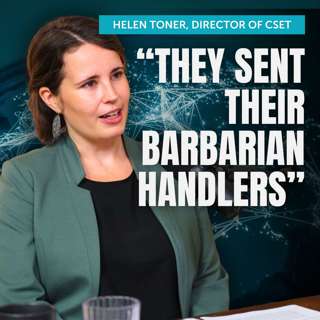
#227 – Helen Toner on the geopolitics of AGI in China and the Middle East

#227 – Helen Toner on the geopolitics of AGI in China and the Middle East

With the US racing to develop AGI and superintelligence ahead of China, you might expect the two countries to be negotiating how they’ll deploy AI, including in the military, without coming to blows. ...

5 Marras 20252h 20min

#226 – Holden Karnofsky on unexploited opportunities to make AI safer — and all his AGI takes

#226 – Holden Karnofsky on unexploited opportunities to make AI safer — and all his AGI takes

For years, working on AI safety usually meant theorising about the ‘alignment problem’ or trying to convince other people to give a damn. If you could find any way to help, the work was frustrating an...

30 Loka 20254h 30min

Suosittua kategoriassa Koulutus

rss-murhan-anatomia
psykopodiaa-podcast
voi-hyvin-meditaatiot-2
rss-valo-minussa-2
rss-narsisti
adhd-podi
psykologia
salainen-paivakirja
rss-liian-kuuma-peruna
rss-niinku-asia-on
rahapuhetta
aamukahvilla
aloita-meditaatio
rss-duodecim-lehti
rss-vapaudu-voimaasi
kesken
koulu-podcast-2
rss-psykalab
rss-koira-haudattuna
rss-hereilla