#44 Classic episode - Paul Christiano on finding real solutions to the AI alignment problem

#44 Classic episode - Paul Christiano on finding real solutions to the AI alignment problem

Rebroadcast: this episode was originally released in October 2018.

Paul Christiano is one of the smartest people I know. After our first session produced such great material, we decided to do a second recording, resulting in our longest interview so far. While challenging at times I can strongly recommend listening — Paul works on AI himself and has a very unusually thought through view of how it will change the world. This is now the top resource I'm going to refer people to if they're interested in positively shaping the development of AI, and want to understand the problem better. Even though I'm familiar with Paul's writing I felt I was learning a great deal and am now in a better position to make a difference to the world.

A few of the topics we cover are:

• Why Paul expects AI to transform the world gradually rather than explosively and what that would look like
• Several concrete methods OpenAI is trying to develop to ensure AI systems do what we want even if they become more competent than us
• Why AI systems will probably be granted legal and property rights
• How an advanced AI that doesn't share human goals could still have moral value
• Why machine learning might take over science research from humans before it can do most other tasks
• Which decade we should expect human labour to become obsolete, and how this should affect your savings plan.

Links to learn more, summary and full transcript.
Rohin Shah's AI alignment newsletter.

Here's a situation we all regularly confront: you want to answer a difficult question, but aren't quite smart or informed enough to figure it out for yourself. The good news is you have access to experts who *are* smart enough to figure it out. The bad news is that they disagree.

If given plenty of time — and enough arguments, counterarguments and counter-counter-arguments between all the experts — should you eventually be able to figure out which is correct? What if one expert were deliberately trying to mislead you? And should the expert with the correct view just tell the whole truth, or will competition force them to throw in persuasive lies in order to have a chance of winning you over?

In other words: does 'debate', in principle, lead to truth?

According to Paul Christiano — researcher at the machine learning research lab OpenAI and legendary thinker in the effective altruism and rationality communities — this question is of more than mere philosophical interest. That's because 'debate' is a promising method of keeping artificial intelligence aligned with human goals, even if it becomes much more intelligent and sophisticated than we are.

It's a method OpenAI is actively trying to develop, because in the long-term it wants to train AI systems to make decisions that are too complex for any human to grasp, but without the risks that arise from a complete loss of human oversight.

If AI-1 is free to choose any line of argument in order to attack the ideas of AI-2, and AI-2 always seems to successfully defend them, it suggests that every possible line of argument would have been unsuccessful.

But does that mean that the ideas of AI-2 were actually right? It would be nice if the optimal strategy in debate were to be completely honest, provide good arguments, and respond to counterarguments in a valid way. But we don't know that's the case.

The 80,000 Hours Podcast is produced by Keiran Harris.

Jaksot(320)

#75 – Michelle Hutchinson on what people most often ask 80,000 Hours [re-release]

#75 – Michelle Hutchinson on what people most often ask 80,000 Hours [re-release]

Rebroadcast: this episode was originally released in April 2020. Since it was founded, 80,000 Hours has done one-on-one calls to supplement our online content and offer more personalised advice. We ...

30 Joulu 20202h 14min
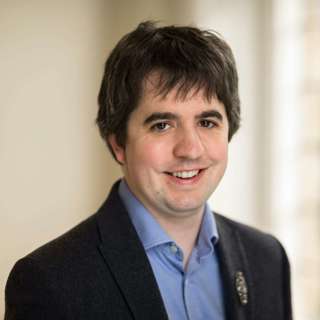
#89 – Owen Cotton-Barratt on epistemic systems and layers of defense against potential global catastrophes

#89 – Owen Cotton-Barratt on epistemic systems and layers of defense against potential global catastrophes

From one point of view academia forms one big 'epistemic' system — a process which directs attention, generates ideas, and judges which are good. Traditional print media is another such system, and we...

17 Joulu 20202h 38min
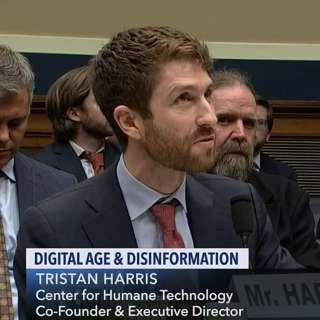
#88 – Tristan Harris on the need to change the incentives of social media companies

#88 – Tristan Harris on the need to change the incentives of social media companies

In its first 28 days on Netflix, the documentary The Social Dilemma — about the possible harms being caused by social media and other technology products — was seen by 38 million households in about 1...

3 Joulu 20202h 35min

Benjamin Todd on what the effective altruism community most needs (80k team chat #4)

Benjamin Todd on what the effective altruism community most needs (80k team chat #4)

In the last '80k team chat' with Ben Todd and Arden Koehler, we discussed what effective altruism is and isn't, and how to argue for it. In this episode we turn now to what the effective altruism comm...

12 Marras 20201h 25min

#87 – Russ Roberts on whether it's more effective to help strangers, or people you know

#87 – Russ Roberts on whether it's more effective to help strangers, or people you know

If you want to make the world a better place, would it be better to help your niece with her SATs, or try to join the State Department to lower the risk that the US and China go to war? People involve...

3 Marras 20201h 49min
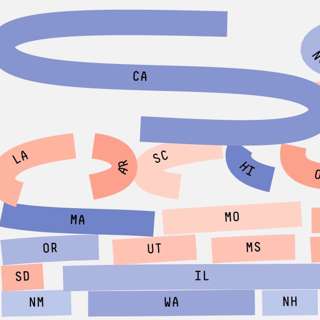
How much does a vote matter? (Article)

How much does a vote matter? (Article)

Today’s release is the latest in our series of audio versions of our articles.In this one — How much does a vote matter? — I investigate the two key things that determine the impact of your vote: • ...

29 Loka 202031min
#86 – Hilary Greaves on Pascal's mugging, strong longtermism, and whether existing can be good for us

#86 – Hilary Greaves on Pascal's mugging, strong longtermism, and whether existing can be good for us

Had World War 1 never happened, you might never have existed. It’s very unlikely that the exact chain of events that led to your conception would have happened otherwise — so perhaps you wouldn't have...

21 Loka 20202h 24min

Benjamin Todd on the core of effective altruism and how to argue for it (80k team chat #3)

Benjamin Todd on the core of effective altruism and how to argue for it (80k team chat #3)

Today’s episode is the latest conversation between Arden Koehler, and our CEO, Ben Todd. Ben’s been thinking a lot about effective altruism recently, including what it really is, how it's framed, an...

22 Syys 20201h 24min

Suosittua kategoriassa Koulutus

rss-murhan-anatomia
psykopodiaa-podcast
rss-narsisti
voi-hyvin-meditaatiot-2
aamukahvilla
rss-vapaudu-voimaasi
rss-niinku-asia-on
psykologia
rss-liian-kuuma-peruna
adhd-podi
kesken
dear-ladies
leveli
rss-duodecim-lehti
rss-koira-haudattuna
rss-luonnollinen-synnytys-podcast
rahapuhetta
aloita-meditaatio
ihminen-tavattavissa-tommy-hellsten-instituutti
rss-ai-mita-siskopodcast