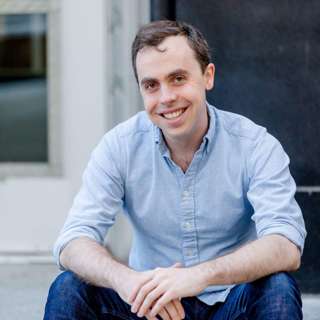
#68 - Will MacAskill on the paralysis argument, whether we're at the hinge of history, & his new priorities

#68 - Will MacAskill on the paralysis argument, whether we're at the hinge of history, & his new priorities

You’re given a box with a set of dice in it. If you roll an even number, a person's life is saved. If you roll an odd number, someone else will die. Each time you shake the box you get $10. Should you do it?

A committed consequentialist might say, "Sure! Free money!" But most will think it obvious that you should say no. You've only gotten a tiny benefit, in exchange for moral responsibility over whether other people live or die.

And yet, according to today’s return guest, philosophy Prof Will MacAskill, in a real sense we’re shaking this box every time we leave the house, and those who think shaking the box is wrong should probably also be shutting themselves indoors and minimising their interactions with others.

Links to learn more, summary and full transcript.
Job opportunities at the Global Priorities Institute.

To see this, imagine you’re deciding whether to redeem a coupon for a free movie. If you go, you’ll need to drive to the cinema. By affecting traffic throughout the city, you’ll have slightly impacted the schedules of thousands or tens of thousands of people. The average life is about 30,000 days, and over the course of a life the average person will have about two children. So — if you’ve impacted at least 7,500 days — then, statistically speaking, you've probably influenced the exact timing of a conception event. With 200 million sperm in the running each time, changing the moment of copulation, even by a fraction of a second, will almost certainly mean you've changed the identity of a future person.

That different child will now impact all sorts of things as they go about their life, including future conception events. And then those new people will impact further future conceptions events, and so on. After 100 or maybe 200 years, basically everybody alive will be a different person because you went to the movies.

As a result, you’ll have changed when many people die. Take car crashes as one example: about 1.3% of people die in car crashes. Over that century, as the identities of everyone change as a result of your action, many of the 'new' people will cause car crashes that wouldn't have occurred in their absence, including crashes that prematurely kill people alive today.

Of course, in expectation, exactly the same number of people will have been saved from car crashes, and will die later than they would have otherwise.

So, if you go for this drive, you’ll save hundreds of people from premature death, and cause the early death of an equal number of others. But you’ll get to see a free movie, worth $10. Should you do it?

This setup forms the basis of ‘the paralysis argument’, explored in one of Will’s recent papers.

Because most 'non-consequentialists' endorse an act/omission distinction… post truncated due to character limit, finish reading the full explanation here.

So what's the best way to fix this strange conclusion? We discuss a few options, but the most promising might bring people a lot closer to full consequentialism than is immediately apparent. In this episode Will and I also cover:

• Are, or are we not, living in the most influential time in history?
• The culture of the effective altruism community
• Will's new lower estimate of the risk of human extinction
• Why Will is now less focused on AI
• The differences between Americans and Brits
• Why feeling guilty about characteristics you were born with is crazy
• And plenty more.

Chapters:

  • Rob’s intro (00:00:00)
  • The interview begins (00:04:03)
  • The paralysis argument (00:15:42)
  • The case for strong longtermism (00:55:21)
  • Longtermism for risk-averse altruists (00:58:01)
  • Are we living in the most influential time in history? (01:14:37)
  • The risk of human extinction in the next hundred years (02:15:20)
  • Implications for the effective altruism community (02:50:03)
  • Culture of the effective altruism community (03:06:28)

Producer: Keiran Harris.
Audio mastering: Ben Cordell.
Transcriptions: Zakee Ulhaq.

Jaksot(326)

#44 - Paul Christiano on how we'll hand the future off to AI, & solving the alignment problem

#44 - Paul Christiano on how we'll hand the future off to AI, & solving the alignment problem

Paul Christiano is one of the smartest people I know. After our first session produced such great material, we decided to do a second recording, resulting in our longest interview so far. While challe...

2 Loka 20183h 51min
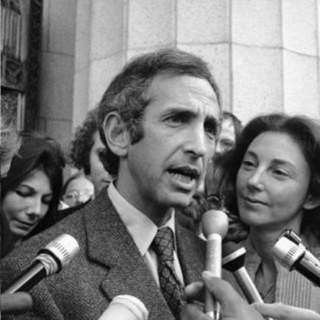
#43 - Daniel Ellsberg on the institutional insanity that maintains nuclear doomsday machines

#43 - Daniel Ellsberg on the institutional insanity that maintains nuclear doomsday machines

In Stanley Kubrick’s iconic film Dr. Strangelove, the American president is informed that the Soviet Union has created a secret deterrence system which will automatically wipe out humanity upon detect...

25 Syys 20182h 44min

#42 - Amanda Askell on moral empathy, the value of information & the ethics of infinity

#42 - Amanda Askell on moral empathy, the value of information & the ethics of infinity

Consider two familiar moments at a family reunion. Our host, Uncle Bill, takes pride in his barbecuing skills. But his niece Becky says that she now refuses to eat meat. A groan goes round the table; ...

11 Syys 20182h 46min
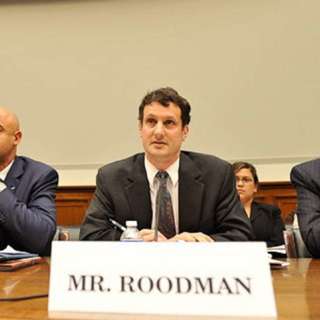
#41 - David Roodman on incarceration, geomagnetic storms, & becoming a world-class researcher

#41 - David Roodman on incarceration, geomagnetic storms, & becoming a world-class researcher

With 698 inmates per 100,000 citizens, the U.S. is by far the leader among large wealthy nations in incarceration. But what effect does imprisonment actually have on crime? According to David Roodman...

28 Elo 20182h 18min
#40 - Katja Grace on forecasting future technology & how much we should trust expert predictions

#40 - Katja Grace on forecasting future technology & how much we should trust expert predictions

Experts believe that artificial intelligence will be better than humans at driving trucks by 2027, working in retail by 2031, writing bestselling books by 2049, and working as surgeons by 2053. But ho...

21 Elo 20182h 11min
#39 - Spencer Greenberg on the scientific approach to solving difficult everyday questions

#39 - Spencer Greenberg on the scientific approach to solving difficult everyday questions

Will Trump be re-elected? Will North Korea give up their nuclear weapons? Will your friend turn up to dinner? Spencer Greenberg, founder of ClearerThinking.org has a process for working out such real...

7 Elo 20182h 17min

#38 - Yew-Kwang Ng on anticipating effective altruism decades ago & how to make a much happier world

#38 - Yew-Kwang Ng on anticipating effective altruism decades ago & how to make a much happier world

Will people who think carefully about how to maximize welfare eventually converge on the same views? The effective altruism community has spent a lot of time over the past 10 years debating how best t...

26 Heinä 20181h 59min
#37 - GiveWell picks top charities by estimating the unknowable. James Snowden on how they do it.

#37 - GiveWell picks top charities by estimating the unknowable. James Snowden on how they do it.

What’s the value of preventing the death of a 5-year-old child, compared to a 20-year-old, or an 80-year-old? The global health community has generally regarded the value as proportional to the numbe...

16 Heinä 20181h 44min

Suosittua kategoriassa Koulutus

rss-murhan-anatomia
voi-hyvin-meditaatiot-2
psykopodiaa-podcast
adhd-podi
rss-narsisti
rss-rahamania
rahapuhetta
rss-liian-kuuma-peruna
kesken
rss-uskonto-on-tylsaa
rss-vapaudu-voimaasi
rss-niinku-asia-on
rss-tietoinen-yhteys-podcast-2
aloita-meditaatio
salainen-paivakirja
esa-saarinen-filosofia-ja-systeemiajattelu
filocast-filosofian-perusteet
rss-valo-minussa-2
rss-koira-haudattuna
rss-hereilla