#76 – Tara Kirk Sell on misinformation, who's done well and badly, & what to reopen first

#76 – Tara Kirk Sell on misinformation, who's done well and badly, & what to reopen first

Amid a rising COVID-19 death toll, and looming economic disaster, we’ve been looking for good news — and one thing we're especially thankful for is the Johns Hopkins Center for Health Security (CHS).

CHS focuses on protecting us from major biological, chemical or nuclear disasters, through research that informs governments around the world. While this pandemic surprised many, just last October the Center ran a simulation of a 'new coronavirus' scenario to identify weaknesses in our ability to quickly respond. Their expertise has given them a key role in figuring out how to fight COVID-19.

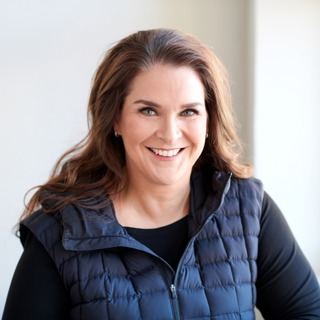
Today’s guest, Dr Tara Kirk Sell, did her PhD in policy and communication during disease outbreaks, and has worked at CHS for 11 years on a range of important projects.

Links to learn more, summary and full transcript.

Last year she was a leader on Collective Intelligence for Disease Prediction, designed to sound the alarm about upcoming pandemics before others are paying attention.

Incredibly, the project almost closed in December, with COVID-19 just starting to spread around the world — but received new funding that allowed the project to respond quickly to the emerging disease.

She also contributed to a recent report attempting to explain the risks of specific types of activities resuming when COVID-19 lockdowns end.

We can't achieve zero risk — so differentiating activities on a spectrum is crucial. Choosing wisely can help us lead more normal lives without reviving the pandemic.

Dance clubs will have to stay closed, but hairdressers can adapt to minimise transmission, and Tara, who happens to be an Olympic silver-medalist in swimming, suggests outdoor non-contact sports could resume soon without much risk.

Her latest project deals with the challenge of misinformation during disease outbreaks.

Analysing the Ebola communication crisis of 2014, they found that even trained coders with public health expertise sometimes needed help to distinguish between true and misleading tweets — showing the danger of a continued lack of definitive information surrounding a virus and how it’s transmitted.

The challenge for governments is not simple. If they acknowledge how much they don't know, people may look elsewhere for guidance. But if they pretend to know things they don't, the result can be a huge loss of trust.

Despite their intense focus on COVID-19, researchers at CHS know that this is no one-off event. Many aspects of our collective response this time around have been alarmingly poor, and it won’t be long before Tara and her colleagues need to turn their mind to next time.

You can now donate to CHS through Effective Altruism Funds. Donations made through EA Funds are tax-deductible in the US, the UK, and the Netherlands.

Tara and Rob also discuss:

• Who has overperformed and underperformed expectations during COVID-19?
• Whe are people right to mistrust authorities?
• The media’s responsibility to be right
• What policy changes should be prioritised for next time
• Should we prepare for future pandemic while the COVID-19 is still going?
• The importance of keeping non-COVID health problems in mind
• The psychological difference between staying home voluntarily and being forced to
• Mistakes that we in the general public might be making
• Emerging technologies with the potential to reduce global catastrophic biological risks

Chapters:

  • Rob’s intro (00:00:00)
  • The interview begins (00:01:43)
  • Misinformation (00:05:07)
  • Who has done well during COVID-19? (00:22:19)
  • Guidance for governors on reopening (00:34:05)
  • Collective Intelligence for Disease Prediction project (00:45:35)
  • What else is CHS trying to do to address the pandemic? (00:59:51)
  • Deaths are not the only health impact of importance (01:05:33)
  • Policy change for future pandemics (01:10:57)
  • Emerging technologies with potential to reduce global catastrophic biological risks (01:22:37)
  • Careers (01:38:52)
  • Good news about COVID-19 (01:44:23)

Producer: Keiran Harris.
Audio mastering: Ben Cordell.
Transcriptions: Zakee Ulhaq.

Jaksot(325)

#28 - Owen Cotton-Barratt on why scientists should need insurance, PhD strategy & fast AI progresses

#28 - Owen Cotton-Barratt on why scientists should need insurance, PhD strategy & fast AI progresses

A researcher is working on creating a new virus – one more dangerous than any that exist naturally. They believe they’re being as careful as possible. After all, if things go wrong, their own life and...

27 Huhti 20181h 3min
#27 - Dr Tom Inglesby on careers and policies that reduce global catastrophic biological risks

#27 - Dr Tom Inglesby on careers and policies that reduce global catastrophic biological risks

How about this for a movie idea: a main character has to prevent a new contagious strain of Ebola spreading around the world. She’s the best of the best. So good in fact, that her work on early detect...

18 Huhti 20182h 16min
#26 - Marie Gibbons on how exactly clean meat is made & what's needed to get it in every supermarket

#26 - Marie Gibbons on how exactly clean meat is made & what's needed to get it in every supermarket

First, decide on the type of animal. Next, pick the cell type. Then take a small, painless biopsy, and put the cells in a solution that makes them feel like they’re still in the body. Once the cells a...

10 Huhti 20181h 44min
#25 - Robin Hanson on why we have to lie to ourselves about why we do what we do

#25 - Robin Hanson on why we have to lie to ourselves about why we do what we do

On February 2, 1685, England’s King Charles II was struck by a sudden illness. Fortunately his physicians were the best of the best. To reassure the public they kept them abreast of the King’s treatme...

28 Maalis 20182h 39min
#24 - Stefan Schubert on why it’s a bad idea to break the rules, even if it’s for a good cause

#24 - Stefan Schubert on why it’s a bad idea to break the rules, even if it’s for a good cause

How honest should we be? How helpful? How friendly? If our society claims to value honesty, for instance, but in reality accepts an awful lot of lying – should we go along with those lax standards? Or...

20 Maalis 201855min
#23 - How to actually become an AI alignment researcher, according to Dr Jan Leike

#23 - How to actually become an AI alignment researcher, according to Dr Jan Leike

Want to help steer the 21st century’s most transformative technology? First complete an undergrad degree in computer science and mathematics. Prioritize harder courses over easier ones. Publish at lea...

16 Maalis 201845min
#22 - Leah Utyasheva on the non-profit that figured out how to massively cut suicide rates

#22 - Leah Utyasheva on the non-profit that figured out how to massively cut suicide rates

How people kill themselves varies enormously depending on which means are most easily available. In the United States, suicide by firearm stands out. In Hong Kong, where most people live in high rise ...

7 Maalis 20181h 8min

#21 - Holden Karnofsky on times philanthropy transformed the world & Open Phil’s plan to do the same

#21 - Holden Karnofsky on times philanthropy transformed the world & Open Phil’s plan to do the same

The Green Revolution averted mass famine during the 20th century. The contraceptive pill gave women unprecedented freedom in planning their own lives. Both are widely recognised as scientific breakthr...

27 Helmi 20182h 35min

Suosittua kategoriassa Koulutus

rss-murhan-anatomia
voi-hyvin-meditaatiot-2
rss-narsisti
adhd-podi
psykopodiaa-podcast
rss-rahamania
rss-uskonto-on-tylsaa
rss-valo-minussa-2
rss-vapaudu-voimaasi
rss-duodecim-lehti
rss-niinku-asia-on
mielipaivakirja
rahapuhetta
aamukahvilla
ilona-rauhala
kesken
dear-ladies
rss-eron-alkemiaa
nakokulmia-rikollisuudesta-irrottautumiseen
rss-arkea-ja-aurinkoa-podcast-espanjasta