#77 – Marc Lipsitch on whether we're winning or losing against COVID-19

#77 – Marc Lipsitch on whether we're winning or losing against COVID-19

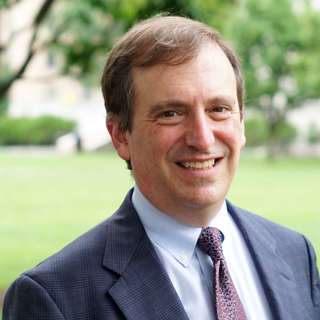
In March Professor Marc Lipsitch — Director of Harvard's Center for Communicable Disease Dynamics — abruptly found himself a global celebrity, his social media following growing 40-fold and journalists knocking down his door, as everyone turned to him for information they could trust.

Here he lays out where the fight against COVID-19 stands today, why he's open to deliberately giving people COVID-19 to speed up vaccine development, and how we could do better next time.

As Marc tells us, island nations like Taiwan and New Zealand are successfully suppressing SARS-COV-2. But everyone else is struggling.

Links to learn more, summary and full transcript.

Even Singapore, with plenty of warning and one of the best test and trace systems in the world, lost control of the virus in mid-April after successfully holding back the tide for 2 months.

This doesn't bode well for how the US or Europe will cope as they ease their lockdowns. It also suggests it would have been exceedingly hard for China to stop the virus before it spread overseas.

But sadly, there's no easy way out.

The original estimates of COVID-19's infection fatality rate, of 0.5-1%, have turned out to be basically right. And the latest serology surveys indicate only 5-10% of people in countries like the US, UK and Spain have been infected so far, leaving us far short of herd immunity. To get there, even these worst affected countries would need to endure something like ten times the number of deaths they have so far.

Marc has one good piece of news: research suggests that most of those who get infected do indeed develop immunity, for a while at least.

To escape the COVID-19 trap sooner rather than later, Marc recommends we go hard on all the familiar options — vaccines, antivirals, and mass testing — but also open our minds to creative options we've so far left on the shelf.

Despite the importance of his work, even now the training and grant programs that produced the community of experts Marc is a part of, are shrinking. We look at a new article he's written about how to instead build and improve the field of epidemiology, so humanity can respond faster and smarter next time we face a disease that could kill millions and cost tens of trillions of dollars.

We also cover:

• How listeners might contribute as future contagious disease experts, or donors to current projects
• How we can learn from cross-country comparisons
• Modelling that has gone wrong in an instructive way
• What governments should stop doing
• How people can figure out who to trust, and who has been most on the mark this time
• Why Marc supports infecting people with COVID-19 to speed up the development of a vaccines
• How we can ensure there's population-level surveillance early during the next pandemic
• Whether people from other fields trying to help with COVID-19 has done more good than harm
• Whether it's experts in diseases, or experts in forecasting, who produce better disease forecasts

Chapters:

  • Rob’s intro (00:00:00)
  • The interview begins (00:01:45)
  • Things Rob wishes he knew about COVID-19 (00:05:23)
  • Cross-country comparisons (00:10:53)
  • Any government activities we should stop? (00:21:24)
  • Lessons from COVID-19 (00:33:31)
  • Global catastrophic biological risks (00:37:58)
  • Human challenge trials (00:43:12)
  • Disease surveillance (00:50:07)
  • Who should we trust? (00:58:12)
  • Epidemiology as a field (01:13:05)
  • Careers (01:31:28)


Producer: Keiran Harris.
Audio mastering: Ben Cordell.
Transcriptions: Zakee Ulhaq.

Jaksot(320)

#46 - Hilary Greaves on moral cluelessness & tackling crucial questions in academia

#46 - Hilary Greaves on moral cluelessness & tackling crucial questions in academia

The barista gives you your coffee and change, and you walk away from the busy line. But you suddenly realise she gave you $1 less than she should have. Do you brush your way past the people now waitin...

23 Loka 20182h 49min
#45 - Tyler Cowen's case for maximising econ growth, stabilising civilization & thinking long-term

#45 - Tyler Cowen's case for maximising econ growth, stabilising civilization & thinking long-term

I've probably spent more time reading Tyler Cowen - Professor of Economics at George Mason University - than any other author. Indeed it's his incredibly popular blog Marginal Revolution that prompted...

17 Loka 20182h 30min
#44 - Paul Christiano on how we'll hand the future off to AI, & solving the alignment problem

#44 - Paul Christiano on how we'll hand the future off to AI, & solving the alignment problem

Paul Christiano is one of the smartest people I know. After our first session produced such great material, we decided to do a second recording, resulting in our longest interview so far. While challe...

2 Loka 20183h 51min
#43 - Daniel Ellsberg on the institutional insanity that maintains nuclear doomsday machines

#43 - Daniel Ellsberg on the institutional insanity that maintains nuclear doomsday machines

In Stanley Kubrick’s iconic film Dr. Strangelove, the American president is informed that the Soviet Union has created a secret deterrence system which will automatically wipe out humanity upon detect...

25 Syys 20182h 44min

#42 - Amanda Askell on moral empathy, the value of information & the ethics of infinity

#42 - Amanda Askell on moral empathy, the value of information & the ethics of infinity

Consider two familiar moments at a family reunion. Our host, Uncle Bill, takes pride in his barbecuing skills. But his niece Becky says that she now refuses to eat meat. A groan goes round the table; ...

11 Syys 20182h 46min
#41 - David Roodman on incarceration, geomagnetic storms, & becoming a world-class researcher

#41 - David Roodman on incarceration, geomagnetic storms, & becoming a world-class researcher

With 698 inmates per 100,000 citizens, the U.S. is by far the leader among large wealthy nations in incarceration. But what effect does imprisonment actually have on crime? According to David Roodman...

28 Elo 20182h 18min

#40 - Katja Grace on forecasting future technology & how much we should trust expert predictions

#40 - Katja Grace on forecasting future technology & how much we should trust expert predictions

Experts believe that artificial intelligence will be better than humans at driving trucks by 2027, working in retail by 2031, writing bestselling books by 2049, and working as surgeons by 2053. But ho...

21 Elo 20182h 11min
#39 - Spencer Greenberg on the scientific approach to solving difficult everyday questions

#39 - Spencer Greenberg on the scientific approach to solving difficult everyday questions

Will Trump be re-elected? Will North Korea give up their nuclear weapons? Will your friend turn up to dinner? Spencer Greenberg, founder of ClearerThinking.org has a process for working out such real...

7 Elo 20182h 17min

Suosittua kategoriassa Koulutus

rss-murhan-anatomia
psykopodiaa-podcast
rss-narsisti
voi-hyvin-meditaatiot-2
aamukahvilla
rss-vapaudu-voimaasi
psykologia
rss-liian-kuuma-peruna
dear-ladies
leveli
adhd-podi
kesken
rss-duodecim-lehti
aloita-meditaatio
ihminen-tavattavissa-tommy-hellsten-instituutti
rss-koira-haudattuna
rahapuhetta
ilona-rauhala
rss-niinku-asia-on
rss-luonnollinen-synnytys-podcast