

#81 - Ben Garfinkel on scrutinising classic AI risk arguments

#81 - Ben Garfinkel on scrutinising classic AI risk arguments

80,000 Hours, along with many other members of the effective altruism movement, has argued that helping to positively shape the development of artificial intelligence may be one of the best ways to have a lasting, positive impact on the long-term future. Millions of dollars in philanthropic spending, as well as lots of career changes, have been motivated by these arguments.

Today’s guest, Ben Garfinkel, Research Fellow at Oxford’s Future of Humanity Institute, supports the continued expansion of AI safety as a field and believes working on AI is among the very best ways to have a positive impact on the long-term future. But he also believes the classic AI risk arguments have been subject to insufficient scrutiny given this level of investment.

In particular, the case for working on AI if you care about the long-term future has often been made on the basis of concern about AI accidents; it’s actually quite difficult to design systems that you can feel confident will behave the way you want them to in all circumstances.

Nick Bostrom wrote the most fleshed out version of the argument in his book, Superintelligence. But Ben reminds us that, apart from Bostrom’s book and essays by Eliezer Yudkowsky, there's very little existing writing on existential accidents.

Links to learn more, summary and full transcript.

There have also been very few skeptical experts that have actually sat down and fully engaged with it, writing down point by point where they disagree or where they think the mistakes are. This means that Ben has probably scrutinised classic AI risk arguments as carefully as almost anyone else in the world.

He thinks that most of the arguments for existential accidents often rely on fuzzy, abstract concepts like optimisation power or general intelligence or goals, and toy thought experiments. And he doesn’t think it’s clear we should take these as a strong source of evidence.

Ben’s also concerned that these scenarios often involve massive jumps in the capabilities of a single system, but it's really not clear that we should expect such jumps or find them plausible. These toy examples also focus on the idea that because human preferences are so nuanced and so hard to state precisely, it should be quite difficult to get a machine that can understand how to obey them.

But Ben points out that it's also the case in machine learning that we can train lots of systems to engage in behaviours that are actually quite nuanced and that we can't specify precisely. If AI systems can recognise faces from images, and fly helicopters, why don’t we think they’ll be able to understand human preferences?

Despite these concerns, Ben is still fairly optimistic about the value of working on AI safety or governance.

He doesn’t think that there are any slam-dunks for improving the future, and so the fact that there are at least plausible pathways for impact by working on AI safety and AI governance, in addition to it still being a very neglected area, puts it head and shoulders above most areas you might choose to work in.

This is the second episode hosted by our Strategy Advisor Howie Lempel, and he and Ben cover, among many other things:

• The threat of AI systems increasing the risk of permanently damaging conflict or collapse
• The possibility of permanently locking in a positive or negative future
• Contenders for types of advanced systems
• What role AI should play in the effective altruism portfolio

Get this episode by subscribing: type 80,000 Hours into your podcasting app. Or read the linked transcript.

Producer: Keiran Harris.
Audio mastering: Ben Cordell.
Transcriptions: Zakee Ulhaq.

Jaksot(324)

#73 – Phil Trammell on patient philanthropy and waiting to do good

#73 – Phil Trammell on patient philanthropy and waiting to do good

To do good, most of us look to use our time and money to affect the world around us today. But perhaps that's all wrong. If you took $1,000 you were going to donate and instead put it in the stock mar...

17 Maalis 20202h 35min
#72 - Toby Ord on the precipice and humanity's potential futures

#72 - Toby Ord on the precipice and humanity's potential futures

This week Oxford academic and 80,000 Hours trustee Dr Toby Ord released his new book The Precipice: Existential Risk and the Future of Humanity. It's about how our long-term future could be better tha...

7 Maalis 20203h 14min
#71 - Benjamin Todd on the key ideas of 80,000 Hours

#71 - Benjamin Todd on the key ideas of 80,000 Hours

The 80,000 Hours Podcast is about “the world’s most pressing problems and how you can use your career to solve them”, and in this episode we tackle that question in the most direct way possible. Las...

2 Maalis 20202h 57min

Arden & Rob on demandingness, work-life balance & injustice (80k team chat #1)

Arden & Rob on demandingness, work-life balance & injustice (80k team chat #1)

Today's bonus episode of the podcast is a quick conversation between me and my fellow 80,000 Hours researcher Arden Koehler about a few topics, including the demandingness of morality, work-life balan...

25 Helmi 202044min
#70 - Dr Cassidy Nelson on the 12 best ways to stop the next pandemic (and limit nCoV)

#70 - Dr Cassidy Nelson on the 12 best ways to stop the next pandemic (and limit nCoV)

nCoV is alarming governments and citizens around the world. It has killed more than 1,000 people, brought the Chinese economy to a standstill, and continues to show up in more and more places. But bad...

13 Helmi 20202h 26min

#69 – Jeffrey Ding on China, its AI dream, and what we get wrong about both

#69 – Jeffrey Ding on China, its AI dream, and what we get wrong about both

The State Council of China's 2017 AI plan was the starting point of China’s AI planning; China’s approach to AI is defined by its top-down and monolithic nature; China is winning the AI arms race; and...

6 Helmi 20201h 37min
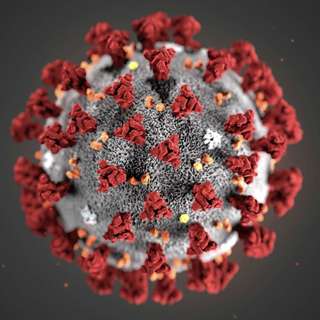
Rob & Howie on what we do and don't know about 2019-nCoV

Rob & Howie on what we do and don't know about 2019-nCoV

Two 80,000 Hours researchers, Robert Wiblin and Howie Lempel, record an experimental bonus episode about the new 2019-nCoV virus.See this list of resources, including many discussed in the episode, to...

3 Helmi 20201h 18min

#68 - Will MacAskill on the paralysis argument, whether we're at the hinge of history, & his new priorities

#68 - Will MacAskill on the paralysis argument, whether we're at the hinge of history, & his new priorities

You’re given a box with a set of dice in it. If you roll an even number, a person's life is saved. If you roll an odd number, someone else will die. Each time you shake the box you get $10. Should you...

24 Tammi 20203h 25min

Suosittua kategoriassa Koulutus

rss-murhan-anatomia
voi-hyvin-meditaatiot-2
rss-narsisti
psykopodiaa-podcast
rss-niinku-asia-on
rss-vapaudu-voimaasi
adhd-podi
psykologia
rss-duodecim-lehti
rss-rahamania
rss-valo-minussa-2
kesken
rss-uskonto-on-tylsaa
aamukahvilla
koulu-podcast-2
rss-liian-kuuma-peruna
rss-koira-haudattuna
avara-mieli
rss-turun-yliopisto
rss-arkea-ja-aurinkoa-podcast-espanjasta