#83 - Jennifer Doleac on preventing crime without police and prisons
80,000 Hours Podcast31 Heinä 2020

#83 - Jennifer Doleac on preventing crime without police and prisons

The killing of George Floyd has prompted a great deal of debate over whether the US should reduce the size of its police departments. The research literature suggests that the presence of police officers does reduce crime, though they're expensive and as is increasingly recognised, impose substantial harms on the populations they are meant to be protecting, especially communities of colour.

So maybe we ought to shift our focus to effective but unconventional approaches to crime prevention, approaches that don't require police or prisons and the human toll they bring with them.

Today’s guest, Jennifer Doleac — Associate Professor of Economics at Texas A&M University, and Director of the Justice Tech Lab — is an expert on empirical research into policing, law and incarceration. In this extensive interview, she highlights three alternative ways to effectively prevent crime: better street lighting, cognitive behavioral therapy, and lead reduction.

One of Jennifer’s papers used switches into and out of daylight saving time as a 'natural experiment' to measure the effect of light levels on crime. One day the sun sets at 5pm; the next day it sets at 6pm. When that evening hour is dark instead of light, robberies during it roughly double.

Links to sources for the claims in these show notes, other resources to learn more, and a full transcript.

The idea here is that if you try to rob someone in broad daylight, they might see you coming, and witnesses might later be able to identify you. You're just more likely to get caught.

You might think: "Well, people will just commit crime in the morning instead". But it looks like criminals aren’t early risers, and that doesn’t happen.

On her unusually rigorous podcast Probable Causation, Jennifer spoke to one of the authors of a related study, in which very bright streetlights were randomly added to some public housing complexes but not others. They found the lights reduced outdoor night-time crime by 36%, at little cost.

The next best thing to sun-light is human-light, so just installing more streetlights might be one of the easiest ways to cut crime, without having to hassle or punish anyone.

The second approach is cognitive behavioral therapy (CBT), in which you're taught to slow down your decision-making, and think through your assumptions before acting.

There was a randomised controlled trial done in schools, as well as juvenile detention facilities in Chicago, where the kids assigned to get CBT were followed over time and compared with those who were not assigned to receive CBT. They found the CBT course reduced rearrest rates by a third, and lowered the likelihood of a child returning to a juvenile detention facility by 20%.

Jennifer says that the program isn’t that expensive, and the benefits are massive. Everyone would probably benefit from being able to talk through their problems but the gains are especially large for people who've grown up with the trauma of violence in their lives.

Finally, Jennifer thinks that lead reduction might be the best buy of all in crime prevention…

Blog post truncated due to length limits. Finish reading the full post here.

In today’s conversation, Rob and Jennifer also cover, among many other things:

• Misconduct, hiring practices and accountability among US police
• Procedural justice training
• Overrated policy ideas
• Policies to try to reduce racial discrimination
• The effects of DNA databases
• Diversity in economics
• The quality of social science research

Get this episode by subscribing: type 80,000 Hours into your podcasting app.

Producer: Keiran Harris.
Audio mastering: Ben Cordell.
Transcriptions: Zakee Ulhaq.

Jaksot(332)

#19 - Samantha Pitts-Kiefer on working next to the White House trying to prevent nuclear war

#19 - Samantha Pitts-Kiefer on working next to the White House trying to prevent nuclear war

Rogue elements within a state’s security forces enrich dozens of kilograms of uranium. It’s then assembled into a crude nuclear bomb. The bomb is transported on a civilian aircraft to Washington D.C, ...

14 Helmi 20181h 4min
#18 - Ofir Reich on using data science to end poverty & the spurious action-inaction distinction

#18 - Ofir Reich on using data science to end poverty & the spurious action-inaction distinction

Ofir Reich started out doing math in the military, before spending 8 years in tech startups - but then made a sharp turn to become a data scientist focussed on helping the global poor. At UC Berkeley...

31 Tammi 20181h 18min

#17 - Will MacAskill on moral uncertainty, utilitarianism & how to avoid being a moral monster

#17 - Will MacAskill on moral uncertainty, utilitarianism & how to avoid being a moral monster

Immanuel Kant is a profoundly influential figure in modern philosophy, and was one of the earliest proponents for universal democracy and international cooperation. He also thought that women have no ...

19 Tammi 20181h 52min

#16 - Michelle Hutchinson on global priorities research & shaping the ideas of intellectuals

#16 - Michelle Hutchinson on global priorities research & shaping the ideas of intellectuals

In the 40s and 50s neoliberalism was a fringe movement within economics. But by the 80s it had become a dominant school of thought in public policy, and achieved major policy changes across the Englis...

22 Joulu 201755min
#15 - Phil Tetlock on how chimps beat Berkeley undergrads and when it’s wise to defer to the wise

#15 - Phil Tetlock on how chimps beat Berkeley undergrads and when it’s wise to defer to the wise

Prof Philip Tetlock is a social science legend. Over forty years he has researched whose predictions we can trust, whose we can’t and why - and developed methods that allow all of us to be better at p...

20 Marras 20171h 24min
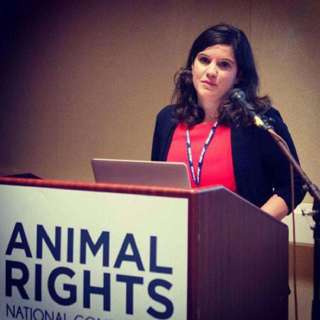
#14 - Sharon Nunez & Jose Valle on going undercover to expose animal abuse

#14 - Sharon Nunez & Jose Valle on going undercover to expose animal abuse

What if you knew that ducks were being killed with pitchforks? Rabbits dumped alive into containers? Or pigs being strangled with forklifts? Would you be willing to go undercover to expose the crime? ...

13 Marras 20171h 25min

#13 - Claire Walsh on testing which policies work & how to get governments to listen to the results

#13 - Claire Walsh on testing which policies work & how to get governments to listen to the results

In both rich and poor countries, government policy is often based on no evidence at all and many programs don’t work. This has particularly harsh effects on the global poor - in some countries governm...

31 Loka 201752min

#12 - Beth Cameron works to stop you dying in a pandemic. Here’s what keeps her up at night.

#12 - Beth Cameron works to stop you dying in a pandemic. Here’s what keeps her up at night.

“When you're in the middle of a crisis and you have to ask for money, you're already too late.” That’s Dr Beth Cameron, who leads Global Biological Policy and Programs at the Nuclear Threat Initiative...

25 Loka 20171h 45min

Suosittua kategoriassa Koulutus

rss-murhan-anatomia
psykopodiaa-podcast
voi-hyvin-meditaatiot-2
adhd-podi
rss-liian-kuuma-peruna
rss-tietoinen-yhteys-podcast-2
rss-niinku-asia-on
rss-valo-minussa-2
rss-rahamania
kesken
rss-arkea-ja-aurinkoa-podcast-espanjasta
rss-vapaudu-voimaasi
rahapuhetta
jari-sarasvuo-podcast
psykologia
rss-uskonto-on-tylsaa
ihminen-tavattavissa-tommy-hellsten-instituutti
rss-hereilla
kehossa
rss-narsisti