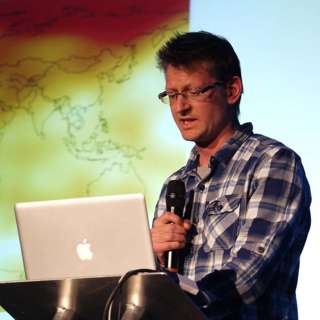
#85 - Mark Lynas on climate change, societal collapse & nuclear energy

#85 - Mark Lynas on climate change, societal collapse & nuclear energy

A golf-ball sized lump of uranium can deliver more than enough power to cover all of your lifetime energy use. To get the same energy from coal, you’d need 3,200 tonnes of black rock — a mass equivalent to 800 adult elephants, which would produce more than 11,000 tonnes of CO2. That’s about 11,000 tonnes more than the uranium.

Many people aren’t comfortable with the danger posed by nuclear power. But given the climatic stakes, it’s worth asking: Just how much more dangerous is it compared to fossil fuels?

According to today’s guest, Mark Lynas — author of Six Degrees: Our Future on a Hotter Planet (winner of the prestigious Royal Society Prizes for Science Books) and Nuclear 2.0 — it’s actually much, much safer.

Links to learn more, summary and full transcript.

Climatologists James Hansen and Pushker Kharecha calculated that the use of nuclear power between 1971 and 2009 avoided the premature deaths of 1.84 million people by avoiding air pollution from burning coal.

What about radiation or nuclear disasters? According to Our World In Data, in generating a given amount of electricity, nuclear, wind, and solar all cause about the same number of deaths — and it's a tiny number.

So what’s going on? Why isn’t everyone demanding a massive scale-up of nuclear energy to save lives and stop climate change? Mark and many other activists believe that unchecked climate change will result in the collapse of human civilization, so the stakes could not be higher.

Mark says that many environmentalists — including him — simply grew up with anti-nuclear attitudes all around them (possibly stemming from a conflation of nuclear weapons and nuclear energy) and haven't thought to question them.

But he thinks that once you believe in the climate emergency, you have to rethink your opposition to nuclear energy.

At 80,000 Hours we haven’t analysed the merits and flaws of the case for nuclear energy — especially compared to wind and solar paired with gas, hydro, or battery power to handle intermittency — but Mark is convinced.

He says it comes down to physics: Nuclear power is just so much denser.

We need to find an energy source that provides carbon-free power to ~10 billion people, and we need to do it while humanity is doubling or tripling (or more) its energy demand.

How do you do that without destroying the world's ecology? Mark thinks that nuclear is the only way.

Read a more in-depth version of the case for nuclear energy in the full blog post.

For Mark, the only argument against nuclear power is a political one -- that people won't want or accept it.

He says that he knows people in all kinds of mainstream environmental groups — such as Greenpeace — who agree that nuclear must be a vital part of any plan to solve climate change. But, because they think they'll be ostracized if they speak up, they keep their mouths shut.

Mark thinks this willingness to indulge beliefs that contradict scientific evidence stands in the way of actually fully addressing climate change, and so he’s helping to build a movement of folks who are out and proud about their support for nuclear energy.

This is only one topic of many in today’s interview. Arden, Rob, and Mark also discuss:

• At what degrees of warming does societal collapse become likely
• Whether climate change could lead to human extinction
• What environmentalists are getting wrong about climate change
• And much more.

Get this episode by subscribing: type 80,000 Hours into your podcasting app. Or read the linked transcript.

Producer: Keiran Harris.
Audio mastering: Ben Cordell.
Transcriptions: Zakee Ulhaq.

Jaksot(325)

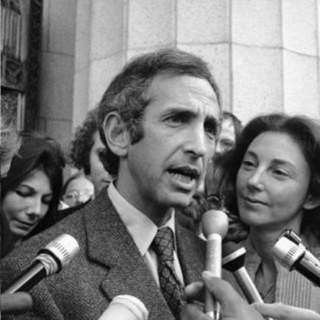
#43 - Daniel Ellsberg on the institutional insanity that maintains nuclear doomsday machines

#43 - Daniel Ellsberg on the institutional insanity that maintains nuclear doomsday machines

In Stanley Kubrick’s iconic film Dr. Strangelove, the American president is informed that the Soviet Union has created a secret deterrence system which will automatically wipe out humanity upon detect...

25 Syys 20182h 44min
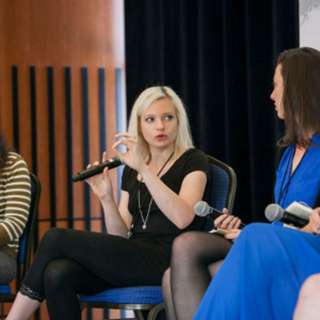
#42 - Amanda Askell on moral empathy, the value of information & the ethics of infinity

#42 - Amanda Askell on moral empathy, the value of information & the ethics of infinity

Consider two familiar moments at a family reunion. Our host, Uncle Bill, takes pride in his barbecuing skills. But his niece Becky says that she now refuses to eat meat. A groan goes round the table; ...

11 Syys 20182h 46min
#41 - David Roodman on incarceration, geomagnetic storms, & becoming a world-class researcher

#41 - David Roodman on incarceration, geomagnetic storms, & becoming a world-class researcher

With 698 inmates per 100,000 citizens, the U.S. is by far the leader among large wealthy nations in incarceration. But what effect does imprisonment actually have on crime? According to David Roodman...

28 Elo 20182h 18min

#40 - Katja Grace on forecasting future technology & how much we should trust expert predictions

#40 - Katja Grace on forecasting future technology & how much we should trust expert predictions

Experts believe that artificial intelligence will be better than humans at driving trucks by 2027, working in retail by 2031, writing bestselling books by 2049, and working as surgeons by 2053. But ho...

21 Elo 20182h 11min
#39 - Spencer Greenberg on the scientific approach to solving difficult everyday questions

#39 - Spencer Greenberg on the scientific approach to solving difficult everyday questions

Will Trump be re-elected? Will North Korea give up their nuclear weapons? Will your friend turn up to dinner? Spencer Greenberg, founder of ClearerThinking.org has a process for working out such real...

7 Elo 20182h 17min

#38 - Yew-Kwang Ng on anticipating effective altruism decades ago & how to make a much happier world

#38 - Yew-Kwang Ng on anticipating effective altruism decades ago & how to make a much happier world

Will people who think carefully about how to maximize welfare eventually converge on the same views? The effective altruism community has spent a lot of time over the past 10 years debating how best t...

26 Heinä 20181h 59min
#37 - GiveWell picks top charities by estimating the unknowable. James Snowden on how they do it.

#37 - GiveWell picks top charities by estimating the unknowable. James Snowden on how they do it.

What’s the value of preventing the death of a 5-year-old child, compared to a 20-year-old, or an 80-year-old? The global health community has generally regarded the value as proportional to the numbe...

16 Heinä 20181h 44min
#36 - Tanya Singh on ending the operations management bottleneck in effective altruism

#36 - Tanya Singh on ending the operations management bottleneck in effective altruism

Almost nobody is able to do groundbreaking physics research themselves, and by the time his brilliance was appreciated, Einstein was hardly limited by funding. But what if you could find a way to unlo...

11 Heinä 20182h 4min

Suosittua kategoriassa Koulutus

rss-murhan-anatomia
voi-hyvin-meditaatiot-2
rss-narsisti
adhd-podi
psykopodiaa-podcast
rss-rahamania
rss-valo-minussa-2
rss-uskonto-on-tylsaa
rss-niinku-asia-on
mielipaivakirja
rss-vapaudu-voimaasi
rss-duodecim-lehti
rahapuhetta
ilona-rauhala
aamukahvilla
kesken
dear-ladies
rss-eron-alkemiaa
rss-arkea-ja-aurinkoa-podcast-espanjasta
rss-koira-haudattuna