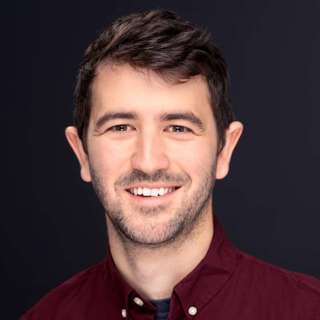
#105 – Alexander Berger on improving global health and wellbeing in clear and direct ways
80,000 Hours Podcast12 Heinä 2021

#105 – Alexander Berger on improving global health and wellbeing in clear and direct ways

The effective altruist research community tries to identify the highest impact things people can do to improve the world. Unsurprisingly, given the difficulty of such a massive and open-ended project, very different schools of thought have arisen about how to do the most good.

Today's guest, Alexander Berger, leads Open Philanthropy's 'Global Health and Wellbeing' programme, where he oversees around $175 million in grants each year, and ultimately aspires to disburse billions in the most impactful ways he and his team can identify.

This programme is the flagship effort representing one major effective altruist approach: try to improve the health and wellbeing of humans and animals that are alive today, in clearly identifiable ways, applying an especially analytical and empirical mindset.

Links to learn more, summary, Open Phil jobs, and full transcript.

The programme makes grants to tackle easily-prevented illnesses among the world's poorest people, offer cash to people living in extreme poverty, prevent cruelty to billions of farm animals, advance biomedical science, and improve criminal justice and immigration policy in the United States.

Open Philanthropy's researchers rely on empirical information to guide their decisions where it's available, and where it's not, they aim to maximise expected benefits to recipients through careful analysis of the gains different projects would offer and their relative likelihoods of success.

This 'global health and wellbeing' approach — sometimes referred to as 'neartermism' — contrasts with another big school of thought in effective altruism, known as 'longtermism', which aims to direct the long-term future of humanity and its descendants in a positive direction. Longtermism bets that while it's harder to figure out how to benefit future generations than people alive today, the total number of people who might live in the future is far greater than the number alive today, and this gain in scale more than offsets that lower tractability.

The debate between these two very different theories of how to best improve the world has been one of the most significant within effective altruist research since its inception. Alexander first joined the influential charity evaluator GiveWell in 2011, and since then has conducted research alongside top thinkers on global health and wellbeing and longtermism alike, ultimately deciding to dedicate his efforts to improving the world today in identifiable ways.

In this conversation Alexander advocates for that choice, explaining the case in favour of adopting the 'global health and wellbeing' mindset, while going through the arguments for the longtermist approach that he finds most and least convincing.

Rob and Alexander also tackle:

• Why it should be legal to sell your kidney, and why Alexander donated his to a total stranger
• Why it's shockingly hard to find ways to give away large amounts of money that are more cost effective than distributing anti-malaria bed nets
• How much you gain from working with tight feedback loops
• Open Philanthropy's biggest wins
• Why Open Philanthropy engages in 'worldview diversification' by having both a global health and wellbeing programme and a longtermist programme as well
• Whether funding science and political advocacy is a good way to have more social impact
• Whether our effects on future generations are predictable or unforeseeable
• What problems the global health and wellbeing team works to solve and why
• Opportunities to work at Open Philanthropy

Get this episode by subscribing to our podcast on the world’s most pressing problems and how to solve them: type 80,000 Hours into your podcasting app.

Producer: Keiran Harris
Audio mastering: Ben Cordell
Transcriptions: Sofia Davis-Fogel

Tämä jakso on lisätty Podme-palveluun avoimen RSS-syötteen kautta eikä se ole Podmen omaa tuotantoa. Siksi jakso saattaa sisältää mainontaa.

Jaksot(364)

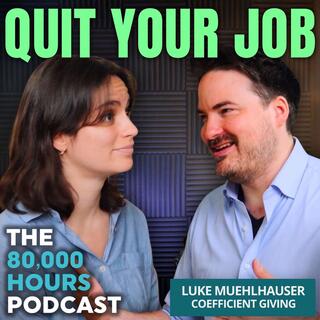
Luke Muehlhauser on the most important AI safety work nobody is doing

Luke Muehlhauser on the most important AI safety work nobody is doing

The US government spends 25 times more on military marching bands than on its AI safety institute. And that’s just one of the many institutions we’re missing as AI becomes more powerful and dangerous....

29 Loka 2h 36min
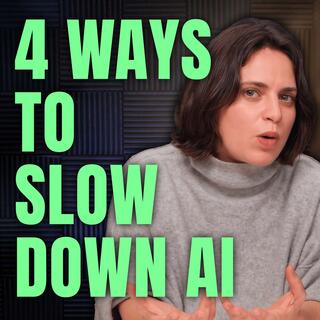
Why Silicon Valley can’t slow down AI on its own | Luisa Rodriguez

Why Silicon Valley can’t slow down AI on its own | Luisa Rodriguez

Two-thirds of Americans think AI is moving too fast. So do the people building it. So why the hell isn’t anyone slowing down?We can’t tell when models are too dangerous. We mostly don’t know how they ...

27 Loka 21min

Tom Milton on how we could verify a US–China deal on AI

Tom Milton on how we could verify a US–China deal on AI

If the US and China agreed to pause frontier AI training, how would either side confirm the other was complying? Today, Tom Milton argues, the most likely answer would be to shut down data centres ent...

23 Loka 1h 48min
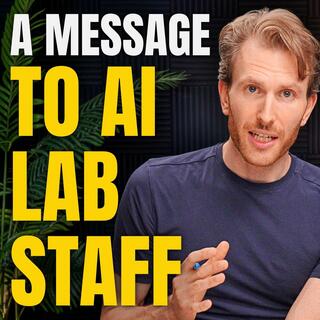
AI lab staff: Has your project been overtaken by events? 8 strategic updates | Rob Wiblin

AI lab staff: Has your project been overtaken by events? 8 strategic updates | Rob Wiblin

I have a plea for all staff at AI companies: reassess if your current role is still your best opportunity for impact. And if it’s not — move.Frontier lab staff listening to this show will mostly alrea...

21 Loka 14min

Introducing our new YouTube channel: Zershaaneh Talks AI

Introducing our new YouTube channel: Zershaaneh Talks AI

Our host Zershaaneh Qureshi has just launched a new YouTube channel: Zershaaneh Talks AI — featuring conversations about who should control AI, how to control AI, and who gets the benefits.The first e...

20 Loka 1min
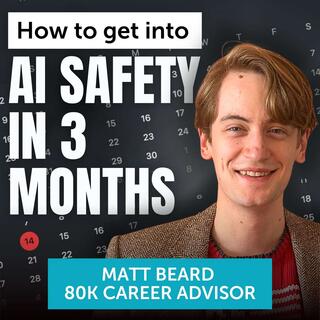
How to get into AI safety in 3 months (article reading by career advisor Matt Beard)

How to get into AI safety in 3 months (article reading by career advisor Matt Beard)

The AI safety field has grown by about 30x in the last eight years. Yet it is still in need of more people. Many want to help, but don’t know where to start. As an advisor at 80,000 Hours, Matt Beard ...

15 Loka 18min

OpenAI Security: Controlling Models is Now ‘Hell’ (AI Explained cross-post)

OpenAI Security: Controlling Models is Now ‘Hell’ (AI Explained cross-post)

This is an (unpaid) cross-post of a video from the podcast 'AI Explained', which Rob Wiblin thought you might be interested in.You can find the original on YouTube here. If you like it and want more s...

9 Loka 40min
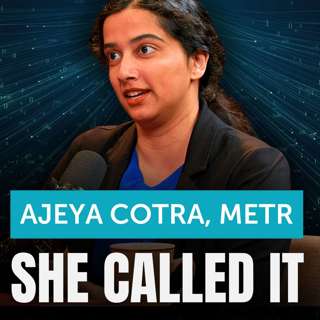
In 2023 Ajeya Cotra already knew what was coming (classic episode)

In 2023 Ajeya Cotra already knew what was coming (classic episode)

We're rereleasing some of older episodes that seem more relevant than ever with new rogue AI incidents now seemingly announced every day. Ajeya was one of three independent investigators into the Hugg...

8 Loka 2h 46min

Suosittua kategoriassa Koulutus

rss-murhan-anatomia
aamukahvilla
psykopodiaa-podcast
psykologia
voi-hyvin-meditaatiot-2
rss-hereilla
rss-liian-kuuma-peruna
rss-narsisti
kesken
rss-vapaudu-voimaasi
rss-suomen-aa-podcast
aloita-meditaatio
ilona-rauhala
rss-arkea-ja-aurinkoa-podcast-espanjasta
ihminen-tavattavissa-tommy-hellsten-instituutti
rss-valo-minussa-2
taytta-tavaraa
rss-niinku-asia-on
rss-luonnollinen-synnytys-podcast
rss-rahamania